About Berberis darwinii Hook.
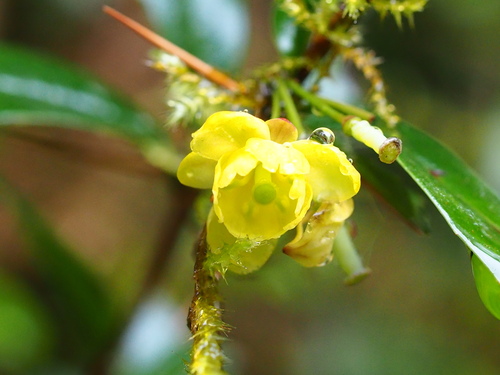
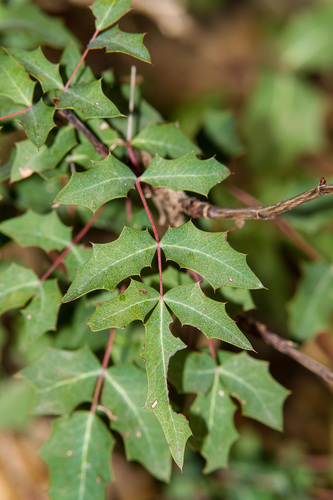
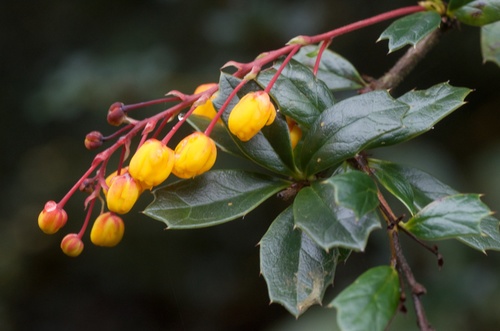
Berberis darwinii Hook. produces dense branches starting from ground level. Its leaves are small and oval, measuring 12–25 mm (0.47–0.98 in) long and 5–12 mm (0.20–0.47 in) wide, with spiny margins. Leaves grow in clusters of 2 to 5, each cluster subtended by a three-branched spine 2–4 mm long. This species bears 4–5 mm long orange flowers, arranged in dense 2–7 cm long racemes that emerge in spring. Its fruit is a small purple-black berry with a 4–7 mm diameter, which ripens in summer. Berberis darwinii was first documented in 1835 by Charles Darwin during the voyage of the Beagle, and it is one of many species named in Darwin's honor. Prehistoric native peoples in the Patagonian region are known to have consumed the berries of this species over thousands of years. It is a popular shrub for gardens and hedging in the British Isles, and the Royal Horticultural Society has awarded this species its Award of Garden Merit. The edible fruit of Berberis darwinii is very acidic.