About Belonocnema treatae Mayr, 1881
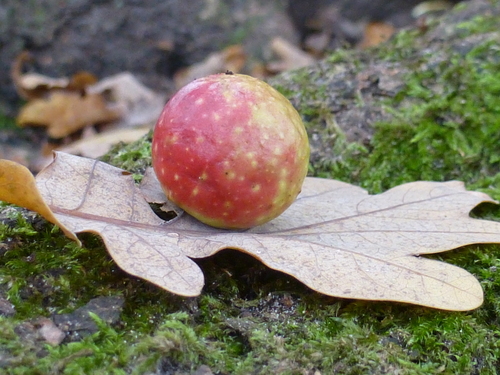
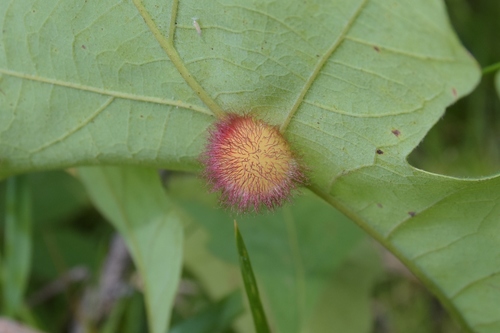
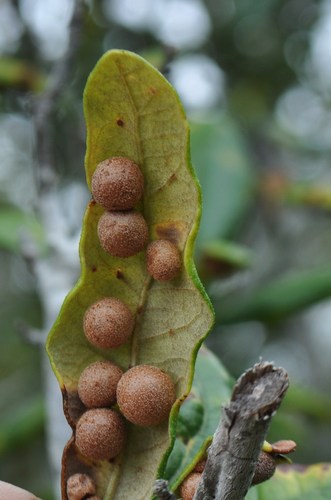
The asexual generation of Belonocnema treatae produces smooth, single-chambered ball-shaped galls that form on the underside of leaves. Young asexual generation galls are orange or light brown, and darken in color as they mature. The sexual generation produces irregularly shaped, multi-chambered clusters of galls that grow on small rootlets. Belonocnema treatae can be told apart from B. fossoria in both generations by the spur on the anterior side of the fore tibia being shorter than the basitarsus. It can be distinguished from B. kinseyi by two traits: sexual generation individuals have weakly defined scutellar foveae that are widely separated by a ridge, while asexual generation individuals have a distinctive areolet. The distribution of Belonocnema treatae generally matches the range of its primary host plant, Quercus virginiana. A species turnover takes place in southeast Mississippi, where B. kinseyi replaces B. treatae across the rest of the western range of Q. virginiana. Sexual-generation adult B. treatae emerge between mid-March and the end of April, which aligns with when Q. virginiana flushes new leaves.