About Belonocnema fossoria Weld, 1921
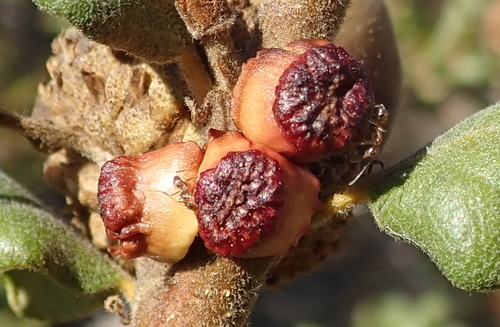
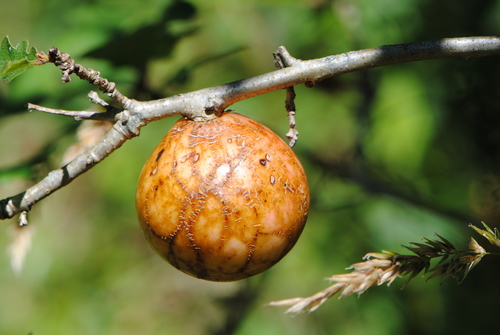
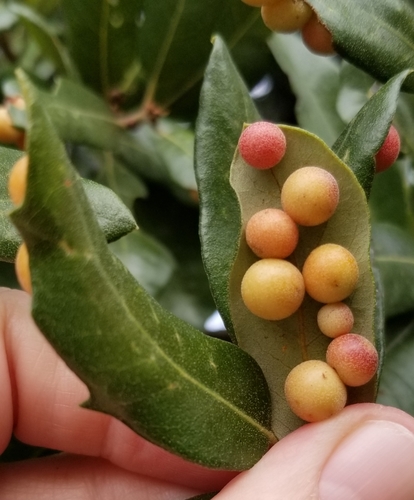
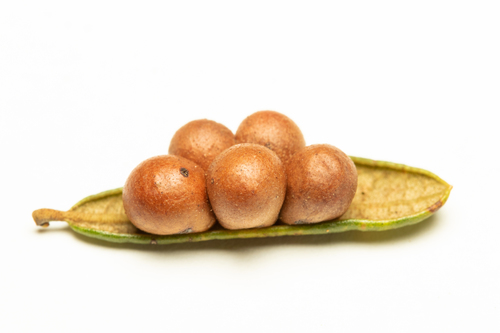
This species is Belonocnema fossoria Weld, 1921. Galls from the asexual generation of Belonocnema fossoria are smooth, single-chambered balls that form on the underside of leaves. Young asexual generation galls are orange or light brown, and become darker as they mature. Galls from the sexual generation are irregularly shaped, multi-chambered clusters that grow on small rootlets. Belonocnema fossoria can be told apart from other species in the genus Belonocnema by a spur on the front side of the fore tibia that is longer than the basitarsus and the other tibial spurs. Individuals of the asexual generation have small, non-functional wings, lack an areolet in the front wing, and have an extra spur on the middle tibia. Belonocnema fossoria is only known to occur in Georgia and Florida, matching the distribution range of its host plant, Quercus geminata. The large tibial spur and short, stout legs of this species are likely adaptations for digging through the sandy soil where Q. geminata commonly grows, to reach small rootlets. The sexual generation of Belonocnema fossoria emerges between early March and mid-April, which aligns with when its host plant produces new leaf flush.