About Begonia cucullata Willd.
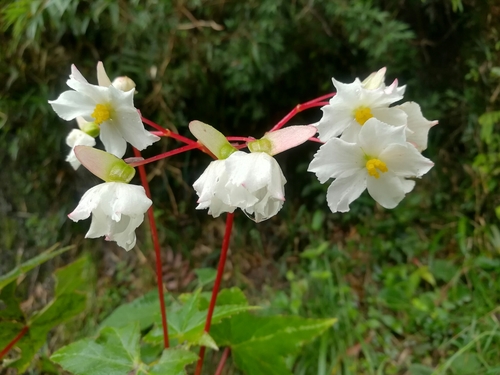
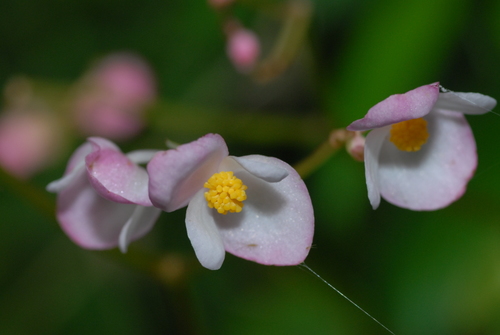
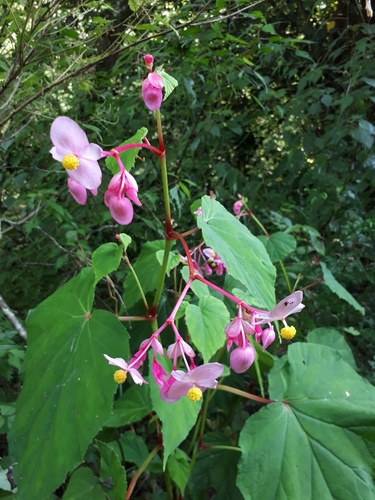
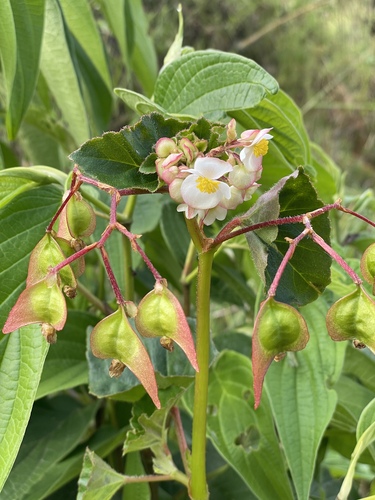
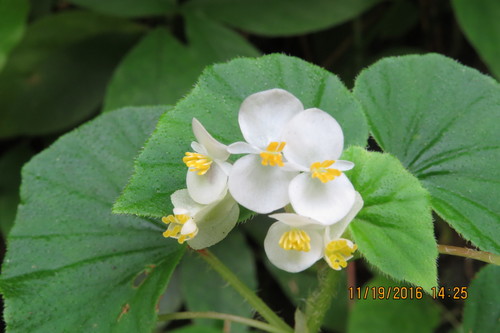
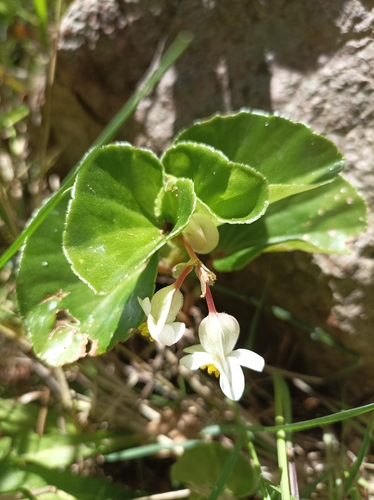
Begonia cucullata Willd., commonly known as wax begonia, is an upright-growing herbaceous perennial plant. Its leaves are almost symmetrical, succulent, ovate, glabrous, and range in color from pale green to pale reddish brown. They measure 4–8 cm long and 6 cm wide, with glossy, toothed crenate edges. This species is cultivated as a groundcover. Its flowers can be red, pink, or white; they bloom in summer in cooler regions, and year-round in warmer climates. Its fruits have three wings. Wax begonia is native to South America, and has become invasive in the United States. In Florida, it occurs across the northern and central peninsula, west to the central panhandle; it is also found invasive in Georgia. It invades waysides, deforested areas, overgrazed pastureland, and wastelands. The species is a very prolific seed producer, and seeds are thought to be the primary method of spread when the plant is left uncontrolled. It can also root very easily from fragments, but this method is not believed to play a large role in spread under natural conditions. For cultivation, older varieties of wax begonia prefer shade, while newer varieties tolerate both full sun and full shade. When grown indoors, it can thrive in a south- or east-facing window, as long as it is acclimated when moved to a new environment.