About Baryphas ahenus Simon, 1902
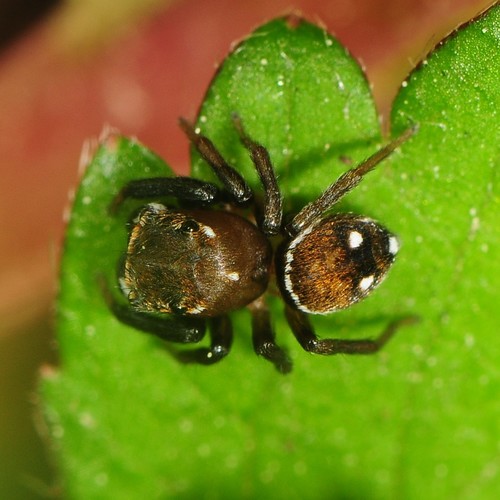
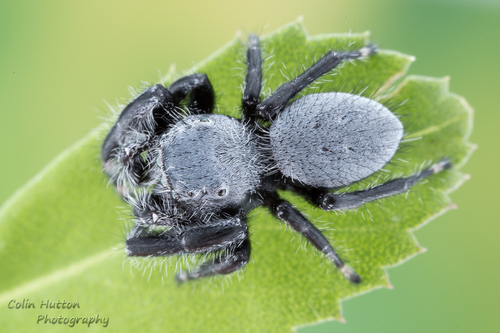
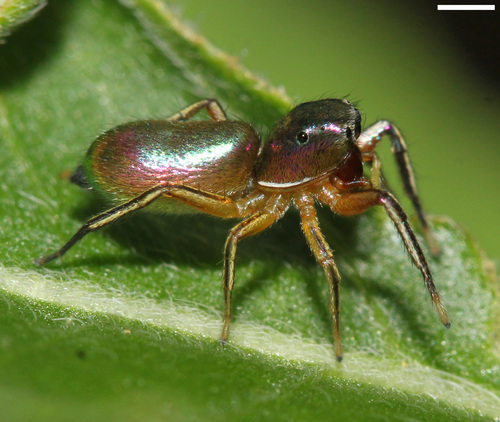
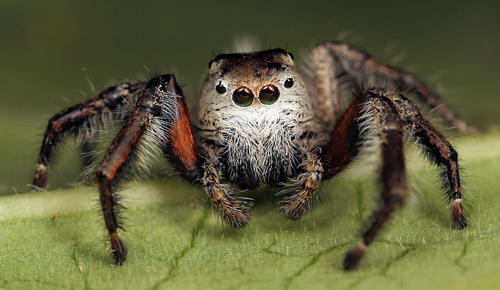
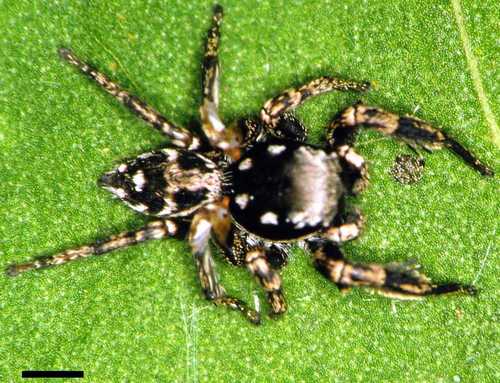
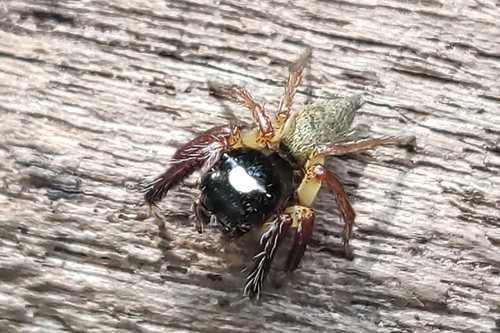
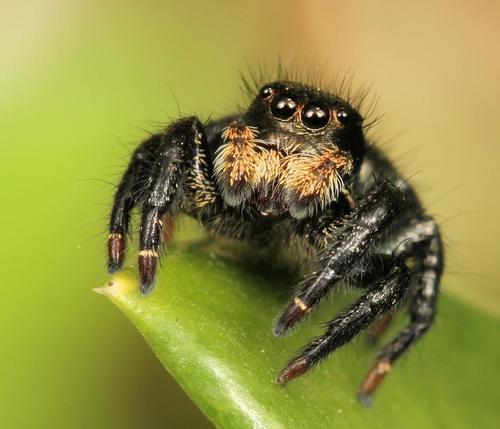
Baryphas ahenus Simon, 1902 can be distinguished from other species in the Baryphas genus by the shape of its tibial apophysis, which is relatively short and has apical teeth, and by the lack of a clearly visible basal lobe on the palpal tegulum. Females are similar in general form to males, but are somewhat lighter in colour. The female abdomen has a pattern made up of white or orange transverse stripes alongside a central patch. Both adult males and females have a total body length that ranges from 4.5 to 10.8 mm. This species is distributed across Tanzania, Zimbabwe, Mozambique, and South Africa. In South Africa, it has an extremely wide distribution, occurring in all nine of the country's provinces. Documented notable locations for the species include Addo Elephant National Park, Golden Gate Highlands National Park, Kruger National Park, Table Mountain National Park, and more than 10 other protected areas. Baryphas ahenus is a very common species, most frequently collected by beating the foliage of shrubs and trees. Mature individuals are usually found on leaves, while juveniles sometimes occur on flowers and occasionally on grasses. The species has been sampled from a variety of different plant species, many of which have smooth, shiny, broad leaves. This spider builds its retreats in one of several locations: between two or three leaves sewn together with silk, in the axils of leaves, or among flower-heads. It is commonly found in gardens, and individuals are either solitary or found in pairs. The species has been recorded across all South African biomes except the Desert biome, at altitudes that span from sea level up to 1,836 m. It has also been sampled in agroecosystems including citrus groves, maize fields, pine plantations, and strawberry plantations.