About Barringtonia acutangula (L.) Gaertn.
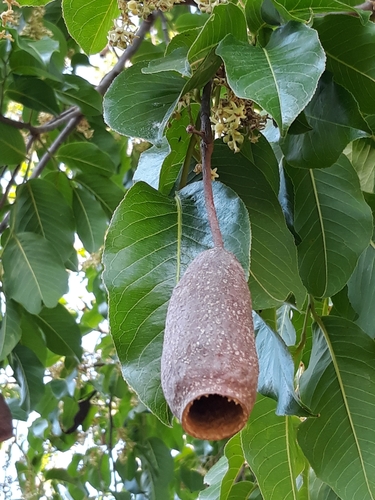
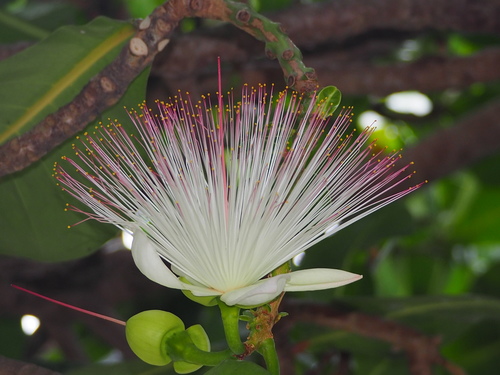
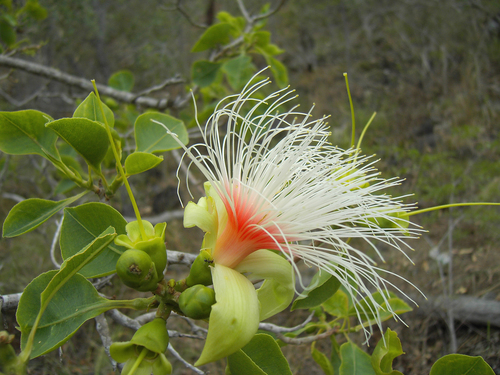
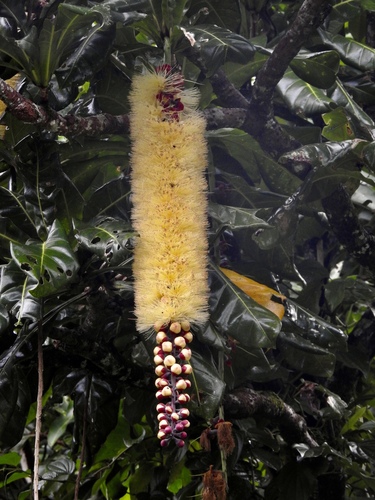
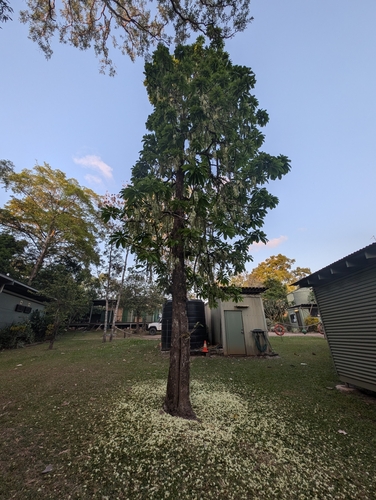
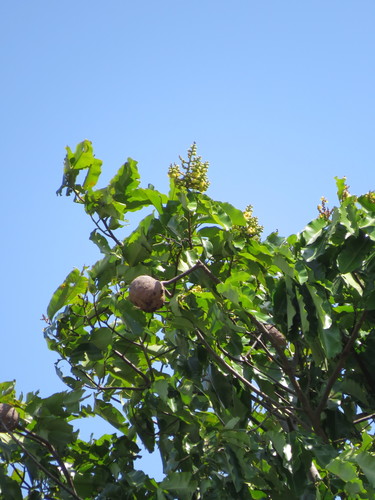
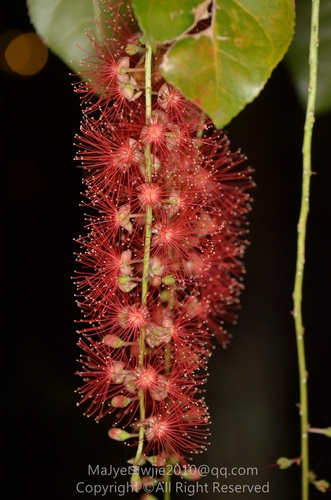
Barringtonia acutangula (L.) Gaertn. is a large tree that reaches a height of 8 to 15 meters. It has thick, smooth oval leaves that measure 8 to 12 centimeters long and 4 to 5 centimeters wide, attached to reddish petioles 0.5 to 1.0 centimeter long. This species produces drooping racemes that can grow up to 50 centimeters long, which hold many large white flowers. Its fruit is oval-shaped, around 3 centimeters long, and contains a single seed inside. The young leaves of Barringtonia acutangula are used as food; in Vietnam, they are commonly eaten fresh alongside other vegetables, meat, and shrimp. Research on this plant has documented a range of medicinal properties: seed extract has antitumor effects, and the plant also has antibiotic, antifungal, antinociceptive activity, and inhibits the growth of Helicobacter pylori. The 1889 publication 'The Useful Native Plants of Australia' records traditional medicinal uses from India: an extract or juice pressed from the leaves, when mixed with oil, is used in native traditional practice to treat skin eruptions. Powdered kernels prepared with sago and butter are used to treat diarrhea, while mixing the powdered kernels with milk induces vomiting, as cited from Treasury of Botany. The root is bitter, noted to be similar to Cinchona, and is also described as cooling and aperient, according to Drury.