About Barkleyanthus salicifolius (Kunth) H.Rob. & Brettell
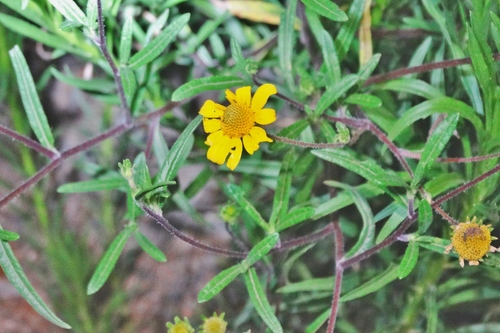
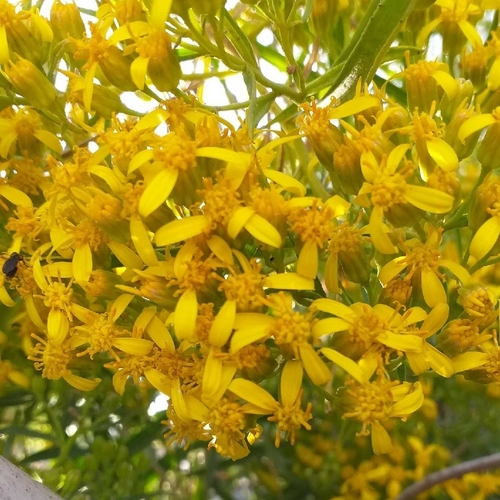
Barkleyanthus is a monotypic genus of flowering plants in the aster family, Asteraceae. It contains only one species, Barkleyanthus salicifolius, which was previously classified in the genus Senecio. This species is native to North and Central America, with a distribution that ranges from the southwestern United States down to El Salvador. Its common names are willow ragwort, willow groundsel, Barkley's-ragwort, and jarilla. This plant is a shrub with a branching stem that typically grows 1 to 2 meters tall, though it can sometimes reach over 4 meters in height. Its leaves are roughly lance-shaped, arranged alternately on the stem, and are sometimes more densely packed toward the ends of branches. The leaves can grow up to 10 to 15 centimeters long. The inflorescence is most often a wide array of multiple flower heads, but the heads may also grow clustered in leaf axils or at the tips of branches. Each flower head holds a small number of yellow pistillate ray florets, and up to 25 or more yellow bisexual disc florets. The fruit is a rough-textured, pyramidal or prism-shaped cypsela that measures up to 1 centimeter long when including its pappus of many barbed white bristles. This plant is abundant across parts of its range, especially in Mexico, and it sometimes grows as a weed. It flowers year-round, with peak flowering in spring, and often reaches full bloom by the end of the dry season. Valued for its attractive yellow flower heads, it is cultivated as an ornamental plant. It is also used in Mexican traditional medicine to treat fever and rheumatism. In Chiapas, it is used as an insecticide for stored corn. Secondary metabolites that have been isolated from this species include pyrrolizidine alkaloids, lactones, furoeremophilanes, and sesquiterpenes.