About Barbarea verna (Mill.) Asch.
Taxonomic Classification
Barbarea verna (Mill.) Asch. is an annual or biennial, winter-green herbaceous plant in the Brassicaceae family.
Germination and Rosette Stage
Its seeds typically germinate in autumn to form a rosette that overwinters.
Stem Characteristics
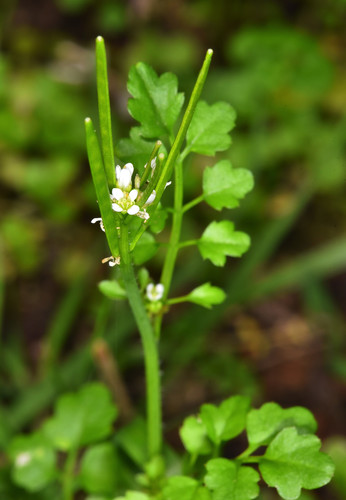
The following spring, it grows a main stem that reaches about 90 cm tall, sometimes growing as tall as 130 cm; this stem is pale green, grooved (sulcate), and occasionally branched.
Leaf Structure
Its leaves are alternate and pinnate, with clasping auricles at the base and between 4 and 11 pairs of sub-opposite lobes. Upper leaves have much narrower lobes than lower leaves, and the whole plant is almost entirely glabrous.
Flowering Period and Inflorescence
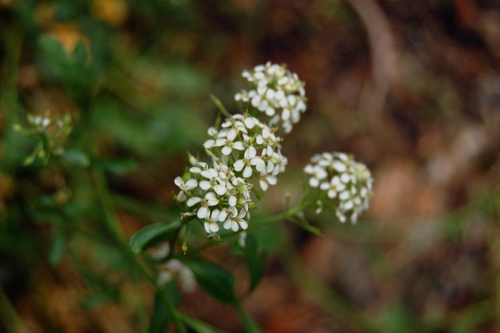
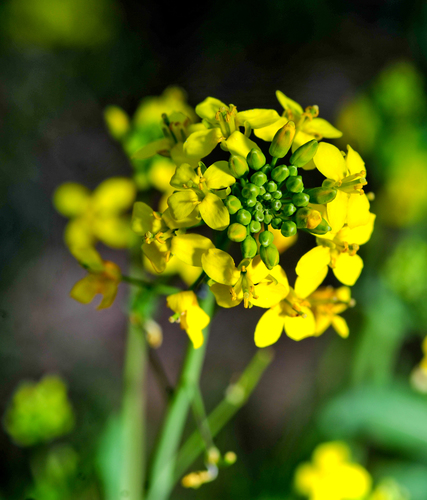
Flowers bloom in early spring, produced in terminal or lateral axillary racemes. Each inflorescence holds 6 to 25 flowers on short 3–8 mm pedicels.
Flower Morphology
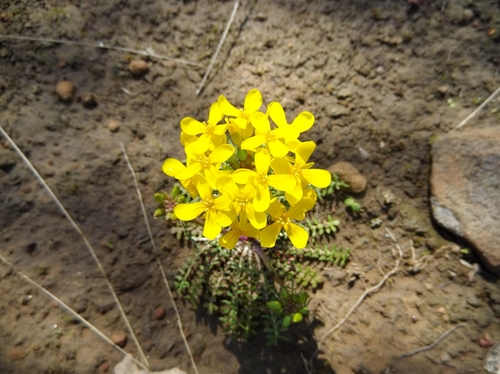
Each flower has four yellowish-green sepals 5 mm long, four bright yellow 8 mm petals, six stamens, and one style with a capitate stigma at its tip.
Culinary Use Status
Commonly called land cress, this species is considered a good substitute for watercress. It can be used in sandwiches, salads, cooked like spinach, or added to soups and pestos.
Cultivation Requirements
Land cress grows easily in any garden. Like watercress, it prefers plenty of water, but does not thrive when partially submerged for long periods. It requires full sun or partial shade and moist or poorly drained soil.
Regional Culinary Role
It is a common green in Appalachian cuisine, as it is one of the few plants that can overwinter in the Appalachian mountains.
Common Names
Other common names for this species include dryland cress, cassabully, and American watercress. When its leaves are cooked similarly to Southern collard greens, they are often called creasy greens.
Cultivated Form
A variegated cultivated form of this plant is available.