About Banksia neoanglica (A.S.George) Stimpson & J.J.Bruhl
Species Identity and Growth Form
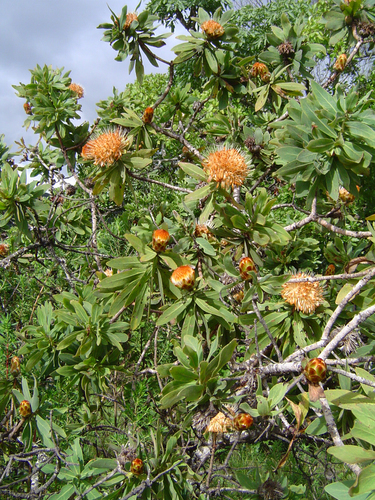
Banksia neoanglica (A.S.George) Stimpson & J.J.Bruhl is a species that sometimes grows as a multi-stemmed shrub with an underground lignotuber reaching 2.5 metres (8 feet) in height, and other times grows as a tree reaching up to 7 metres (20 feet) tall.
Adult Leaf Structure
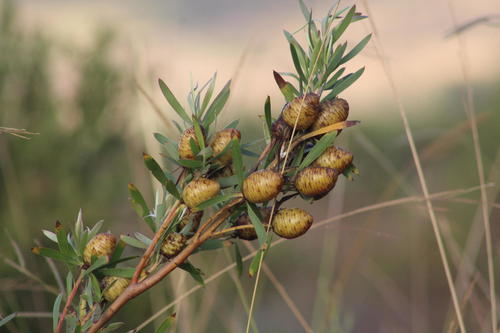
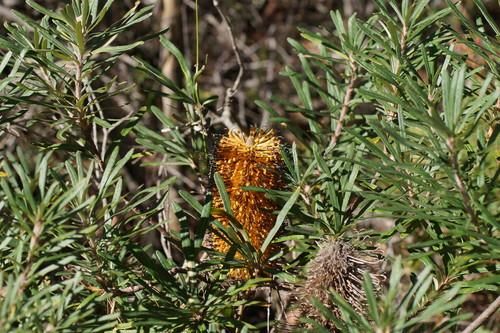
Adult leaves have a petiole around 2–4 mm (0.08–0.2 in) long, with a linear leaf blade 43–75 mm (2–3 in) long and 3–5 mm (0.1–0.2 in) wide.
Immature Leaf Structure
Immature leaves are wider but shorter than adult leaves, and have teeth along their edges.
Leaf Surface Characteristics
The upper surface of the leaves is glabrous, while the lower surface is covered in a layer of greyish-white felted hairs.
Flower Spike Dimensions
Mature flower spikes are 84–119 mm (3–5 in) long and 70–85 mm wide, with 12 to 14 pairs of flowers arranged around the circumference.
Mature Flower Color
When fully mature, the flowers are yellowish-orange.
Style Traits
The style, which has a hooked tip, changes colour from red to black at anthesis.
Infructescence Size
The infructescence (cluster of developed fruit from fertilised flowers) grows to 85–120 mm (3–5 in) long and 35–45 mm (1–2 in) in diameter.
Flowering Period
Flowering most often takes place from April to June.
Similarity to Banksia spinulosa
This species is similar to the hairpin banksia (B. spinulosa), but differs from it by having leaves with flat edges.
Similarity to Banksia cunninghamii
It also resembles Banksia cunninghamii (also treated as B. spinulosa var. cunninghamii), but has a shorter, wider infructescence and a lignotuber, which is absent in B. cunninghamii.
Geographic Distribution
Banksia neoanglica is found on the McPherson Range in southern Queensland, along the eastern edge of the New England Tableland, and extends south as far as Hanging Rock in New South Wales.
Habitat and Associated Flora
It grows in sandy soil within woodland, forest, and heath habitats, and often occurs alongside White Mountain banksia (B. integrifolia subsp. monticola).
Growth Form Dimorphism
New England banksia grows in two distinct forms. It is commonly a shrub with up to ten stems and an underground lignotuber, but may also grow as a single-stemmed small tree with a lignotuberous swelling just above or just below the soil surface.
Multi-stemmed Shrub Traits
The multi-stemmed shrub form grows in areas prone to bushfire, produces few infructescences per plant, and holds its seeds inside the fruit until the plant is burned.
Single-stemmed Tree Traits
The single-stemmed tree form is found in areas with rare fire such as Lamington National Park, and these individuals produce many infructescences that release their seeds as the fruit matures.
Cultivation Information
This banksia species is not often cultivated. Alex George suggests it is likely similar to B. spinulosa var. spinulosa in cultivation conditions, but should be able to tolerate colder temperatures.