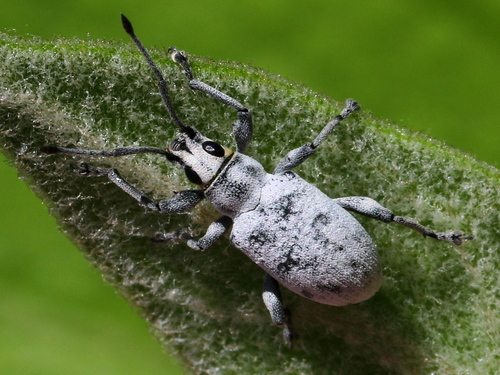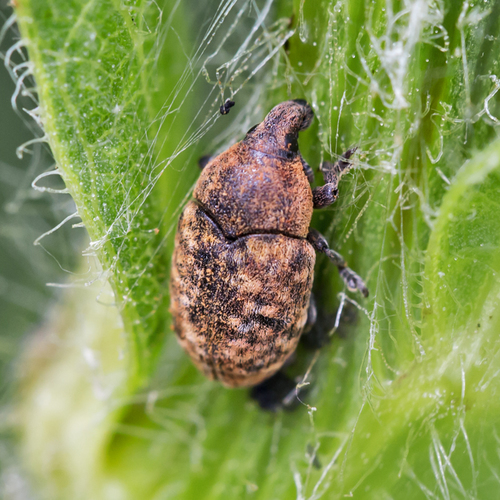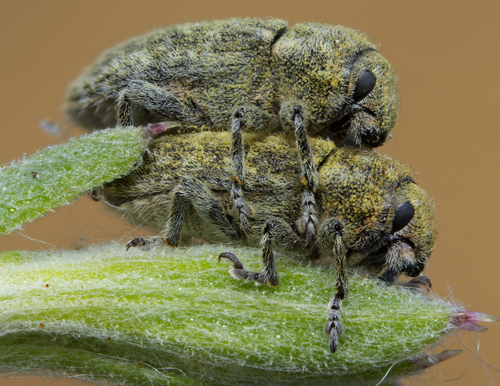
About Bangasternus fausti Reitter, 1890
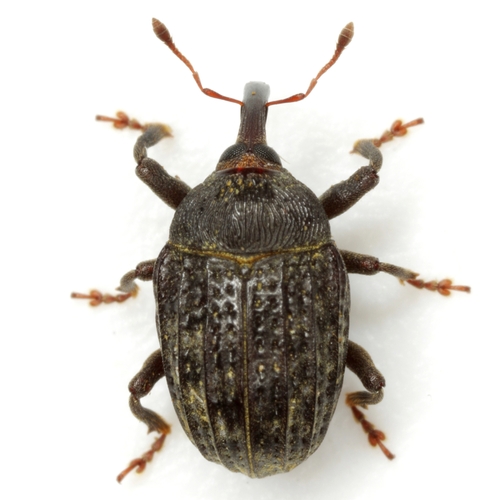
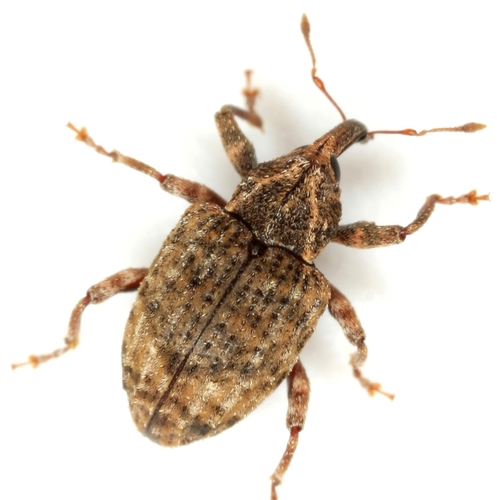
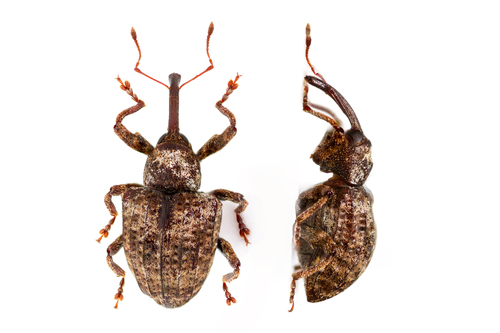
Bangasternus fausti Reitter, 1890 is a species of true weevil commonly called the broad-nosed seed head weevil. It is used as a biological pest control agent against noxious knapweeds, specifically spotted knapweed (Centaurea maculosa), squarrose knapweed (Centaurea virgata ssp. squarrosa), and diffuse knapweed (Centaurea diffusa). Adult weevils are dark gray, hairy, and reach approximately 4 millimeters in length. Females lay their eggs on early-stage developing flower heads and on stem tips. When larvae emerge, they either burrow directly into the flower head or reach it by tunneling through the stem. The larvae feed on developing knapweed seeds, often consuming all seeds present in a flower head. If other insects enter the flower head, the larvae will attack these intruders. Larvae pupate inside the knapweed seed head. This weevil is native to southern Europe and the Middle East. It was first released for knapweed biocontrol in Oregon in the 1980s, and is now established in the Pacific Northwest. It is host-specific to invasive knapweeds, and has never been recorded attacking native plants.