About Bambusa oldhamii Munro
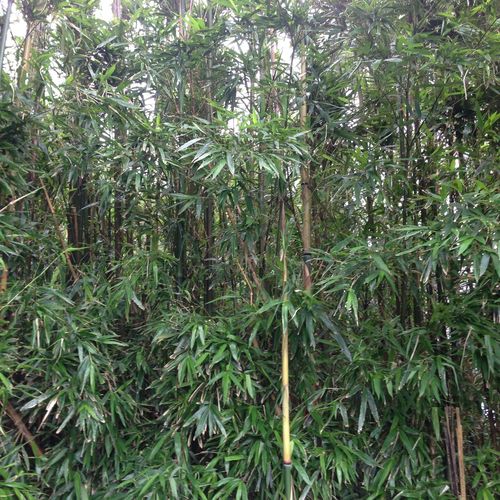
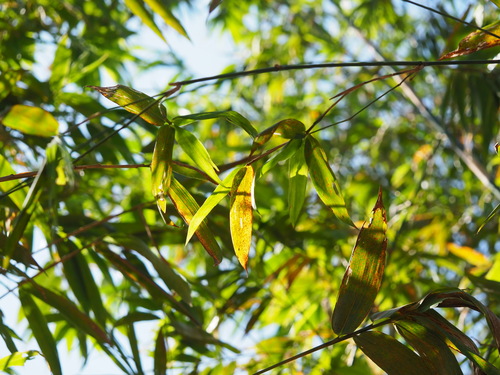
Bambusa oldhamii Munro reaches 17 to 20 meters (56 to 66 feet) in height. Its green culms grow to a maximum diameter of 10 centimeters (4 inches). Shoots of this species grow rapidly during warmer months. It has short branches and long leaves. B. oldhamii is native to Taiwan and southern China, specifically the provinces of Fujian, Guangdong, Guangxi, Hainan, and Zhejiang. It is widely cultivated and has become naturalized in multiple additional locations, including the Ryukyu Islands, New Zealand, Chiapas, Honduras, and Peru. This species has been introduced to cultivation across the globe. It is grown under glass in Germany, and cultivated throughout Australia, Puerto Rico, and the U.S. states of Florida, Texas, Tennessee, Maryland, Virginia, North Carolina, South Carolina, Oklahoma, Kentucky, Georgia, Alabama, Arkansas, Mississippi, Arizona, Nevada, Hawaii, Louisiana, and California. In California, it is the most common clumping bamboo grown in cultivation. Maximum height of cultivated B. oldhamii changes based on temperature. The species can tolerate temperatures as low as −7 °C (19 °F). In both Taiwan and China, the young shoots of B. oldhamii are highly desired for their crisp texture and sweet taste. Cultivation of the species has declined in Taiwan, as many bamboo stands have been converted to pineapple production. Multiple subsidy and support programs have been created to protect this cultivation, because existing cultivated bamboo groves offer valuable wildlife habitat, and the loss of these groves threatens the endangered farmland green tree frog. The culms of B. oldhamii are used for furniture making, but are not suitable for use in construction.