About Balduina uniflora Nutt.
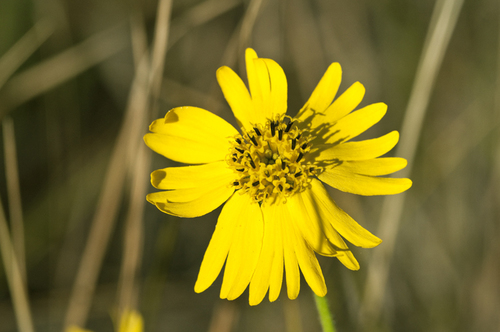
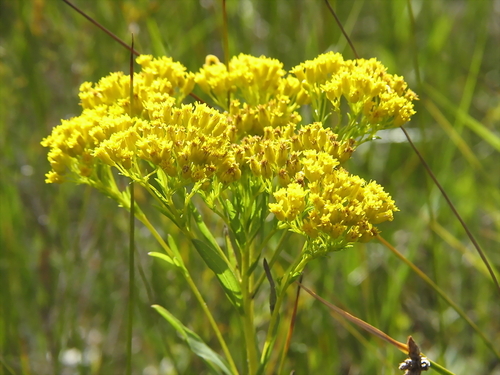
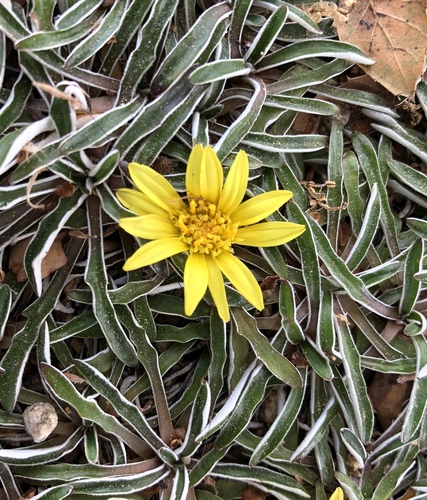
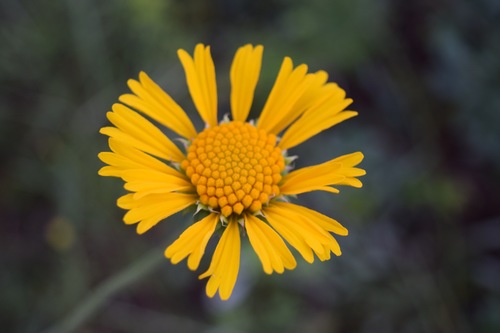
Balduina uniflora Nutt. is a perennial herbaceous plant that grows 0.4 to 1 meter tall. It has fibrous roots and ribbed, erect stems; most stems are typically branched, except stems that bear flower heads. All leaves, stems, involucres, and peduncles are green and pubescent, with the exception of the undersides of leaves, which may be glabrous or only sparsely haired. Its leaves are arranged alternately, and are usually clustered at the base of the plant, becoming smaller and more spaced out as they grow toward the stem apex. Like other species in the family Asteraceae, what appear to be individual flowers of this species are actually clustered inflorescences called flower heads, made up of hundreds of small individual flowers. The inflorescence has many bracts at its base that form a green, bell-shaped or hemispheric involucre. The yellow, petal-like ray florets are sterile, and usually have 3 to 5 lobes along their edges. The more central disc florets are perfect, containing multiple arrow-shaped stamens and a pistil made up of two ovaries. Each pistil has a yellow, two-branched style that extends out from the floret. The species gets its name from its characteristic honeycomb-like bract structures called chaff, which are most visible when the plant reaches fruit maturity. Also like other members of Asteraceae, B. uniflora produces achene-like fruits called cypselae: these are dry, indehiscent single-seeded fruits that develop from the flower's two carpels, and typically measure 1.3 to 2.2 millimeters in length. B. uniflora can be distinguished from other species in the genus Balduina by its wider corolla rays, larger pollen grains, and a chromosome arrangement of n=36, whereas other species in the genus have n=18 chromosomes. B. uniflora is not currently listed on the IUCN Red List. It is ranked as "Apparently Secure (S4)" nationwide by NatureServe, but ranked "Vulnerable (S3)" in North Carolina and "Imperiled (S2)" in South Carolina. There is no record of this species being invasive in any U.S. state. B. uniflora is not usually available commercially, but can be grown from seed as an ornamental plant in native wildflower gardens. It prefers wet, boggy soils and full, high-intensity sunlight.