About Backhousia myrtifolia Hook. & Harv.
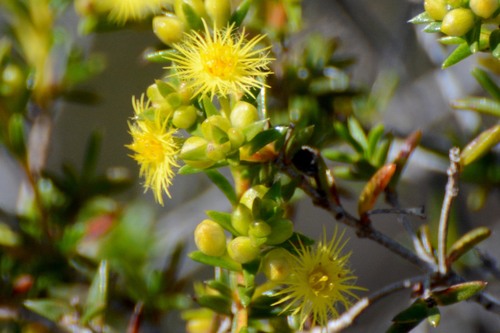
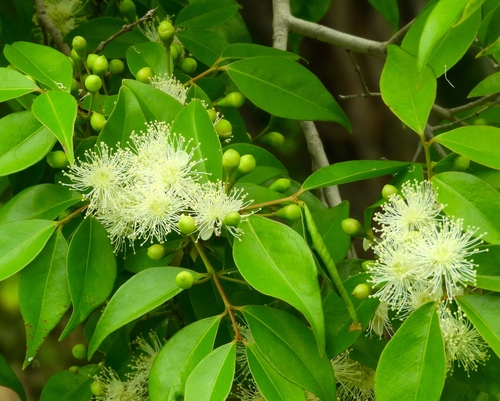
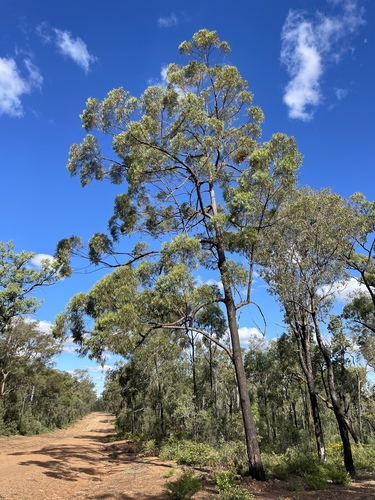
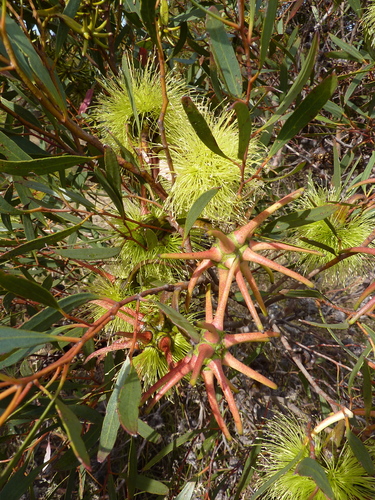
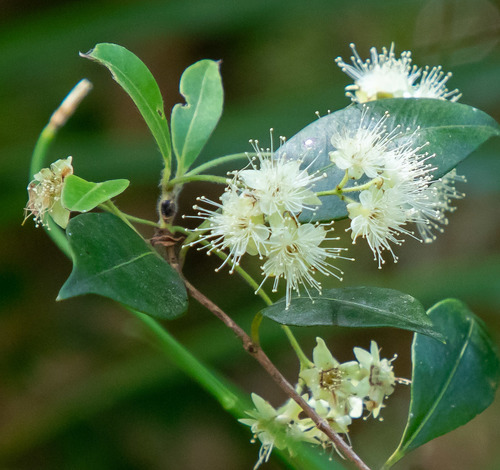
Backhousia myrtifolia Hook. & Harv. is a native Australian species in the Myrtaceae family. It grows as a canopy plant that occupies high-light environments, forms thick coppiced trunks, and typically thrives in warmer temperate rainforest conditions. It is most often found near water bodies along the eastern coastal edges of Queensland, New South Wales and Victoria; common locations include Bega on the South Coast of New South Wales and areas off Fraser Island, Queensland. B. myrtifolia is an evergreen with an average lifespan of 80 to 100 years. It blooms between late spring and early summer, producing ivory white starfish-shaped flowers with 5 individual sepals, and forms capsule-like fruiting bodies. Visible oil glands appear as fine white dots throughout leaf tissue, and produce four major organic compounds: methyl eugenol, (E)-methyl isoeugenol, elemicin and (E)-isoelemicin, which together create the plant's distinct cinnamon-like aroma. B. myrtifolia was first documented and named for English botanist James Backhouse (1794–1869), after he mentioned it in his report on Australian landscapes and wildlife, A narrative of a visit to the Australian colonies. Backhouse was known both for his botanical publications and for the friendships he formed with Indigenous Australians on whose land he conducted his research. Before this formal documentation, Indigenous Australians used the species extensively as a cooking spice, thanks to its unique aroma and widespread availability. Under ideal conditions that include fertile soil, high irradiance, and sufficient water, B. myrtifolia grows quickly, as measured by plant biomass, total leaf area, and leaf biomass per plant. It reaches maximum growth in oxygen-rich air with low carbon or nitric oxide pollution, and in nutrient-rich soil with high diversity of micro-organisms and minerals. B. myrtifolia tolerates drought, periods of inundation, and repeated root disturbance, so it can flourish in areas with frequent temperature and weather fluctuations. This makes it suitable for both domestic and commercial cultivation in Australian environments, such as home gardens or footways, in tropical (higher rainfall) and coastal climates. In these urban settings, B. myrtifolia has an average lifespan of 60 years, and requires very little maintenance as long as it receives consistently high levels of sunlight. This low maintenance requirement is ideal for local governments and councils, as it lowers costs associated with watering, trimming and root clearance. Because of the unique properties of its natural oils methyl eugenol and elemicin, B. myrtifolia is widely used as an aromatic spice. These oils create a natural cinnamon-like fragrance, so the plant can be used as a flavoring agent in biscuits, stews and desserts. The plant is also rich in fiber, vitamins (vitamins A, C, E, K, and pyridoxine) and minerals (potassium, calcium and copper), all of which support healthy homeostatic body function. Vitamins act as co-enzymes in the body that speed up biological reactions, while minerals such as potassium help maintain cellular electrochemical gradients to support proper musculoskeletal function. Research is currently ongoing into the use of B. myrtifolia as an anti-bacterial and anti-fungal agent, due to the bactericidal properties of its oils. The methyl eugenol and elemicin components of the plant's natural oils are strong antiseptic agents, and together can inhibit the growth of over 100 species of bacteria. Methyl eugenol from B. myrtifolia can break down the thick peptidoglycan cell wall of gram positive bacteria, while elemicin creates small pores in the outer lipopolysaccharide layer of gram negative bacteria. Through these two mechanisms, B. myrtifolia exposes the interior of bacterial cells to the external environment, killing the cells. As a result, aqueous and methanolic leaf extracts of B. myrtifolia have been found to inhibit the growth of both Proteus mirabilis and Escherichia coli bacteria. Infection by P. mirabilis causes 1 to 10% of all urinary tract infections, and has also been linked as a causative factor of rheumatoid arthritis, while E. coli commonly causes gastrointestinal infections such as food poisoning. An Artemia franciscana nauplii bioassay has confirmed that the oils produced by B. myrtifolia are non-toxic, which further supports their use as either an internal or topical treatment for bacterial and fungal infections.