About Backhousia citriodora F.Muell.
This species has the scientific name Backhousia citriodora F.Muell., and is commonly known as lemon myrtle.
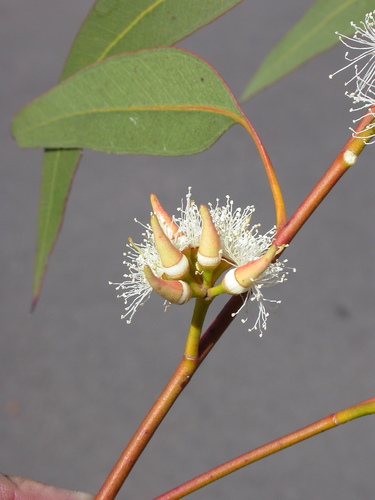
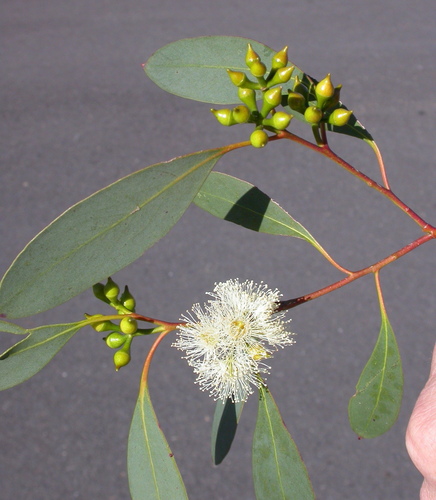
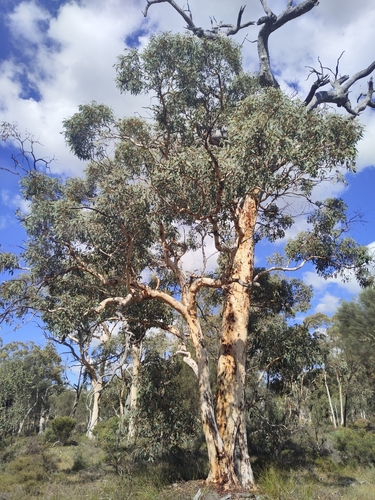
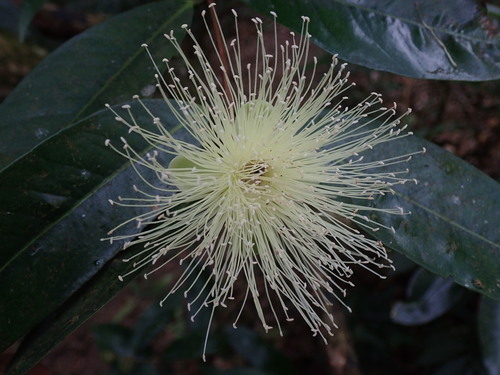
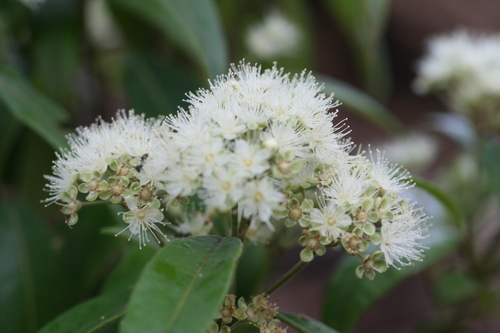
In description and ecology, the plant can reach 6 metres (20 feet) in height, though it is often smaller. It has evergreen, opposite, lanceolate leaves that measure 5–12 cm (2.0–4.7 in) long and 1.5–2.5 cm (0.6–1.0 in) broad. The leaves are glossy green with an entire margin. Its creamy-white flowers are 5–7 mm (0.20–0.28 in) in diameter, produced in clusters at the ends of branches from summer through to autumn. The calyx remains persistent after petals fall. In January 2011, a significant fungal pathogen called myrtle rust (Uredo rangelii) was detected in lemon myrtle plantations. Myrtle rust causes severe damage to new growth and threatens lemon myrtle production.
In cultivation, lemon myrtle is grown as an ornamental plant. It can be cultivated in climates ranging from tropical to warm temperate, and can grow in cooler districts if young plants are protected from frost. In cultivation, it rarely exceeds about 5 metres (16 ft) in height and typically grows a dense canopy. The main draw for gardeners is its distinct lemon scent, which perfumes both its leaves and flowers. Lemon myrtle is a hardy plant that tolerates most soil types, with the exception of very poorly drained soils. It can be slow growing, but responds well to slow-release fertilisers. Seedling lemon myrtle goes through a shrubby, slow juvenile growth stage before developing a dominant trunk.
Lemon myrtle can also be propagated via cuttings, but cuttings root slowly. A study on adventitious root growth found that actively growing axillary buds, wide stems, and mature leaves are good indicators that a cutting will root successfully and survive. A separate study on temperature recommended growing cuttings in glasshouses year-round. Growing cuttings taken from mature trees bypasses the shrubby juvenile growth stage. Cutting propagation is also used to produce a consistent product for commercial production. In plantation cultivation, the tree is typically maintained as a shrub through regular harvesting from the top and sides. Commercial plantations use mechanical harvesting. When pruning, it is important to retain some lower branches to maintain plant health. Harvested leaves are dried for use as a leaf spice, or distilled to obtain essential oil. The majority of commercial lemon myrtle is grown in Queensland and the north coast of New South Wales, Australia. A 2009 study has suggested that drying lemon myrtle leaves at higher temperatures increases the citral content of the dried leaves, but also causes more leaf discolouration.