About Baccharis pilularis DC.
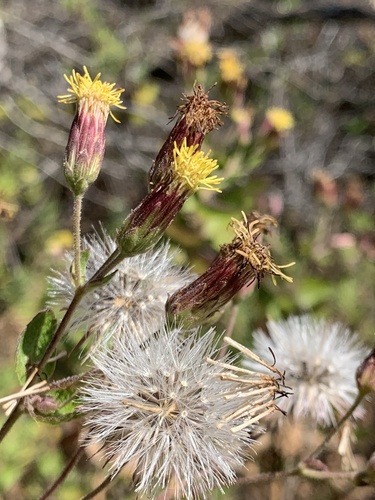
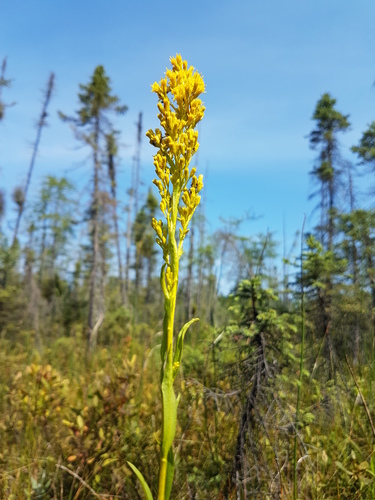
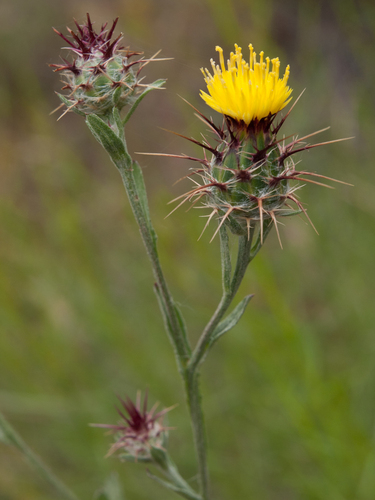
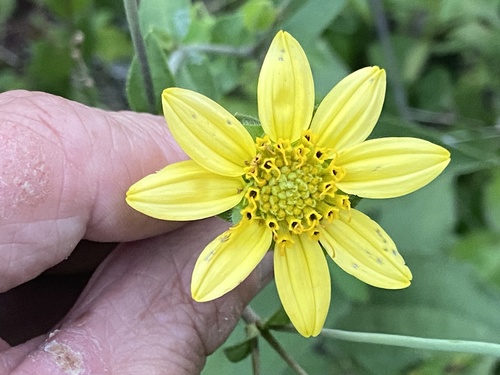
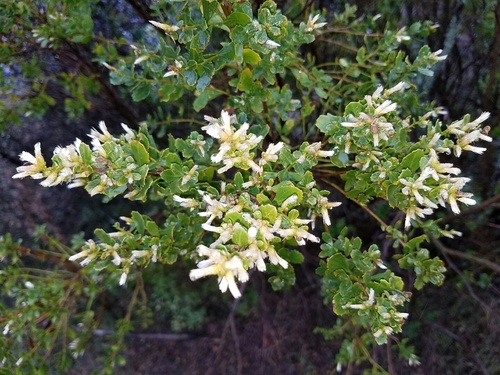
Baccharis pilularis DC., commonly called coyote brush, is a shrub that generally grows less than 3 metres (9.8 ft) tall. This species naturally grows a mix of erect and prostrate individuals, and erect plants can sometimes grow to become prostrate over time. Its stems range from prostrate to erect, with spreading or ascending branches. Its leaves are smooth, lack spines or hairs, are usually sticky to the touch, and measure 8–55 millimetres (0.31–2.17 in) long. Leaf shapes range from oblanceolate to obovate, with margins that can be entire or toothed, and each leaf has three principal veins. Flower heads of this species are arranged in a leafy panicle. Involucres range from hemispheric to bell-shaped. Baccharis pilularis is dioecious, meaning pistillate and staminate flowers grow on separate individual plants. Both staminate and pistillate flower heads are 3.5–5 millimetres (0.14–0.20 in) long. Phyllaries are arranged in 4–6 series, are ovate in shape, and glabrous. Receptacles are convex to conic and have a honeycombed texture. A staminate head holds 20 to 30 staminate flowers, while a pistillate head holds 19 to 43 pistillate flowers. Baccharis pilularis and other species in the Baccharis genus act as nectar sources for most predatory wasps, native small butterflies (skippers), and native flies that occur within their ranges. There are two recognized subspecies: Baccharis pilularis subsp. consanguinea (DC.) C.B.Wolf, which occurs primarily in coastal chaparral, and Baccharis pilularis subsp. pilularis, which grows on sandy coastal bluffs and beaches in California. This species grows across a wide range of habitats below 2,000 feet (610 m) in elevation, including coastal bluffs, oak woodlands, grasslands, hillsides, and canyons. It is classed as a secondary pioneer plant in plant communities such as coastal sage scrub and chaparral. It cannot regenerate under a closed shrub canopy, because its seedlings grow poorly in shaded conditions. Over time, shade-producing species including Coast live oak, California bay, and Rhus integrifolia replace coastal sage scrub and other areas dominated by coyote brush, especially when there has been no recent wildfire or heavy grazing. In California grasslands, coyote brush establishes late and invades to increase in abundance when fire or grazing are absent. Its invasion of grasslands aids the establishment of other coastal sage species, but it also displaces highly biodiverse grassland habitat that is important for carbon storage and naturally resilient to wildfires. After grassland restoration, coyote brush can be a problematic invasive plant that overtakes restored grassland habitat, especially when restoration activities are limited and not repeated periodically. Baccharis pilularis is cultivated as an ornamental plant, and is frequently used in drought-tolerant gardens, native plant gardens, wildlife gardens, natural landscaping projects, and habitat restoration projects. Cultivated ground cover selections offer a range of heights, spreads, leaf colors, and leaf textures. Upright growth forms work well for hedges and fence lines, and provide year-round foliage. Coyote brush is typically deer-resistant. Mature plants are drought tolerant; new plantings need weekly watering until established, then approximately monthly watering through their first summer. Plants reach maturity in one to two years, and prefer growing locations with good drainage. Only male plants of Baccharis pilularis are generally cultivated for landscaping use. If male cultivated plants are used in place of Baccharis pilularis subsp. consanguinea for ecological restoration, projects will see lower seed set and lower rates of new individual recruitment.