About Aythya novaeseelandiae (J.F.Gmelin, 1789)
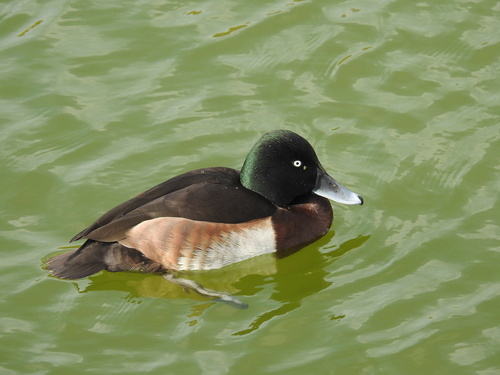
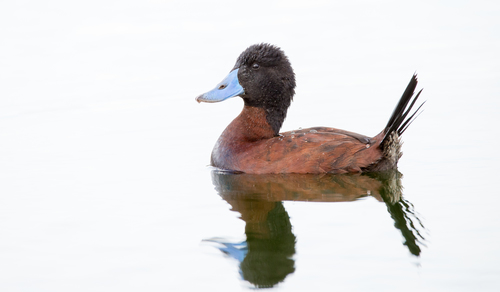
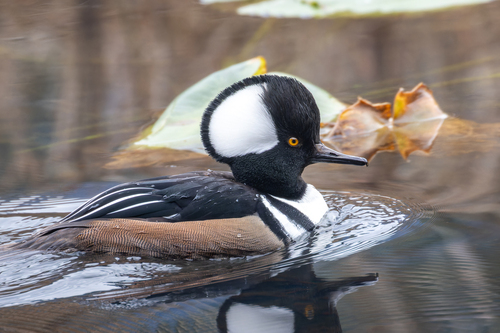
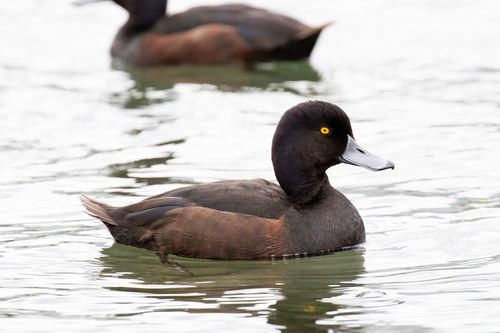
The New Zealand scaup (Aythya novaeseelandiae) is a small, round-bodied diving duck with dark plumage, and the two sexes are easily distinguished. This species has black legs and webbed feet adapted for swimming, and it spends a large amount of time underwater, where it can travel considerable distances. Adults measure around 40 centimetres (16 in) in length. Males weigh approximately 695 grams (24.5 oz), while females weigh around 610 grams (22 oz). Males have dark black-brown plumage, a distinctive yellow eye, and a dark greenish head. Females have duller chocolate brown plumage, brown eyes, and develop a white face patch during the breeding season. Both sexes have a grey bill, and a white wing bar is visible on both when they are in flight. Newly hatched scaups are initially covered in pale brown and white down. Juveniles resemble adult females, but lack white coloration at the base of the bill. Males produce a high-pitched whistle call, while females quack.
This species is found across both the North and South Islands of New Zealand, where it inhabits deep freshwater lakes and ponds; more recently, it has also colonized hydroelectric lakes and oxidation ponds. Although it is widespread across the country, its distribution is patchy, and most New Zealand scaups occupy suitable habitat areas in Northland, upper Waikato, Rotorua, Taupō, Hawke's Bay, West Coast, North Canterbury, and the Southern Alps. Unlike other species in the Aythya genus, the New Zealand scaup is not migratory, though it does move from frozen high country lakes to open water during winter. Thanks to predator control and increased availability of suitable habitat, the species has recently undergone a population expansion in Christchurch.
New Zealand scaups typically form flocks during autumn and winter. Flocks of over 200 individuals have been recorded at traditional moulting and wintering sites, including Lake Rotorua, Lake Taupō, Lake Tūtira, the Bromley sewage ponds, and the Ashburton Lakes.