About Avicularia avicularia (Linnaeus, 1758)
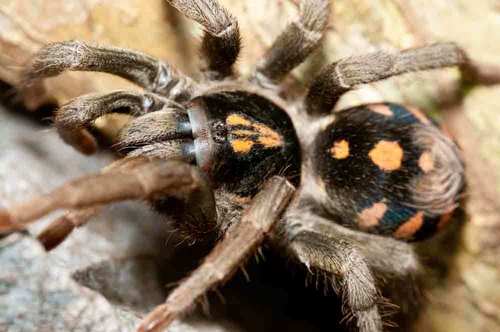
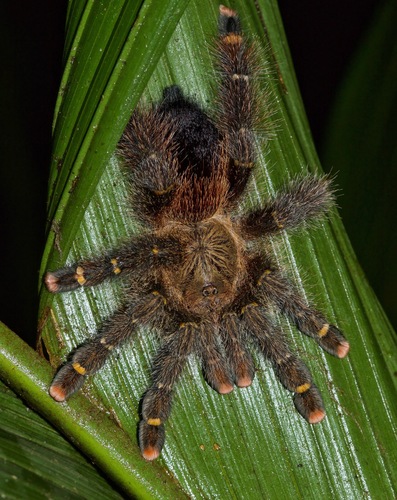
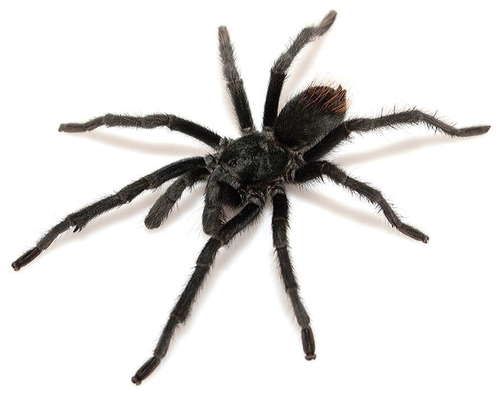
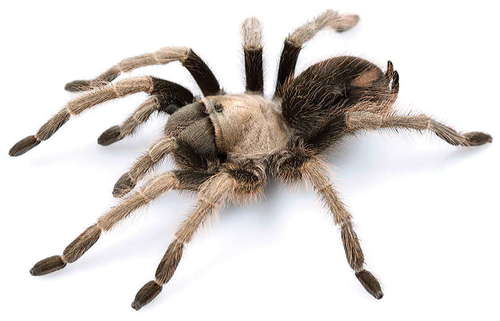
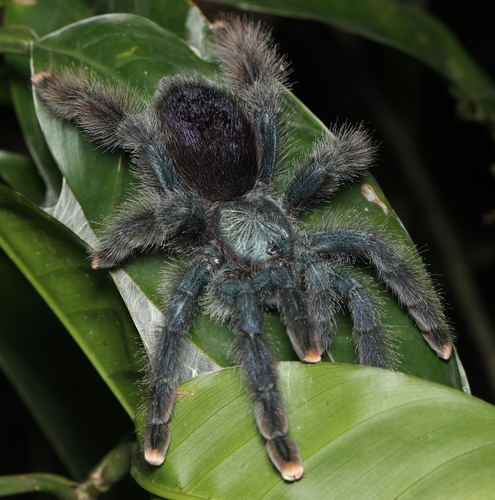
The mature pinktoe tarantula, Avicularia avicularia, has a dark-colored body and pinkish feet, which gives the species its common name. Juvenile pinktoe tarantulas have pinkish bodies and dark-colored feet instead, and their coloration reverses as they reach adulthood at 4 to 5 years old. A fully grown pinktoe tarantula can reach up to six inches in length. This species has a relatively short lifespan: males live 2 to 3 years, while females live between 6 and 9 years. Sexual dimorphism occurs in mature individuals: males have uniformly barbed urticating hairs, while females only have barbed urticating hairs at the proximal end. Mature males also have a pair of hooks on the last segment of their pedipalps, which are used for building "sperm webs" and during courtship behaviors. Pinktoe tarantulas are ambush predators that use webbing as a trap and to detect prey movement. In an enriched environment, they can show a range of additional behaviors including active hunting, foraging, and building structures like nests and tunnels from nearby debris. The pinktoe tarantula mostly feeds on insect prey and is an aggressive feeder. Recorded prey items include crickets, wax moths, grasshoppers, cockroaches, and small tree frogs. They occasionally eat small lizards such as Anolis, but vertebrates do not usually make up a major part of their diet. Common responses to threats include running or leaping away, but they may act aggressively if provoked. Their defensive mechanisms include type II urticating hairs, which must be transferred via direct contact rather than being kicked into the air, propelling feces toward perceived threats, taking a threat posture, and biting. Their venom is considered mild, even when compared to other New World tarantulas. Females of this species have been observed engaging in sexual cannibalism.