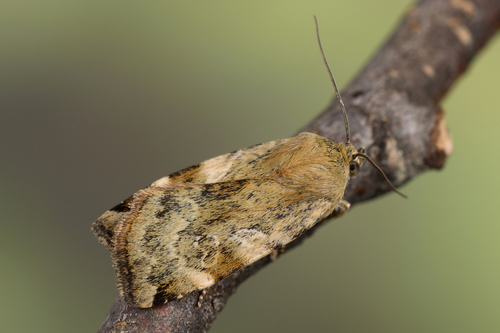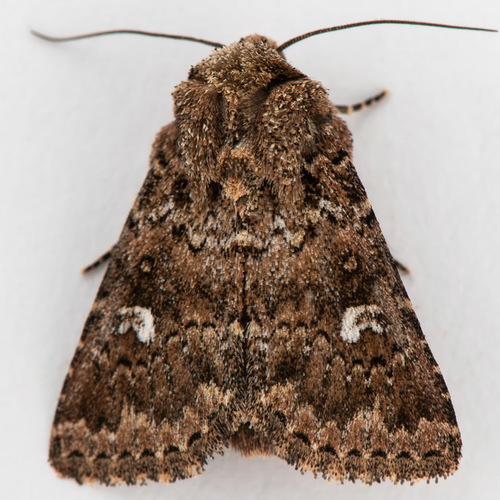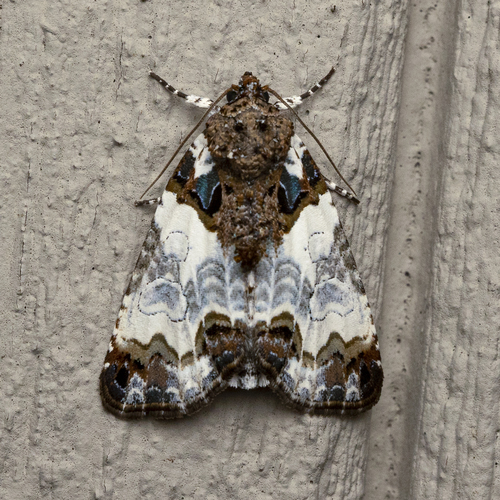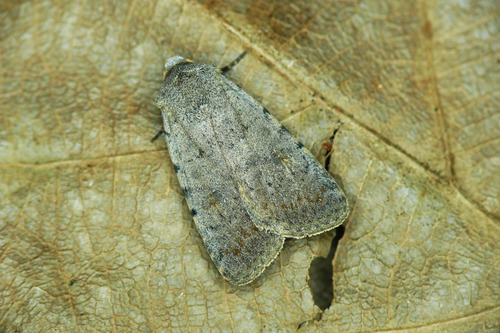
About Autographa bimaculata Stephens, 1830
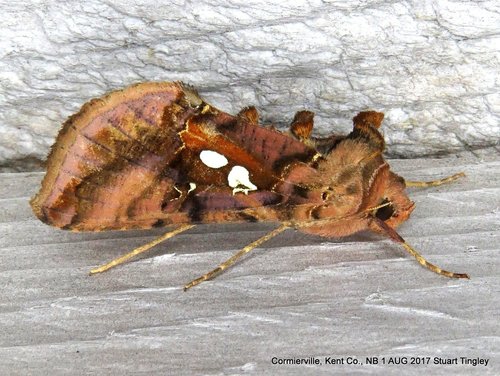
Autographa bimaculata is a species of moth commonly known by the common names two-spotted looper moth, twin gold spot, and double-spotted spangle. It belongs to the moth family Noctuidae. This species was first formally described by James Francis Stephens in 1830. Its range covers parts of North America: it extends west from Newfoundland almost to the coast of British Columbia, north to the Northwest Territories, and south to New Mexico in the western part of its range and to Pennsylvania and Long Island in the eastern part. The wingspan of adults measures 37 to 40 mm. Adult moths are active on the wing between July and August, with the timing varying based on location. This species produces one generation per year. Its larvae feed on plants in the genus Taraxacum, and will also feed on Plantago and Urtica dioica.