About Austrocidaria bipartita Dugdale, 1988
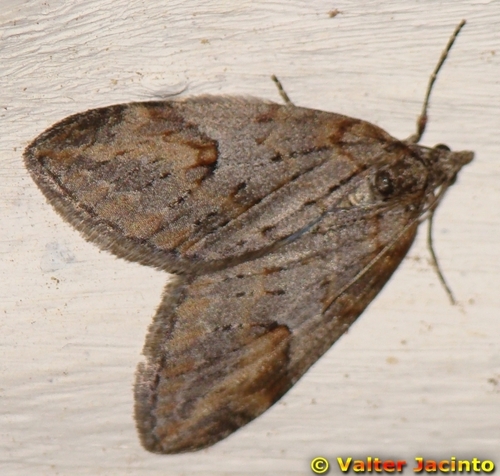
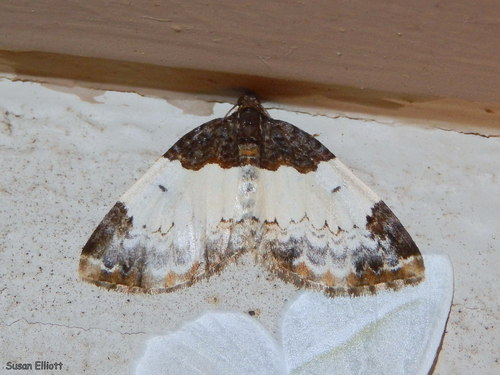
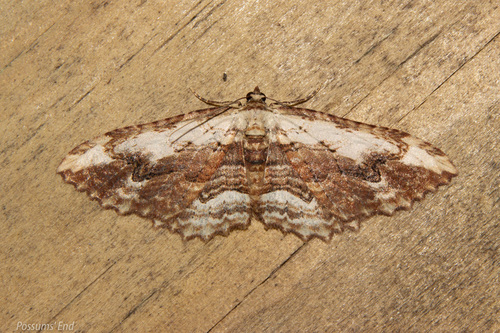
Austrocidaria bipartita Dugdale, 1988 has grey larvae that bear two raised areas on each abdominal segment. Prout provided the first description of the adult of this species: On the forewing, the area anterior to a line running from the wing apex to two-sevenths of the inner margin is light buff, with light fuscous irroration along the costa. The area posterior to this line is drab with fuscous irroration; the light buff postmedial fascia is only visible between veins R and M, and at the inner margin. On the hindwing, the costa and postmedial fascia are broadly light buff, and the subterminal fascia is narrowly light buff. The rest of the wing is drab with fuscous irroration, and is crossed by several thin fuscous fasciae. While this species can be confused with A. anguligera, it can be distinguished by a distinctive dark tooth-like marking located below the middle of the forewing. Females of this species have ochreous-brown wings with white markings. This species is endemic to New Zealand, where it occurs on the North Island, South Island, Stewart Island, and the Poor Knights Islands. The larval host plants of this moth are species in the genus Coprosma, including C. autumnalis, C. macrocarpa, and C. robusta.