About Austrocedrus chilensis (D.Don) Pic.Serm. & Bizzarri
Austrocedrus is a genus of conifer in the cypress family, Cupressaceae. The genus contains only one species: Austrocedrus chilensis, which is native to Valdivian temperate rain forests and the adjacent drier steppe-forests of central-southern Chile and western Argentina, ranging from 33°S to 44°S latitude. In its native range, it is called ciprés de la cordillera or cordilleran cypress. Outside its native area, it is most commonly referred to by its scientific name Austrocedrus, and is also sometimes known as Chilean incense-cedar or Chilean cedar. The generic name translates to "southern cedar".
Austrocedrus chilensis belongs to subfamily Callitroideae, a group of distinct Southern Hemisphere genera linked to Antarctic flora. It is closely related to Libocedrus, a genus native to New Zealand and New Caledonia, and some botanists classify it within Libocedrus under the name Libocedrus chilensis. However, it resembles Libocedrus less than Pilgerodendron, the other South American cypress genus, does.
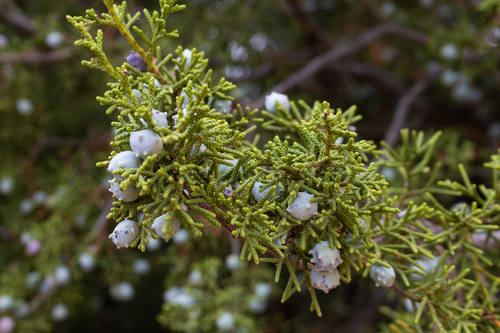
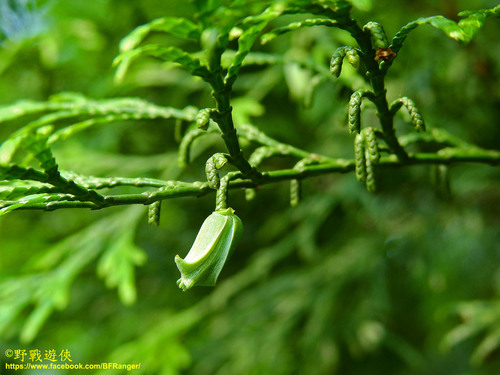
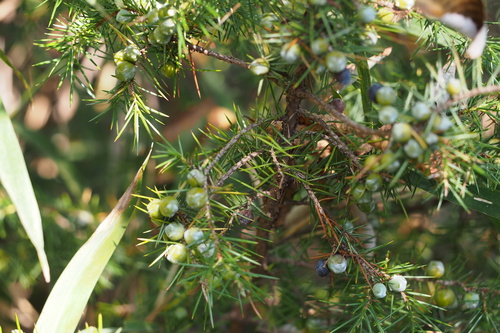
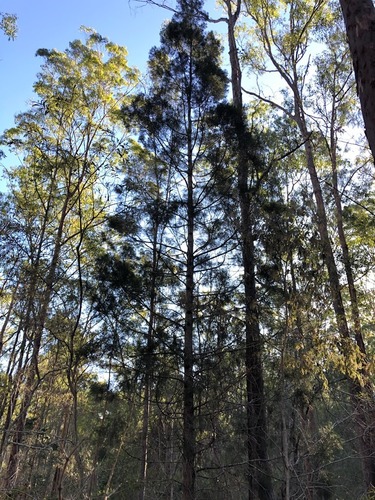
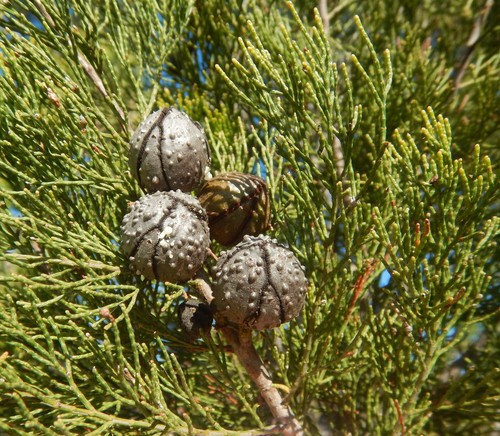
It is a slow-growing, narrowly conical evergreen tree, reaching a height between 10 and 24 meters. Its scale-like leaves are arranged in decussate pairs, and are unequal in size: pairs of larger leaves measuring 4–8 mm alternate with pairs of smaller leaves measuring 2–3 mm, forming a flattened shoot. Each leaf has a noticeable white stomatal stripe along its outer edge. Its cones are 5–10 mm long, with four scales total: two very small sterile basal scales, and two large fertile scales. Each fertile scale holds two winged seeds that are 3–4 mm long. This species is dioecious, meaning male and female cones grow on separate individual plants.
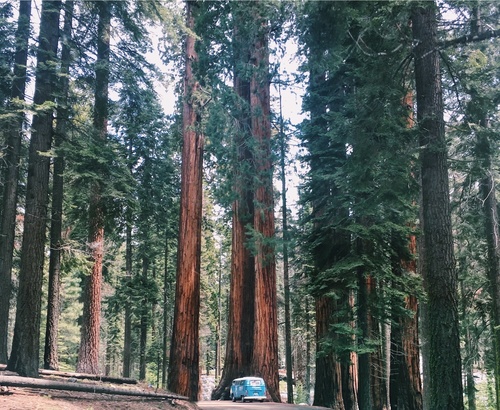
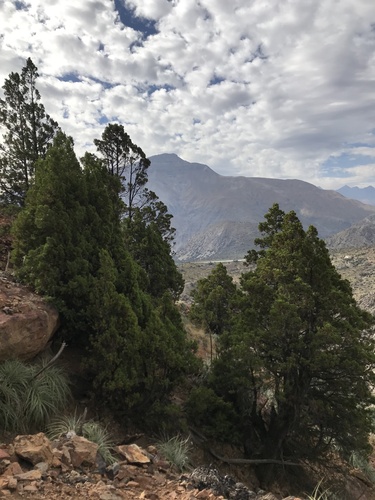
Cordilleran cypress grows in the evergreen mountain forests of the Andes, most often on drier sites near temperate rainforest. It can be found in open pure stands, where it is often locally dominant on the eastern slopes of the Andes in southwestern Argentina, or growing alongside Araucaria araucana and Nothofagus species. Young plants grow best in soil with 8% or higher humidity, and under conditions of intermediate to high solar radiation. It has been introduced to northwest Europe and the Pacific Northwest of North America, where it is occasionally cultivated in botanical gardens.