About Austroblechnum penna-marina subsp. penna-marina
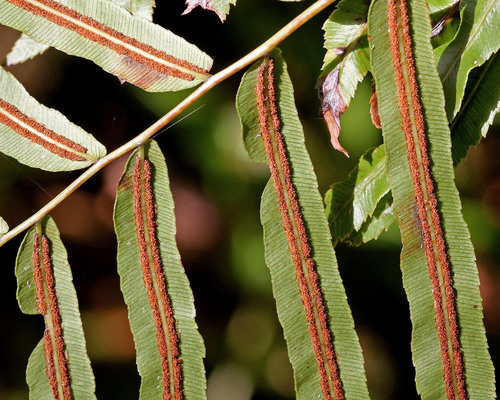
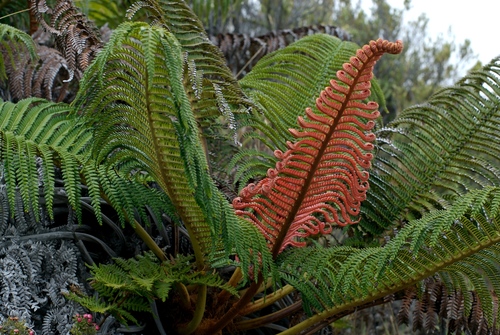
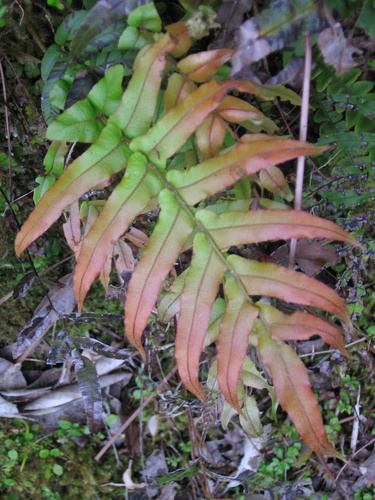
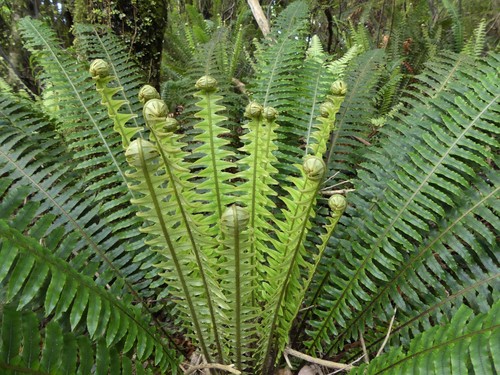
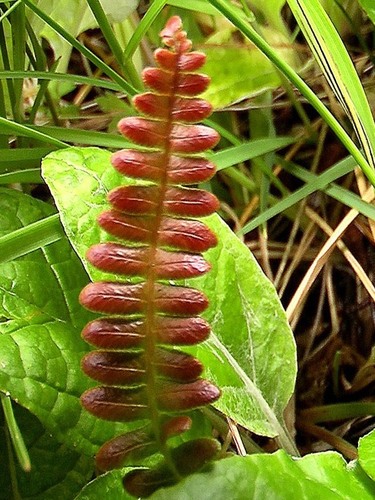
Austroblechnum penna-marina subsp. penna-marina, with the synonym Blechnum penna-marina, has multiple common names: Antarctic hard-fern, Little Hard Fern, Alpine Hard Fern, alpine water fern, and pinque in Chilean Spanish. It is a fern species belonging to the family Blechnaceae. This is a widely distributed fern in the southern hemisphere, with a natural range covering New Zealand, Australia, South America, and the subantarctic Marion Island located halfway between Africa and Antarctica. It has wiry rhizomes and shows strong dimorphism in its fronds. Sterile fronds grow prostrate or semi-erect, reaching up to 400 mm in length, while fertile fronds are longer and held upright. The stipe of sterile fronds is yellow-brown, while the stipe of fertile fronds is purplish-black. Both frond types have pinnatisect laminae with free veins. Sterile fronds bear 12–44 pairs of triangular or oblong pinnae. Fertile fronds bear 10–36 pairs of linear to narrowly oblong pinnae, and tiny sterile flanges replace pinnae at the base of fertile fronds. This fern favors coastal to alpine environments, including open forests, grasslands, subalpine scrub, alpine herb fields, creek beds, river terraces, and rocky herb fields. It grows at altitudes ranging from sea level up to 1900 meters above sea level. The optimal temperature range for its productivity is 6 to 11 degrees Celsius. It is preyed on by endemic alpine grasshoppers including Brachaspis nivalis, Paprides nitidus, and Sigaus australis. Across New Zealand, the species occurs throughout the country, from the North Island to the South Island, and also grows on the Chatham, Stewart, Auckland, Campbell, and Antipodes Islands. In the North Island, it is found from lowland to alpine regions, ranging from Hamilton and East Cape to south Wellington. In the South Island and Stewart Island, it also occurs from lowland to alpine areas; it has been recorded growing at elevations as high as 1900 meters above sea level in the Spenser Mountains, Nelson. Its broad geographic distribution across the southern hemisphere demonstrates its adaptability to diverse habitats and climates.