About Aureolaria pedicularia (L.) Raf. ex Pennell
Taxonomy
Aureolaria pedicularia (L.) Raf. ex Pennell is a species in the genus Aureolaria.
Size
It grows to an average height between 1 foot and 4 feet, with height varying by season.
Parasitic Trait
It is a root hemiparasite, meaning it attaches to the roots of host plants to obtain nutrients. This species selectively parasitizes oaks (Quercus), which are members of the Fagaceae family, targeting oaks as its favored hosts.
Flower Color
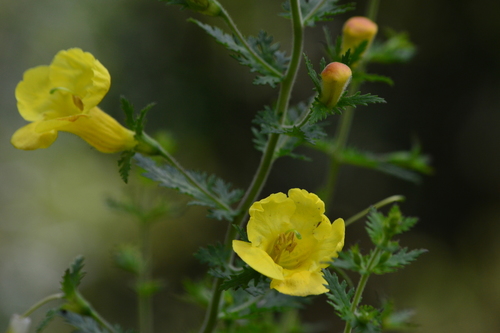
In terms of morphology, Aureolaria pedicularia produces yellow flowers.
Leaf Characteristics
Its leaves are simple (not divided into leaflets), arranged oppositely, with two leaves growing at each node on the stem or branch. The edges of its leaf blades are lobed.
Flower Structure
Its flowers are bilaterally symmetrical, with five fused petals forming a tube, and each flower has four stamens.
Fruit Features
Its fruit is a dry capsule that splits open when ripe, measuring 10–13 mm in length.
Habitat Types
Aureolaria pedicularia grows in terrestrial habitats including cliffs, balds, ledges, forests, grasslands, ridges, rocky slopes, and woodlands.
Growing Conditions
It occurs in areas ranging from partly shady to full sun, and typically grows in dry, sandy soil. It is most commonly found in open oak woods and savannas.
Blooming Period
Its blooming season runs from May to October.
United States Distribution
Within the United States, it is distributed across most of eastern North America, the Great Lakes states, and parts of the Midwest.
Human Use
The Cherokee used Aureolaria pedicularia as an antidiarrheal drug, and deer commonly use it as a food plant.