About Attagis gayi I.Geoffroy Saint-Hilaire & R.Lesson, 1831
Size and Sexual Plumage
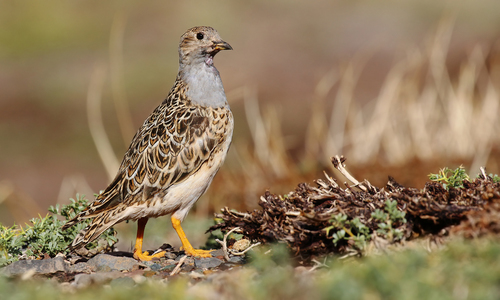
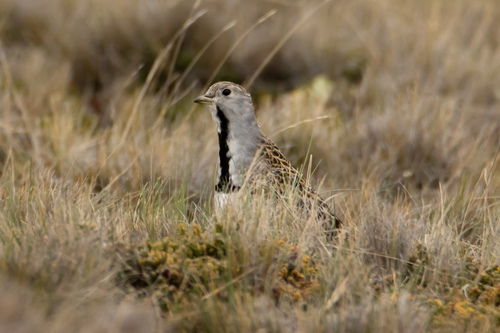
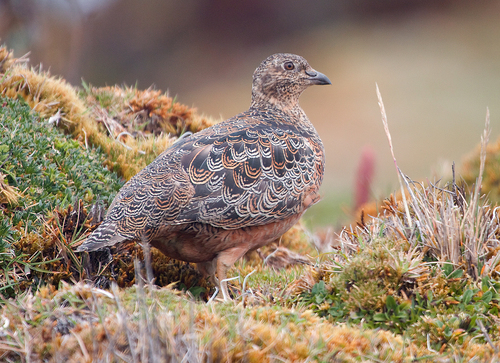
The rufous-bellied seedsnipe (Attagis gayi) measures 27 to 30 cm (11 to 12 in) in length and weighs approximately 280 to 400 g (9.9 to 14 oz). Males and females have identical plumage.
Nominate Subspecies Plumage
The nominate subspecies A. g. gayi has intricate rufous-brown and blackish scalloped patterns on its upperparts, and plain pale pinkish cinnamon underparts.
A. g. latrelillii Plumage
Subspecies A. g. latrelillii has deeper rufous cinnamon coloring on the vent area than the nominate, and a scalloped breast.
A. g. simonsi and Juvenile Plumage
Subspecies A. g. simonsi has darker pinkish cinnamon breast plumage than the nominate, and is paler on the upperparts with finer markings. Juveniles look very similar to adults, but have slightly finer markings on their upperparts.
Subspecies Distribution Overview
Three subspecies of rufous-bellied seedsnipe have distinct distribution ranges.
A. g. latrelillii Range
Subspecies A. g. latrelillii is geographically separated from the other two subspecies, and occurs only on seven high volcanoes in north-central Ecuador.
A. g. simonsi Range
A. g. simonsi ranges from central Peru south through northern Chile and western Bolivia to northwestern Argentina.
Nominate Subspecies Range
The nominate subspecies A. g. gayi ranges from north-central Chile and west-central Argentina south almost to Tierra del Fuego.
General Habitat
The species inhabits alpine terrain in the Andes, often reaching elevations as high as the snow line. It most commonly occurs in boggy and other moist areas, but can also be found in drier, rockier landscapes.
A. g. latrelillii Habitat
Subspecies A. g. latrelillii typically lives in páramo habitat.
Northern Range Elevation
Across the northern half of the species' total range, it is mostly found between 4,000 and 5,500 m (13,100 and 18,000 ft) elevation.
Southern Range Elevation
Further south, it occurs at elevations as low as 2,000 m (6,600 ft), and in the extreme southern part of its range it can be found as low as 1,000 m (3,300 ft).