About Atta mexicana (Smith, 1858)
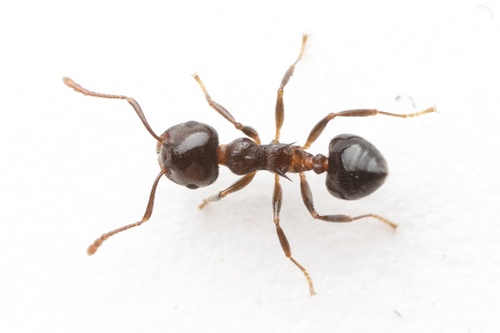
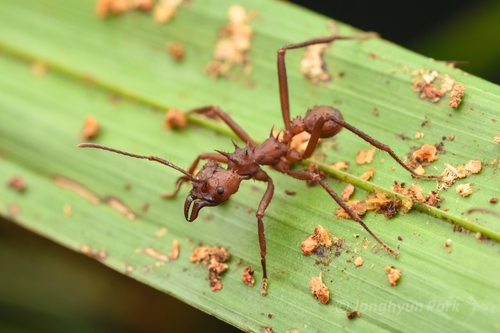
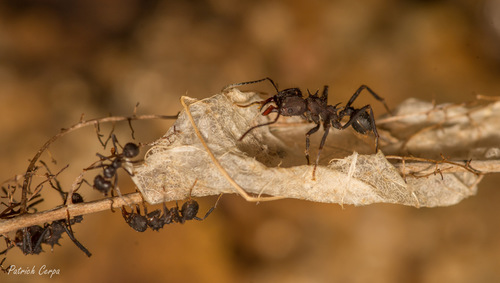
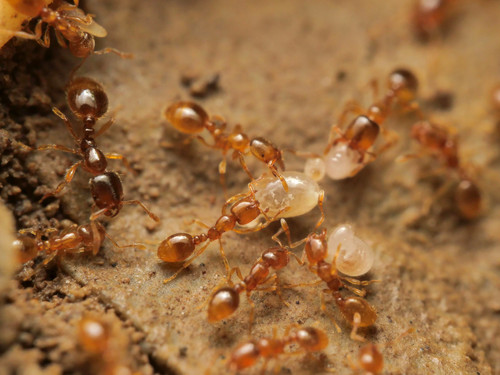
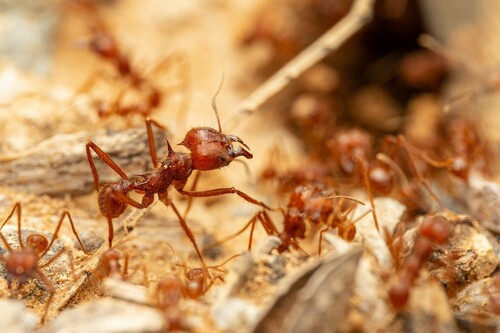
Atta mexicana is a species of leafcutter ant first described by Smith in 1858. Members of this species have distinct size-based castes with consistent dark brown coloration: mature queens are approximately 30 mm long, while workers have short spines. Soldiers are far larger than workers, reaching up to 18 mm in length, and have greater armor coverage with additional short spines. Like other attine ants, A. mexicana workers cut fresh leaves to cultivate the basidiomycete fungus Leucoagaricus gongylophorus (family Agaricaceae), which forms the colony's main food source. Exposure to oleic acid acts as one of the triggers that prompt worker ants to carry dead nestmates away from the colony, a behavior known as undertaking. This ant is distributed across Mexico and the southwestern United States: it is native to Mexico, where it has several regional common names, including hormiga chicatana, hormiga podadora de hoja, desert ant, and mochomo, and its range extends north into the state of Arizona. A. mexicana is a highly adaptive species that thrives in urban environments, including the Mexican city of Puerto Vallarta. Nest densities of this species are very high in many areas, including the resort community of Nuevo Vallarta. Alate queens and males of A. mexicana emerge for their annual nuptial flight at the start of the rainy season, when wet soil triggers the flight. At this time, the ants become extremely abundant as colonies clean their nests and produce new reproductive individuals, making this the primary window for harvesting the species for food across central and southern Mexico. Harvesting typically runs from late May to early June in the state of Chiapas. This species is known by different regional common names across its Mexican range: it is called nucú in Tuxtla Gutiérrez, nacasmá in Chiapa de Corzo, and cocosh in Ocosingo. It is also harvested and eaten in Veracruz, Oaxaca, the mountainous regions of Guerrero, Guanajuato, Puebla, Morelos, and the State of Mexico. Preparation methods vary by region. When served as botanas (snacks), the ants are usually fried in olive oil or toasted on a comal griddle, seasoned with salt, lemon, and hot sauce, and traditionally served alongside the fermented drink Pox. They are also used as a fried filling for tacos. In Maya-speaking regions of Mexico, the ants are cooked into a stew called chilmole. In traditional Mixtec cuisine, A. mexicana is the main ingredient of salsa de chicatanas, a sauce also made with chili pepper, onion, and garlic that is served over cooked meat or cheese tortillas. Multiple regional variations of this sauce exist: the Zoque people of Jamiltepec prepare it with chile de árbol, people in Pinotepa Nacional use coastal chili, and cooks in the Mixteca Poblana region use guajillo chili. In Veracruz, the ants are added to a type of pipián sauce known as tlatonile.