About Atrytone arogos (Boisduval & Le Conte, 1833)
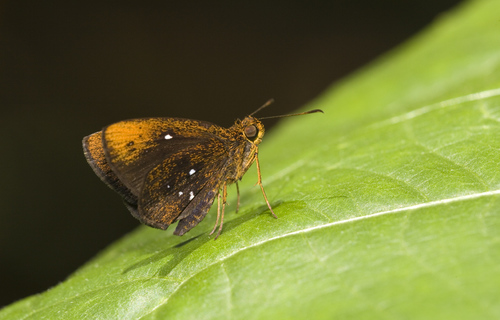
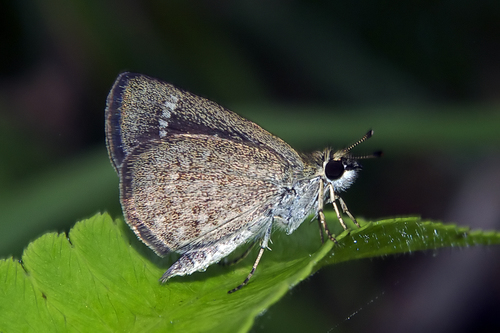
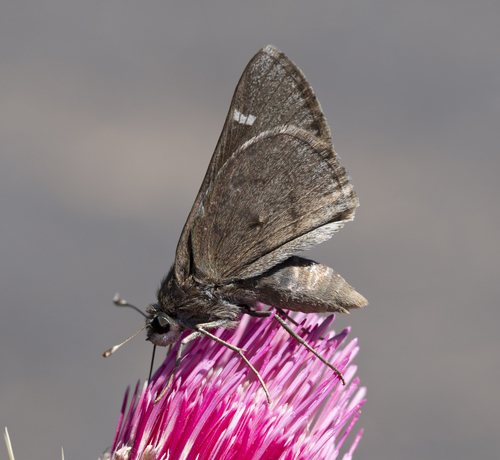
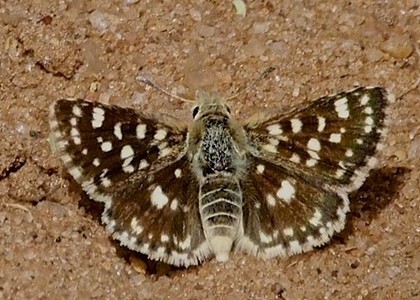
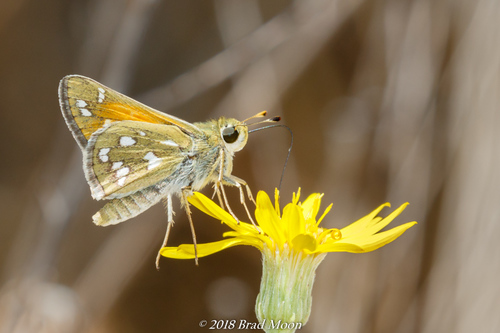
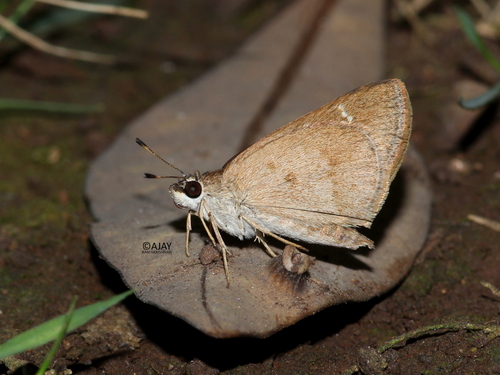
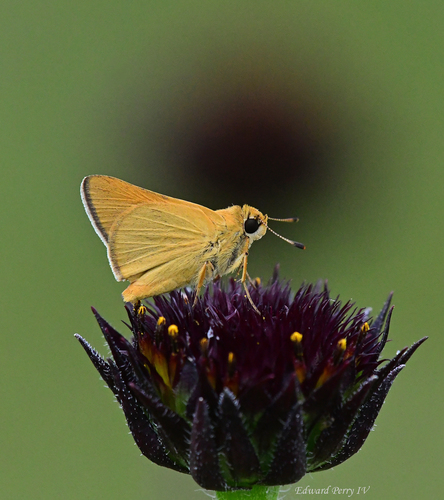
This species is currently accepted under the scientific name Atrytone arogos (Boisduval & Le Conte, 1833). Atrytone arogos often found in the southeastern United States physically resembles Atrytone delaware, which occurs across the eastern United States. Adult Atrytone arogos have bright yellow wings with a dark blackish-brown border, and their wingspan measures 2.9 to 3.7 cm. Male Atrytone arogos butterflies have thinner black borders than female Atrytone arogos butterflies. The underside of this species’ wings is paler yellow than the upper surface of the wings. During its metamorphosis, Atrytone arogos goes through five instar stages. After completing all metamorphosis stages, the adult butterfly has a physical appearance similar to that of the fifth instar. Atrytone arogos is distributed in the Eastern and Midwestern United States, and populations usually occur a few hundred kilometers away from the Atlantic Ocean or Gulf of Mexico. It generally forms isolated colonies in peninsular Florida, the Gulf Coast, south-east North Dakota, southern Texas, and the Colorado Front Range. Stray individuals can be found from New Jersey to northern Arkansas. The species is considered possibly extirpated from New York, Minnesota, Wyoming, Illinois, North Carolina, South Carolina, Alabama, Iowa, Georgia, Montana, and Pennsylvania. Atrytone arogos lives in grasslands, prairies, flat woods, and pine savannas. These habitats are threatened by wildfire, improper land management, and lack of appropriate land management, which destroys viable habitat. This threat is a major factor that has led to the species’ extirpation in some areas.