About Atriplex hymenelytra (Torr.) S.Watson
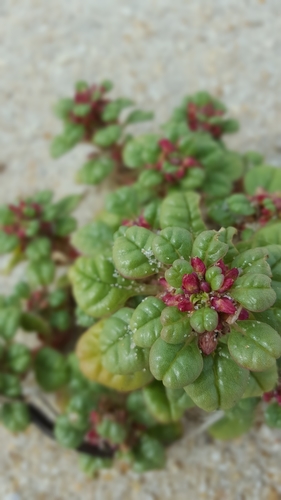
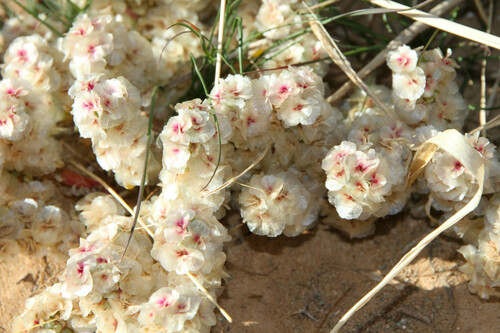
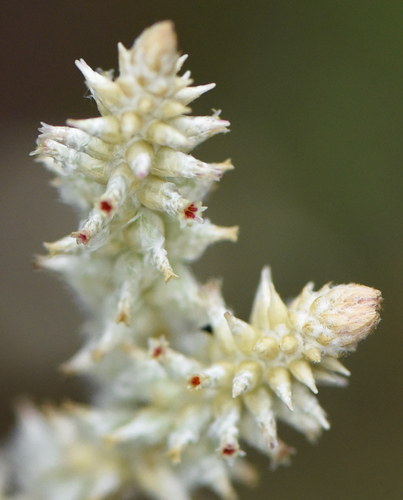
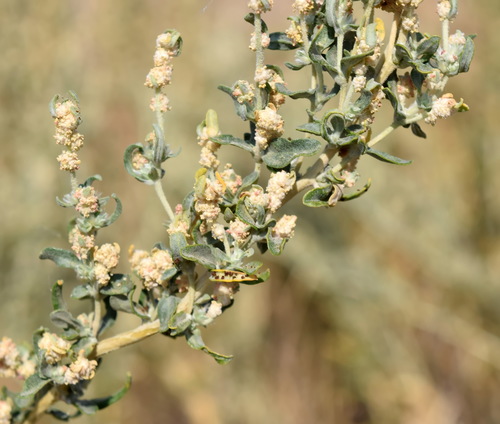
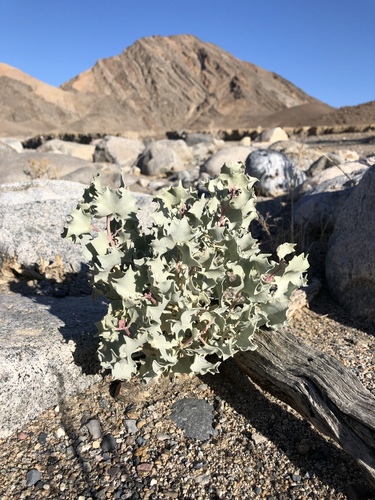
Atriplex hymenelytra, commonly known as desert holly, is a silvery-whitish-gray shrub in the amaranth family Amaranthaceae, native to desert regions of the southwestern United States. It is the most drought-tolerant saltbush in North America. It can survive on the hottest, driest sites in Death Valley, and remains active for most of the year. Its common name comes from the shape of its leaves, which are similar to holly leaves, although desert holly is not related to true holly. Its toothed leaves and small reddish fruits give it a general resemblance to the unrelated European holly. Desert holly grows in alkaline sites, including desert dry washes and creosote bush scrub, across the Mojave Desert and Sonoran Desert, extending south to Baja California. In the Sonoran Desert, it grows in northwestern Mexico, western Arizona, southeastern California, and southwestern Utah, at elevations ranging from 250 to 3,900 feet (76 to 1,189 m). When growing in dry soil, it can survive temperatures as low as −10 °F (−23 °C), but it will die if the ground freezes. Historically, dried and dyed desert holly plants were used for Christmas decorations. It is not a protected species in most of its habitats.