About Atractomorpha similis Bolívar, 1884
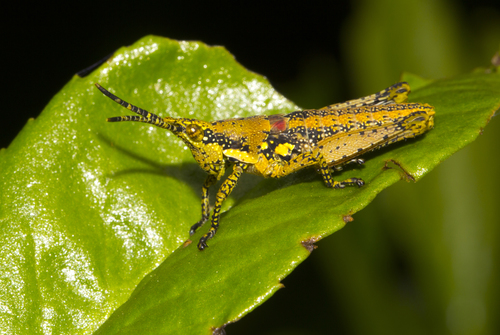
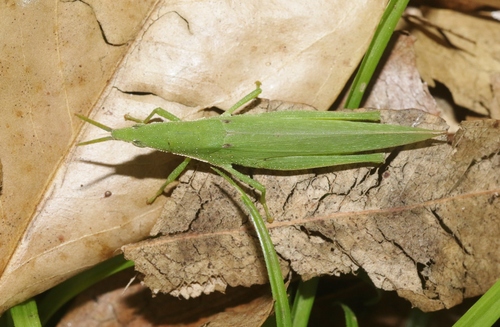
Atractomorpha similis Bolívar, 1884 is a grasshopper species that averages 40 millimetres (1.6 inches) in length. It has a compact body tapered at both the head and abdomen. This grasshopper avoids predators by using camouflage, and rarely attempts to run or fly away when threatened. Like other species in its genus Atractomorpha, A. similis has low amounts of heterochromatin, though the total amount of this DNA varies between different populations. The species has very high chromosome polymorphism, with each chromosome existing in 10 to 50 different morphs. Male A. similis from Australia carry between 1 and 10 extra copies of chromosome A9, and having one extra copy is the most common variant found in natural populations. A. similis occurs in both tropical and temperate regions. It is native to northern and eastern Australia, where it occurs mostly in coastal areas, but can also be found inland in locations with sufficient humidity. It has been recorded in New South Wales, Fraser Island, Western Australia, and northern Queensland. It is the most common of the three species of the genus Atractomorpha found in Australia; the other two species are A. australis, which prefers cooler environments, and A. hypoestes, which is restricted to the Arnhem Land escarpment. This species has also been found in southern New Guinea, the Moluccas, and Timor. It has been reported from the Lesser Sunda Islands, but researcher Keith McE. Kevan argues that these reported specimens are most likely actually A. crenulata. A. similis lives in well-watered areas such as gardens, and is associated with semi-permanent or permanent standing water. Its populations are generally small and discrete. In Australia, A. similis is considered a garden pest because it feeds on garden leaves.