About Athrotaxis cupressoides D.Don
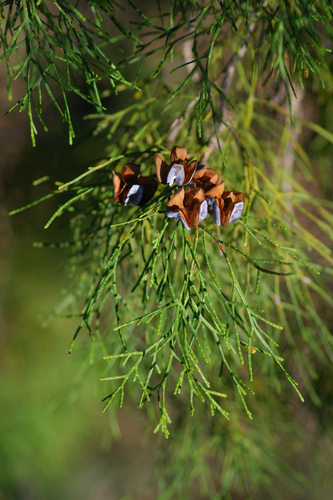
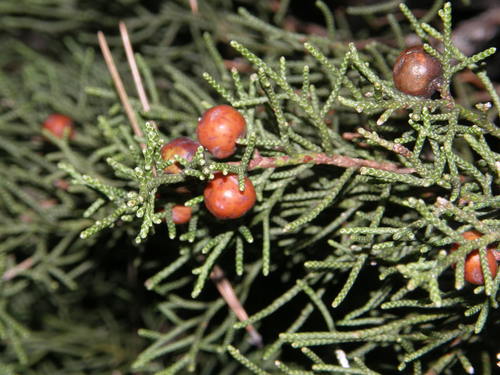
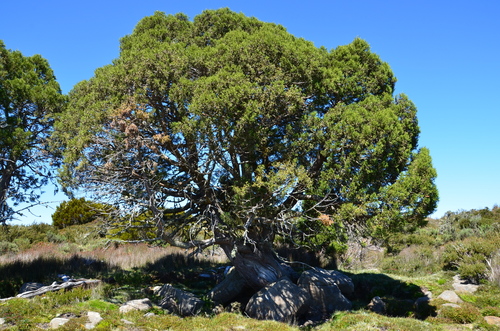
Athrotaxis cupressoides D.Don is a species in the genus Athrotaxis. Like all other members of this genus, its leaves are single-veined and arranged in a spiral pattern. What makes A. cupressoides unique is that its leaves measure 2–3 mm in both length and width, overlapping and closely pressing against stems, which gives the foliage a scale-like appearance. It produces two types of woody cones, which function as its gametophyte structures. These cones mature around six months after pollination, and typically stay attached to the tree for up to one year. Female cones are spherical, with pointed bract scales, and measure 12–15 mm in diameter. Male cones are much smaller, at 3–5 mm in diameter. This species is commonly called pencil pine, a name that comes from its growth form: it is an evergreen conical tree that can grow up to 20 m tall, with trunks reaching up to 1.5 m in diameter. This distinct conical shape is most noticeable when the tree grows in subalpine or open alpine vegetation, though it can also grow as a rainforest tree. Its bark is light brown and fibrous, and becomes more furrowed as the tree ages. A. cupressoides produces root suckers up to 50 meters away from the main trunk, which indicates it has a very extensive root system. The genus name Athrotaxis comes from the Greek words athros, meaning 'crowded', and taxis, meaning 'arrangement'. The specific epithet cupressoides means 'resembling cypress' in Greek. Athrotaxis cupressoides is endemic to Tasmania, Australia. It is found primarily in the central and western mountain areas of the island, between 700 and 1300 m above sea level. It often grows around tarns or damp depressions, on peaty or wet rocky soils. Documented locations include the Central Plateau, the Great Western Tier, Mt. Field National Park, western mountains such as Cradle Mountain, and scattered populations across southern Tasmania. It most commonly occurs in subalpine or open alpine vegetation. In montane cool temperate rainforests, A. cupressoides is the dominant species. These rainforest environments typically have a canopy made up of A. cupressoides and A. selaginoides (King Billy pine), an understory containing Nothofagus cunninghamii (myrtle beech) and Phyllocladus aspleniifolius (celery-top pine), a shrub layer of Olearia pinifolius (prickly daisybush) and Richea species, and ground cover of Astelia alpina (pineapple grass), Empodisma minus (spreading rope rush) and Gleichenia alpina (alpine coral fern). Where both A. cupressoides and A. selaginoides grow together, a third hybrid species, Athrotaxis × laxifolia, can occasionally form, since the two parent species are very closely related. There are no recorded commercial or traditional uses for Athrotaxis cupressoides, as its gnarled trunks are not suitable for timber use. However, the species is occasionally cultivated and sold as an ornamental plant.