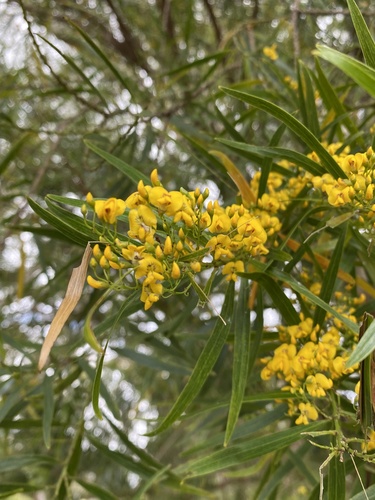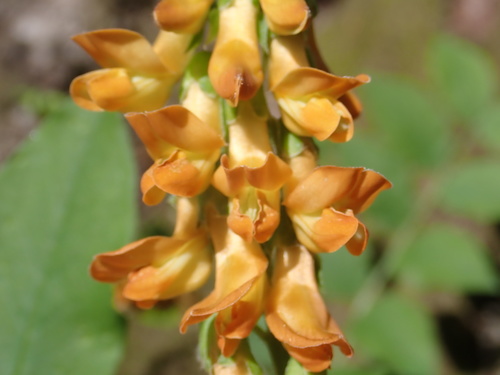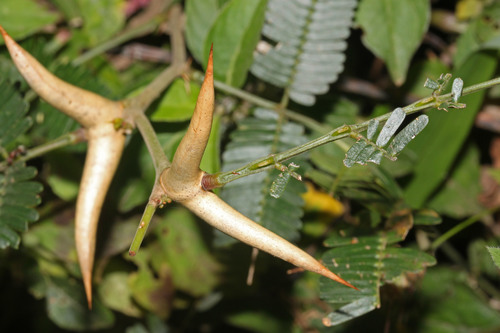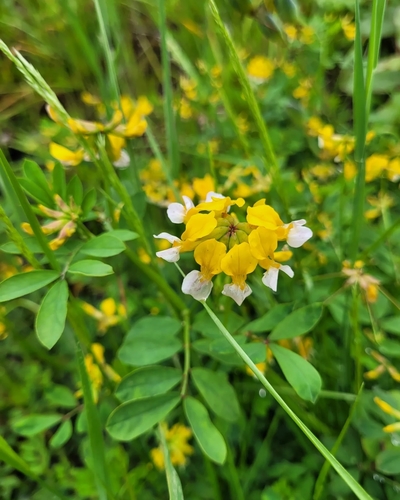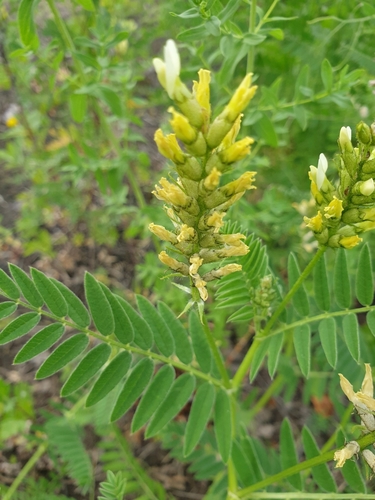
About Astragalus cicer L.
Astragalus cicer L., commonly known as cicer milkvetch, grows rhizomes (also called creeping roots), which are extended horizontal stems that grow underground and continue increasing in size as the plant ages. This makes the plant grow more vigorous over time. Cicer milkvetch spreads through both its rhizomatous growth and sexual reproduction via seeds. Seeds develop inside pods and have a very thick seed coat, called an integument, which requires scarification for germination to occur. The thick seed coat acts as a barrier that prevents microbial invasion, and its thickness also reduces the seed's ability to absorb water. This allows the seed to remain dormant for longer periods. The plant's green stipules are easily visible, and its leaves are alternate and compound. Cicer milkvetch grows best in the Rocky Mountain region of the United States, but it also thrives in coastal areas, particularly performing well on the coasts of Alaska. Due to its high drought tolerance, it can survive in dryland areas of Idaho, Montana, and Wyoming that receive less than 360 mm (14 inches) of annual rainfall. In its natural range, cicer milkvetch grows at forest edges, in meadows, and alongside streams, and it also spreads readily along roadsides. It can grow in a wide variety of soil textures including clay and sand, and it proliferates particularly well in coarsely textured soil. Excessive salt is harmful to this plant, and it grows poorly in soils with a pH outside the 6.0 to 8.1 range. Despite these limitations, it persists very well in nutrient-poor or disturbed soils. While it grows exceptionally well in higher temperatures, it grows slowly at temperatures between 7 and 18 °C. Drought tolerance is a key durable trait of the species. To acquire sufficient nitrogen, cicer milkvetch forms a mutualistic relationship with rhizobia bacteria.