About Asthenes wyatti (P.L.Sclater & Salvin, 1871)
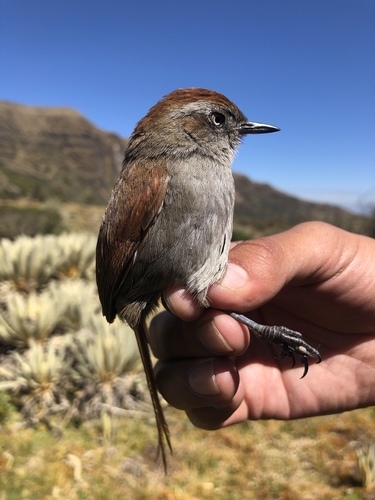
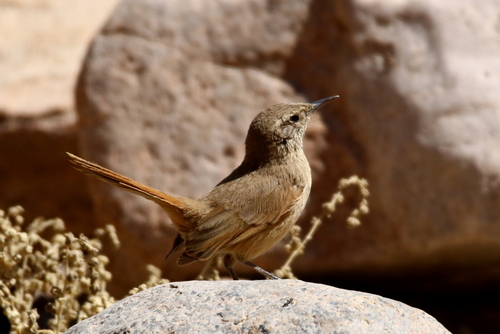
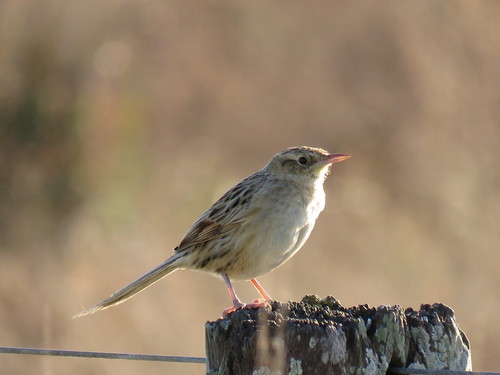
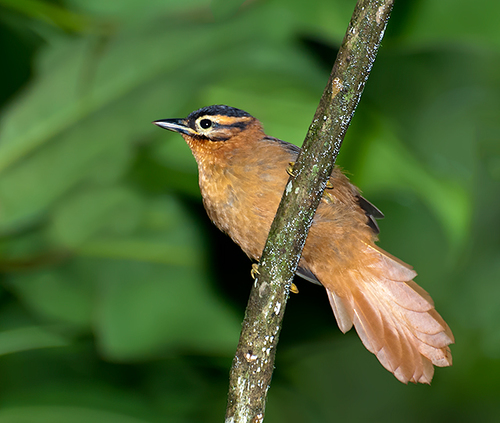
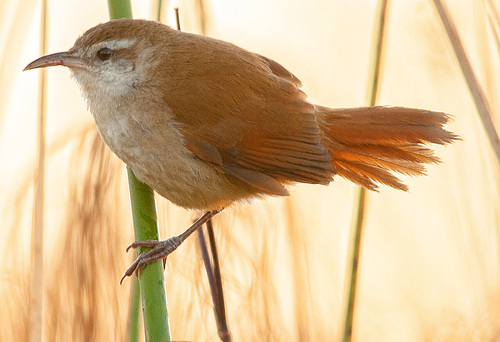
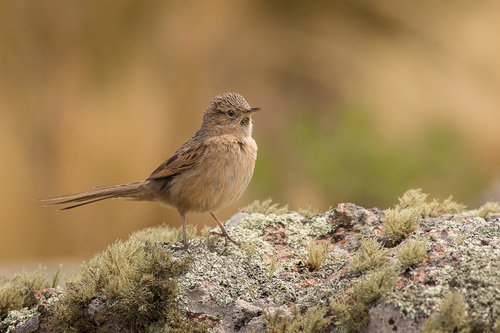
Scientific name: Asthenes wyatti (P.L.Sclater & Salvin, 1871), commonly called the streak-backed canastero. The streak-backed canastero measures 16 to 18 cm (6.3 to 7.1 in) in length and weighs 17 to 25 g (0.60 to 0.88 oz). The sexes share identical plumage. Adults of the nominate subspecies A. w. wyatti have a narrow buff supercilium on an otherwise grizzled face patterned with light brown and blackish tones. Their crown, nape, back, rump, and uppertail coverts are olive-brown. Their forehead has dark brown flecks, which become thin streaks on the crown and nape, and wider streaks on the back. Their wings are dark fuscous, with rufous edges on the coverts, tawny-rufous edges on the primaries, and rufous bases on the secondaries; the rufous bases of the secondaries form a distinct wingband. Their central three pairs of tail feathers are dark fuscous brown, with progressively more rufous on their outer webs. The remaining tail feathers are mostly rufous, with some dark fuscous marking on their inner webs. Their chin is tawny-buff, their upper throat is light orange-rufous, and their lower throat is pale brownish gray; both throat sections have thin dark brown streaks. Their breast is light brown with almost invisible dark brown flecks and spots, their belly is bright tawny-buff, and their flanks and undertail coverts are rufescent buff. Other subspecies differ from the nominate and from each other as follows: A. w. sanctaemartae has wider but less contrasting back streaks, a darker orange throat, and dingy grayish buff underparts; A. w. phelpsi has light brown underparts and dark chestnut-brown outer tail feathers instead of rufous; A. w. mucuchiesi has less brownish upperparts, with grayer edges to the streaks; A. w. aequatorialis has grayer or more rufous upperparts and a blacker tail; A. w. azuay has buffier underparts than A. w. aequatorialis, and almost entirely rufous wings; A. w. graminicola has tawny underparts with only a faint hint of streaks; A. w. sclateri has pale gray-brown upperparts with blackish streaks edged in rufous, dark brown wing coverts with rufous-chestnut edges, bright rufous bases to flight feathers with the rest of the feather brown with rufescent edges, dark gray-brown central tail feathers and the rest dark fuscous with progressively more rufous toward the tips, a whitish throat with a faint pale rufous center, and tawny-buff underparts; A. w. punensis has darker and grayer upperparts with less streaking than A. w. sclateri, and rufous only at the tail feather tips; A. w. cuchacanchae has paler, more heavily streaked upperparts and paler, less tawny underparts than A. w. sclateri, as well as paler rufous on the flight feathers; A. w. lilloi has slightly darker upperparts than A. w. cuchacanchae with a rufescent tinge and heavier streaks, and rufous on the flight feathers that is intermediate between A. w. cuchacanchae and A. w. sclateri; A. w. brunnescens is essentially identical to A. w. sclateri. Subspecies A. w. graminicola and A. w. punensis intergrade in the area around Lake Titicaca on the Peru-Bolivia border. The subspecies of the streak-backed canastero have the following distributions: A. w. wyatti occurs in Norte de Santander Department, in Colombia's Eastern Andes; A. w. sanctaemartae occurs in the isolated Sierra Nevada de Santa Marta in northern Colombia; A. w. phelpsi occurs in Serranía del Perijá, which straddles the Colombia-Venezuela border; A. w. mucuchiesi occurs in Mérida and Trujillo states in western Venezuela; A. w. aequatorialis occurs in the western Andes of central Ecuador, between Carchi and Cotopaxi provinces; A. w. azuay ranges from Azuay Province in southern Ecuador south through Zamora-Chinchipe and northern Loja into the Piura, Cajamarca, and Ancash departments of northern Peru; A. w. graminicola occurs in the Andes of Peru from the Department of Junín south and east into La Paz Department in western Bolivia; A. w. punensis occurs in the Lake Titicaca basin in Bolivia's La Paz Department and Peru's Department of Puno; A. w. cuchacanchae ranges from Bolivia's Cochabamba Department south through Potosí Department into Salta Province in northwestern Argentina; A. w. lilloi occurs in Catamarca, Tucumán, and La Rioja provinces in northwestern Argentina; A. w. sclateri occurs in Sierra de Córdoba in Córdoba Province, central Argentina; A. w. brunnescens occurs in Sierra de San Luis in San Luis Province, central Argentina. The streak-backed canastero inhabits páramo and puna grasslands, most often arid types, that are characterized by rock outcroppings, and usually (but not always) contain tall tussock grass and low shrubs. In the southern part of its range, it also occurs locally in Polylepis woodlands that have tussock grass ground cover. In terms of elevation, northern populations (found from Venezuela to central Peru) mostly range between 3,000 and 4,500 m (9,800 to 14,800 ft), but occur locally as low as 2,400 m (7,900 ft) and as high as 5,000 m (16,000 ft). Southern populations, often called "puna canastero", mostly occur between 2,000 and 4,000 m (6,600 to 13,100 ft), and range locally down to 1,800 m (5,900 ft).