About Asthenes humicola (Kittlitz, 1830)
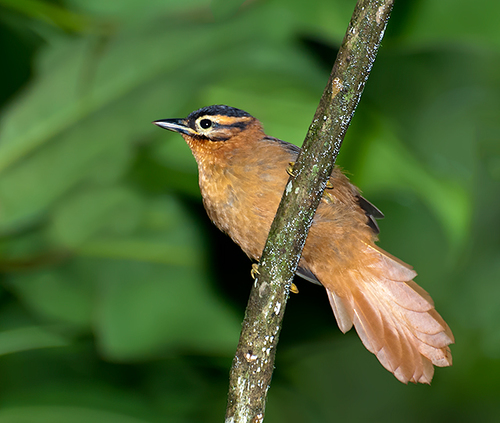
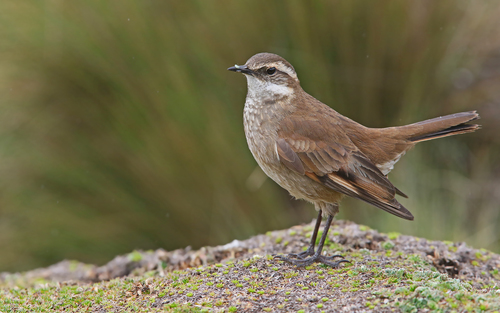
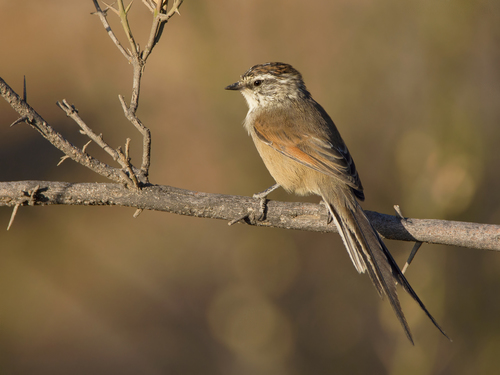
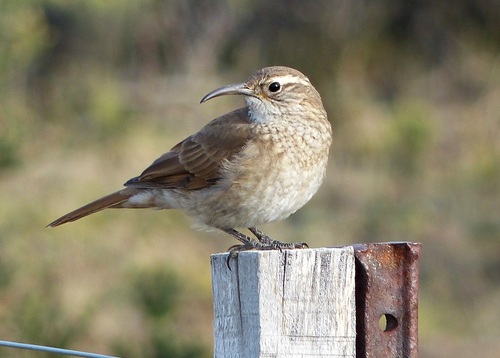
The dusky-tailed canastero (scientific name Asthenes humicola, originally described by Kittlitz in 1830) measures 14 to 16 cm (5.5 to 6.3 in) long and weighs 18 to 24 g (0.63 to 0.85 oz). Males and females have identical plumage. Adults of the nominate subspecies have a narrow whitish supercilium on an otherwise dark gray-brown face marked with faint paler streaks. Their crown is dark brown, their back is a slightly paler brown, and their rump and uppertail coverts are paler brown with a rufescent tinge. Their wings are mostly the same brown as the back, with dull rufous coloration on the shoulder. The central feathers of the tail are also mostly the same brown as the back, with dark fuscous tips; the rest of the tail feathers are fuscous blackish. Their throat is whitish with black flecks, their upper breast is whitish with black streaks, their lower breast is brownish gray with faint pale streaks, their belly is paler unstreaked brownish gray, their flanks are rufescent brown, and their undertail coverts are darker rufous-brown. Their iris is dark brown, their maxilla is dull black, their mandible is bluish gray with a black tip, and their legs and feet range from greenish to gray. Juveniles have a more rufous rump than adults, with less streaking on the underparts and more rufescent coloration on the tail. Compared to the nominate subspecies, subspecies A. h. goodalli has more streaks on the face, a darker crown, less visible streaks on the breast, and brighter cinnamon color on the shoulder, flanks, and undertail coverts. Subspecies A. h. polysticta is very similar to the nominate, but has duller brown flanks and undertail coverts, and more spotting on the underparts. The dusky-tailed canastero is endemic to Chile. Subspecies A. h. goodalli is the northernmost taxon, found in the southwestern part of Chile's northern Antofagasta Region. The nominate subspecies occurs from the Atacama Region south into the northern part of the Maule Region. At least one historical record from western Argentina leads the International Ornithological Committee to include "Argentina (?)" as part of the species' range, but this record has not been accepted by the South American Classification Committee of the American Ornithological Society or the Clements taxonomy. Subspecies A. h. polysticta is found from southern Maule Region south to the Araucanía Region. The habitat of the dusky-tailed canastero varies across its geographic range. In the northern part of its range, it occurs in shrub-dotted desert and the edges of coastal dry forest, and very locally inland in vegetated valleys. In the central and southern parts of its range, it extends from near the coast up to about 1,800 m (5,900 ft) in the piedmont foothills. There, it inhabits semi-arid steppe landscapes with abundant bushes, as well as forest edges. The species shuns populated areas across its entire range.