About Asthenes hudsoni (P.L.Sclater, 1874)
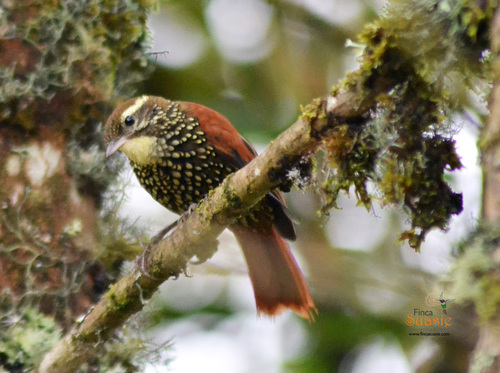
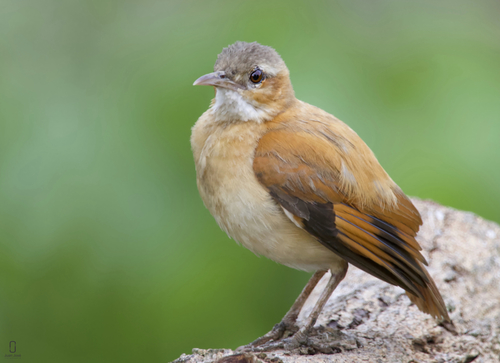
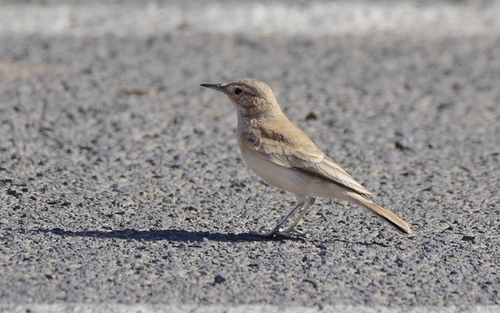
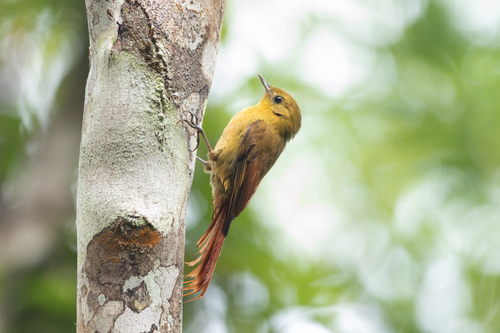
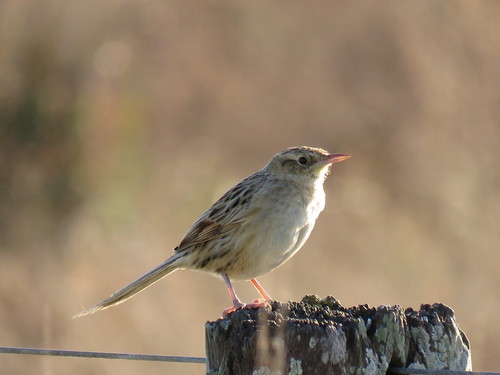
Hudson's canastero, Asthenes hudsoni, is approximately 18 centimeters (7.1 inches) long. It is one of multiple streaked canastero species that have drab plumage with dark stripes on their upperparts, and it has a long bill. Males and females of this species have identical plumage patterns. Adults have a narrow pale buff supercilium on a face that is otherwise sandy brownish. Their crown and upperparts are sandy brown with prominent blackish and silvery streaks. The greater coverts of their wings are dark brown with whitish tips; their median and lesser coverts are dark brown with wide rufous edges. Their flight feathers are dark fuscous, with whitish-tawny bases on the primaries and tawny-rufous bases on the secondaries. Their tail is dusky, with noticeable silvery buff edges on each feather. Their chin is whitish, often with a yellow tinge, and sometimes with an orange-rufous tinge. Their throat, breast, and belly are buff, with a richer buff tone on their sides, flanks, and undertail coverts. Their flanks have blackish streaks. Their iris is light brown, their maxilla is fuscous black, their mandible is pale horn to gray with a blackish tip, and their legs and feet are light brownish. Juveniles have blackish-brown streaks on their breast and sides. Hudson's canastero is distributed in southeastern far southern Brazil's Rio Grande do Sul state, Uruguay, and eastern Argentina, where it ranges from Santa Fe and Entre Ríos provinces south to Buenos Aires Province. Records of the species from Chubut and Rio Negro may correspond to a population that is now extinct. It lives in temperate grasslands that are usually located near both fresh and brackish marshes. It prefers areas with tall grasses such as Paspalum quadrifarium and sedges, interspersed with short turf or bare ground. Its elevational range extends from sea level up to 950 meters (3,100 feet).