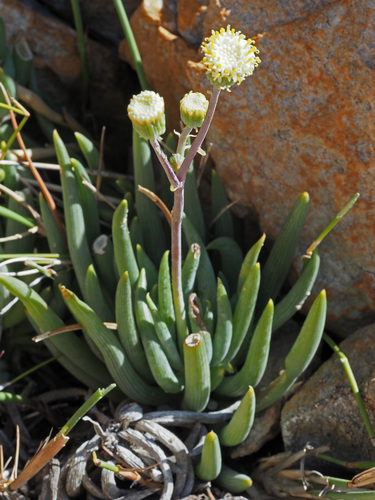
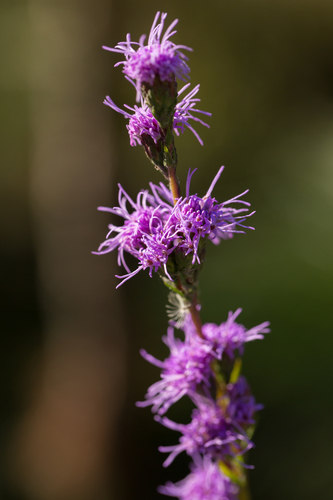
About Asteraceae
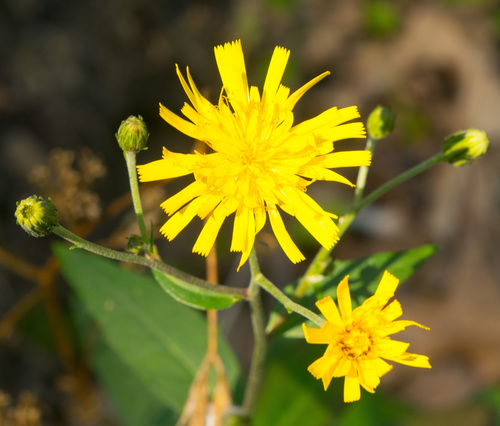
Members of the Asteraceae plant family are mostly herbaceous plants, though some are shrubs, vines, and trees such as Lachanodes arborea. Asteraceae species can generally be easily distinguished from other plants by their unique inflorescence and other shared traits, including the joined anthers of the stamens. Even so, identifying genera and species within some groups, such as Hieracium, is famously difficult, an example of this being the well-known case called the "damned yellow composite".
Asteraceae species have a very widespread distribution, occurring from subpolar to tropical regions across a wide range of habitats. They are found on every continent except Antarctica, and most grow in hot desert and cold or hot semi-desert climates. They are especially abundant in tropical and subtropical regions, particularly in Central America, eastern Brazil, the Mediterranean, the Levant, southern Africa, central Asia, and southwestern China. The largest share of the family's species grow in the arid and semi-arid regions of subtropical and lower temperate latitudes. Overall, the Asteraceae family makes up 10% of all flowering plant species worldwide.
Asteraceae are especially common in open, dry environments. Most members of the family are pollinated by insects, which makes them valuable for attracting beneficial insects, but wind pollination (anemophily) also occurs in genera like Ambrosia and Artemisia. This family includes many apomictic species. Seeds are normally dispersed while still attached to their fruiting body, called a cypsela. Wind dispersal (anemochory) is very common, aided by a hairy structure called a pappus. Another common dispersal method is epizoochory, where the dispersal unit (either a single cypsela like in Bidens, or an entire capitulum like in Arctium) has hooks, spines, or other structures that attach to the fur or feathers of animals, or even to human clothing, to later fall off far from the parent plant.
Some Asteraceae members are economically important as weeds. In the United States, notable examples include Senecio jacobaea (ragwort), Senecio vulgaris (groundsel), and Taraxacum (dandelion). A number of species are invasive in certain regions, most often introduced through human activity. These invasive species include various tumbleweeds, Bidens, ragweeds, thistles, and dandelion. Dandelion was introduced to North America by European settlers, who used its young leaves as a salad green. Several species in the family are toxic to grazing animals.
Asteraceae is an economically important plant family, that provides a range of products including cooking oils, leaf vegetables such as lettuce, sunflower seeds, artichokes, sweetening agents, coffee substitutes, and herbal teas. Multiple genera are horticulturally important, including pot marigold (Calendula officinalis), Echinacea (coneflowers), various daisies, fleabane, chrysanthemums, dahlias, zinnias, and heleniums. Many species are used in herbal medicine, including Grindelia, yarrow, and numerous others.
Commercially important food crops in the Asteraceae family include Lactuca sativa (lettuce), Cichorium (chicory), Cynara scolymus (globe artichoke), Helianthus annuus (sunflower), Smallanthus sonchifolius (yacón), Carthamus tinctorius (safflower), and Helianthus tuberosus (Jerusalem artichoke). Multiple species are used as herbs and in the preparation of herbal teas and other beverages. For example, chamomile is produced from two different species: the annual Matricaria chamomilla (German chamomile) and the perennial Chamaemelum nobile (Roman chamomile). Calendula, also known as pot marigold, is grown commercially for use in herbal teas and potpourri. Echinacea is used to make a medicinal tea. The wormwood genus Artemisia includes the species used to make absinthe (A. absinthium) and tarragon (A. dracunculus). Winter tarragon (Tagetes lucida) is commonly grown and used as a tarragon substitute in climates where common tarragon cannot survive.
Many members of the family are grown as ornamental plants for their flowers, and some are important commercial crops for the cut flower industry. Common examples include Chrysanthemum, Gerbera, Calendula, Dendranthema, Argyranthemum, Dahlia, Tagetes, Zinnia, and many others. Many species in this family have medicinal properties and are used as traditional antiparasitic medicine.
Members of the family are also commonly studied in medical and phytochemical research, because the sesquiterpene lactone compounds they contain are a major cause of allergic contact dermatitis. Allergy to these compounds is the leading cause of allergic contact dermatitis in florists working in the United States. Pollen from ragweed (Ambrosia) is one of the main causes of hay fever in the United States.
Asteraceae are also used for a number of industrial purposes. French Marigold (Tagetes patula) is a common ingredient in commercial poultry feed, and its oil is extracted for use in cola and the cigarette industry. Species in the genera Chrysanthemum, Pulicaria, Tagetes, and Tanacetum have useful insecticidal properties. Parthenium argentatum (guayule) is a source of hypoallergenic latex. Several members of the family produce large amounts of nectar, and are useful for assessing pollinator populations during their blooming period. Centaurea (knapweed), Helianthus annuus (domestic sunflower), and some species of Solidago (goldenrod) are major honey plants for beekeepers. Solidago produces pollen with a relatively high protein content, which helps honey bees survive through the winter.