About Astelia graminea L.B.Moore
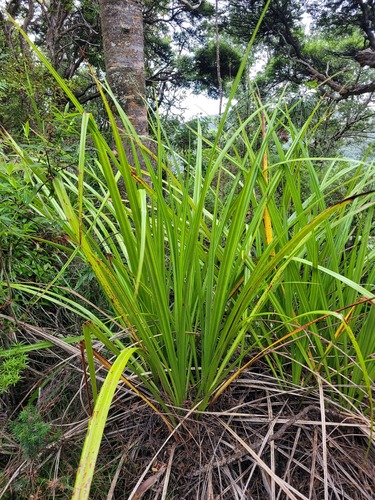
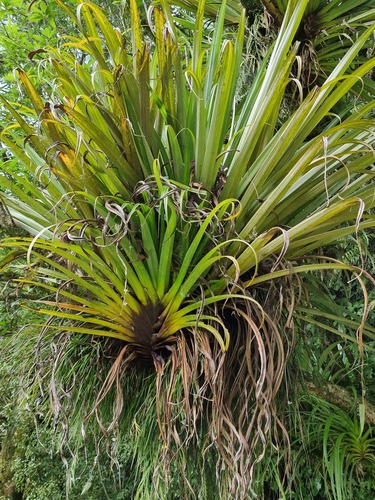
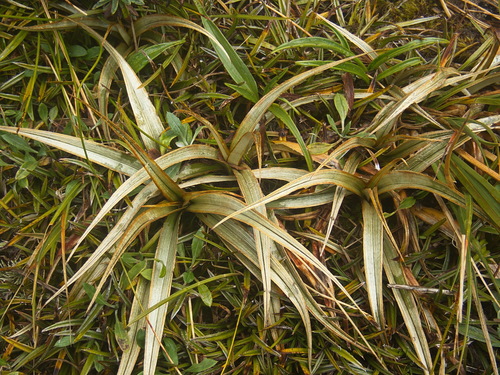
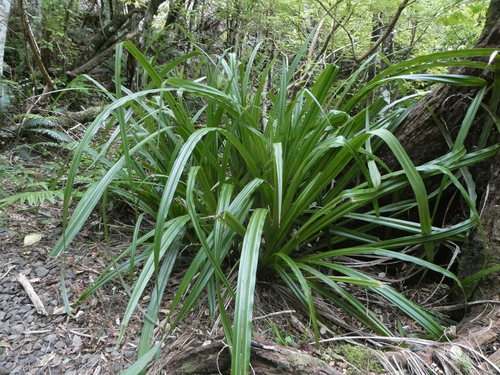
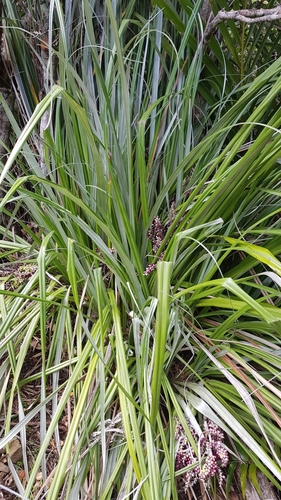
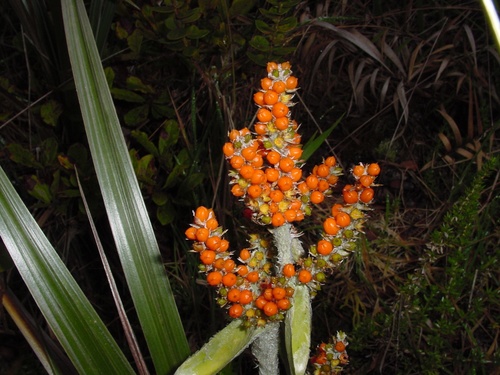
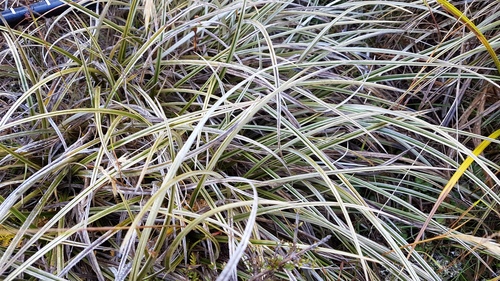
Astelia graminea has a grass-like appearance without forming tufts, which makes it easy to identify in the field. Despite the genus name Astelia meaning 'stemless', this species does have a stem, which measures approximately 1cm in diameter. Long, grass-like leaves with a prominent deep keel spread evenly from this stem. One side of the leaves is brown, while the other is buff-colored and covered in a felted texture. Flowers of this species may be green, red, or pink, and they bloom in January. Orange fruits develop from March through April. This species is a perennial plant. The key characters used to distinguish this species from related plants in its original description are: narrow leaf blades, mostly around 1 cm wide, dull brown on the upper (adaxial) surface, fewer than 6 nerves on each side of the midrib; diffuse, grass-like growth habit caused by lateral shoots developing in the axils of many leaves; a simple panicle, with each spathe subtending just one raceme; fruit that is nearly twice as long as it is broad. Astelia graminea is found only in the northern South Island of New Zealand, specifically restricted to Nelson and west Marlborough, ranging from the Wairau Mountains to Gouland Downs. This species is currently not classified as threatened. Ecologically, the seeds inside the plant's berries are dispersed by frugivorous animals. Honey bees and flies have been recorded visiting its flowers. It grows alongside Chionochloa australis in open, high-altitude grasslands. It also co-occurs with Astelia nivicola near Lake Adelaide and near Mt. Arthur.