About Astelia alpina R.Br.
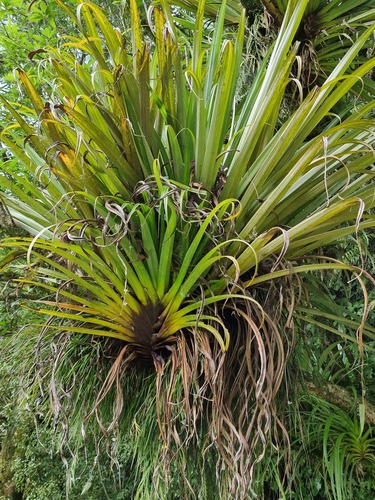
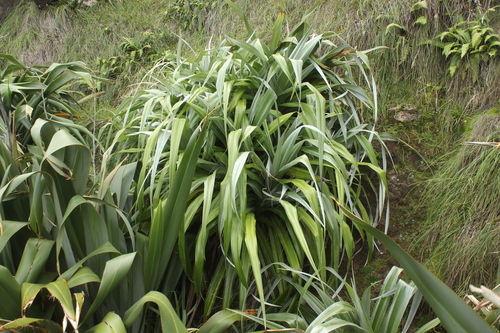
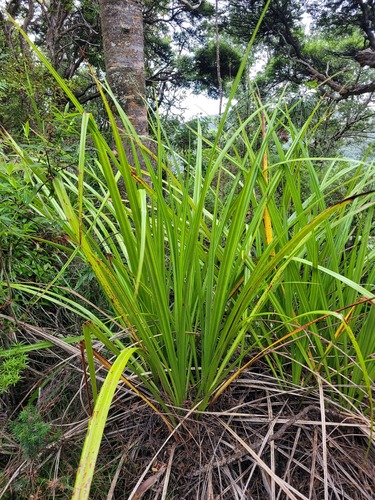
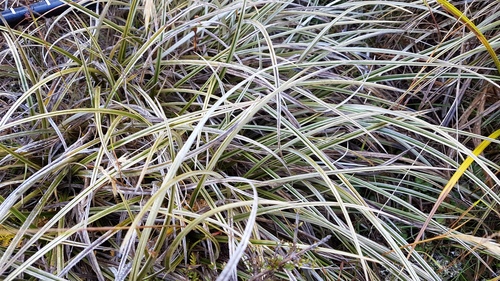
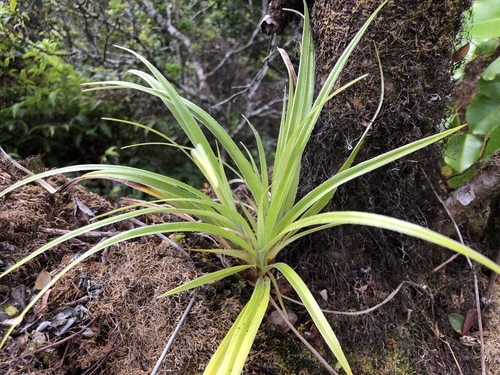
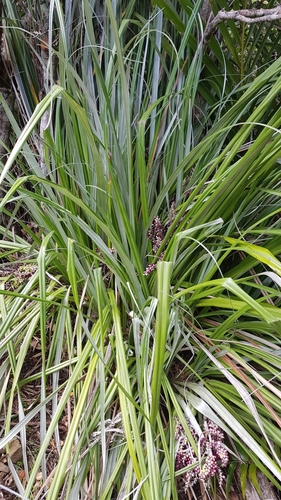
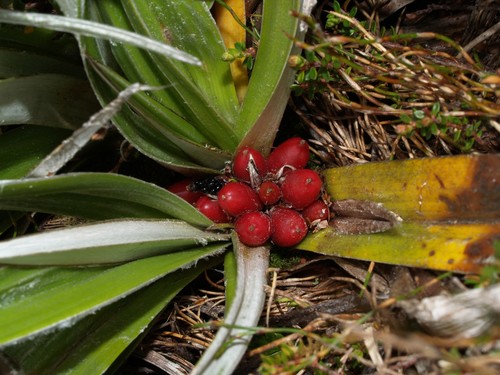
Commonly called pineapple grass, Astelia alpina R.Br. gets its name because its leaves resemble the vegetative leaves of a pineapple plant. Its green leaves have silvery, hairy undersides, growing up to 30 cm long and 2–3 cm wide, tapering to a pointed tip. Leaves are stiff with recurved margins. The lower leaf surface is covered in many fine white hairs called trichomes, while the upper surface is green with only occasional hairs. When viewed under a microscope, each trichome has a base of two glandular cells that stains dark. Pineapple grass produces small white-green flowers. This species is dioecious: male and female flowers grow on separate individual plants. Male panicles hold 10 to 60 flowers, while female panicles hold a maximum of 30 flowers, and males produce more flowers and inflorescences overall than females. Flowers emerge in summer on structures called racemes. Oval red fleshy fruits around 12 mm long grow at the base of leaves when present, and these fruits are edible. Like other Astelia species that grow in moist, humid areas, the ovary of this species is full of mucilage, which is thought to aid in pollen transmittance. Humans can facilitate asexual reproduction by dividing mature clumps and planting the sections separately. Astelia alpina is commonly found in the subalpine and alpine areas of Tasmania and the Australian Alps. Plants in these habitats must be tough to survive harsh wind exposure, hot summer sun, and winter freezing temperatures. The species typically dominates alpine sedgeland in Tasmania and is found on all mountains in the state. It prefers moist soils, and often grows alongside coral fern (Gleichenia alpina), and other alpine plants including Empodisma minus, Carpha alpina, and Restio australis. Astelia alpina is often a pioneer species after fires in alpine areas. Ten to 20 years after a fire, alpine herbland and sedgeland is typically dominated by this species, and this community generally replaces deciduous and coniferous heath. Western alpine sedgeland in Tasmania is less dependent on fire for its existence than eastern Tasmanian alpine sedgelands. The species shows variable form and dominance depending on its location and habitat, with different locations displaying distinct form and dominance patterns. It is not widely cultivated. The berries are edible, and an 1889 book titled The Useful Native Plants of Australia records that the fruit is sweet, and the bases of the leaves are also eaten. For cultivation, it prefers high altitude conditions with wet soil and plenty of light. When grown at low altitudes, it is best suited to colder climates, and seed can be collected from native wild plants for cultivation.