About Asplenium appendiculatum (Labill.) C.Presl
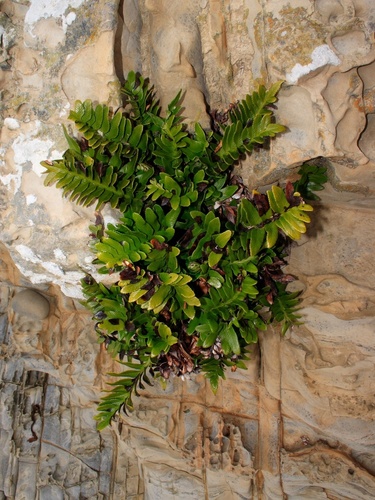
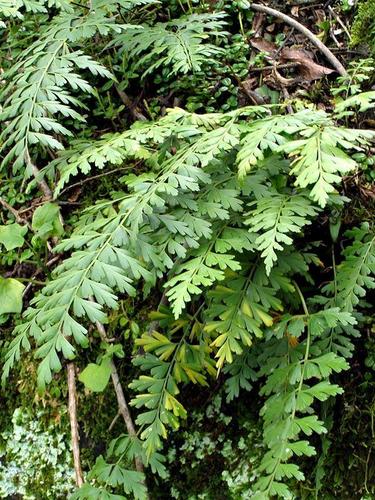
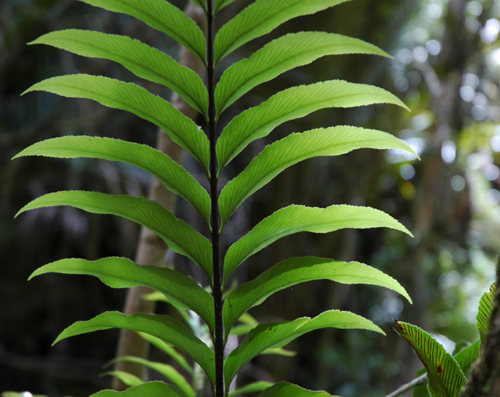
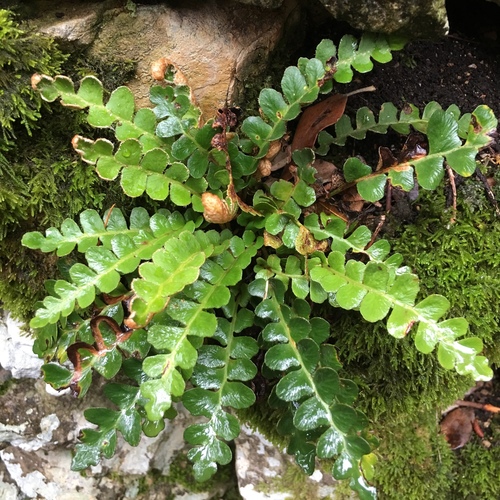
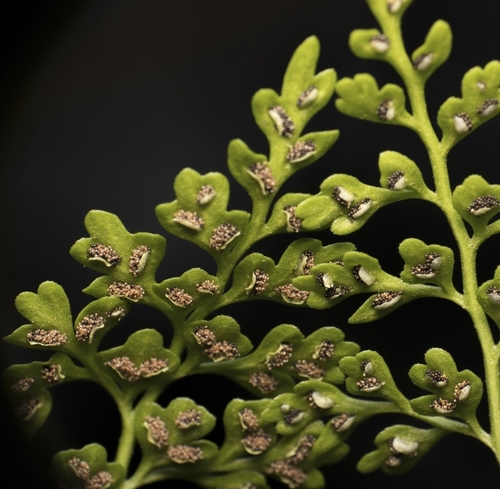
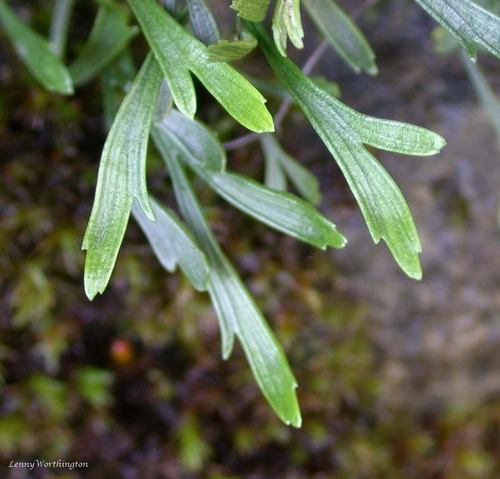
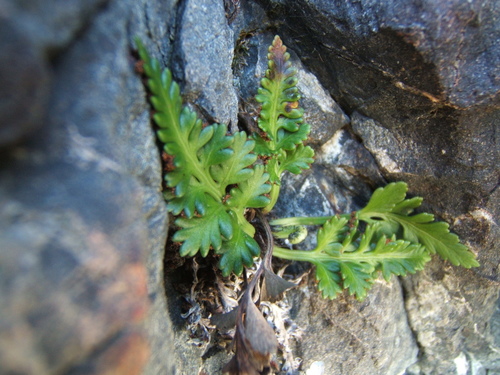
Asplenium appendiculatum produces dark green foliage. Its blades are 100–300 mm long and 50–150 mm wide, with a leathery texture and slightly drooping habit. Blades range in shape from lanceolate, slightly wider a short distance above the base and tapering to a pointed tip, to oblong, tapering at both ends and roughly the same width throughout the middle. The stipe, the stalk below the blade, is 50–150 mm long, grooved, green on its upper surface and brown on its lower surface, and scattered with narrow triangular scales. The rachis, the stalk running through the center of the blade, is green, scaly, and prominently ridged. This species has 8 to 20 alternate pairs of pinnae, or leaflets, that measure 30–100 mm long by 5–30 mm wide. Pinnae located at the base of the blade are ovate, while pinnae closer to the blade tip are very narrowly ovate or elliptic, and they often have long, relatively undivided tips. The pinna stalks are covered in tiny scales on their underside. Pinnules at the base of the blade are narrowly elliptic and pinnate, growing up to 30 mm long and 8 mm wide. Pinnules closer to the blade tip are linear, with entire margins, and sessile. The rhizomes, the underground stems of the fern, are short and covered in linear, tapering dark brown scales. Every pinnule on a fertile frond bears sori, which are submarginal, 2–7 mm long, and oblong in shape. Asplenium appendiculatum is often confused with Asplenium bulbiferum, but it can be distinguished by its lack of bulbils, the vegetative clone structures produced by A. bulbiferum.