About Asparagus capensis L.
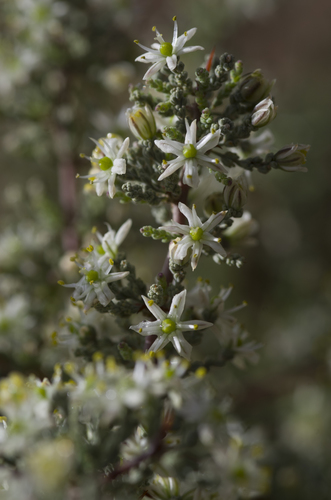
Asparagus capensis L. is a thorny asparagus species that grows as a bush up to 1 metre tall. Its stems are erect, often zig-zagged, and both stems and branches terminate in spines. Each branch has numerous whorls of spreading shoots arranged around it, giving the branch a bottle-brush shape, and each shoot is tightly packed with tiny leaves. The small grey-green leaves measure 3 to 5 millimetres, are velvety and needle-shaped, and often grow in sets of five. Spines at branch nodes usually occur in sets of three: one longer central spine reaching a maximum of 30 millimetres, plus two smaller lateral spines. The tiny white flowers are strongly scented and sessile, meaning they grow without stalks, and bloom from autumn through spring. This species' natural distribution covers stony slopes across the Cape region, extending from Namibia south to Cape Town and east into the Eastern Cape. It is especially common in the western winter-rainfall areas of this range. It prefers sandy soils, and while it can grow inland, it is most frequently found near the coast. Like many other Asparagus species, the young shoots of Asparagus capensis are edible, and are eaten by local people.