About Aspalathus linearis (Burm.f.) R.Dahlgren
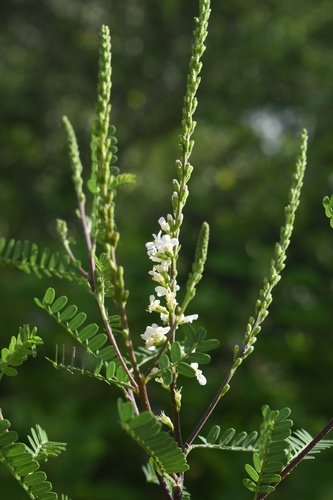
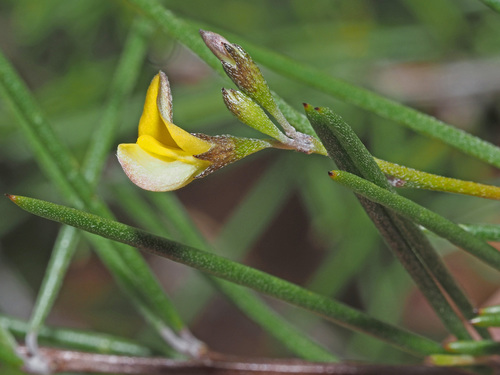
Rooibos (pronounced ROY-boss; Afrikaans: [ˈroːibɔs], literally meaning 'red bush'), or Aspalathus linearis, is a broom-like plant in the legume family Fabaceae that grows in South Africa’s Fynbos biome. Its leaves are used to make a caffeine-free herbal infusion, which has been popular across Southern Africa for generations. Since the 2000s, rooibos has gained international popularity; it has an earthy flavour and aroma similar to yerba mate or tobacco. Outside Southern Africa, it is commonly known as bush tea, red tea, or redbush tea, the latter name is used predominantly in Great Britain. The name rooibos comes from the Afrikaans phrase rooi bos, which translates to 'red bush'. This name has protected status in South Africa, and holds protected designation of origin status in the European Union. Rooibos was formerly classified in the genus Psoralea, but following work by Dahlgren in 1980, it is now placed in the genus Aspalathus. The specific epithet linearis, referring to the plant’s linear growth habit and needle-like leaves, was published by Burman in 1759. In the wild, Aspalathus linearis has a small endemic range. However, horticultural methods developed to maximise production have successfully maintained cultivation of this species as a semi-wild crop to meet growing demand from the expanding global rooibos tea industry. A. linearis is often grouped with honeybush (Cyclopia), another Fynbos plant from Southern Africa that is also used to make tea. Like other members of its genus, A. linearis is part of the Fynbos ecoregion within the Cape Floristic Region, where many native plants depend on fire for successful reproduction. A. linearis is a legume, so it is an angiosperm that produces indehiscent fruit. Its flowers form a raceme inflorescence. Seed germination for this species is naturally slow, but sprouting can be triggered by acid treatment. Its hard-shelled seeds often require scarification to germinate. Fire can stimulate sprouting in A. linearis, though it produces less sprouting after fire than many other Fynbos plants. A. linearis can act as both facultative and obligate sprouters, and develops lignotubers to support regrowth after fire events. Typically, A. linearis is divided into two classifications based on their response to fire: reseeders and resprouters. Reseeders are killed by fire, but fire triggers the germination of their seeds. Resprouters are not completely killed by fire, and regrow from their existing lignotubers. In wild populations, seeds are dispersed by ant species. Ant dispersal lowers competition between parent plants and offspring, and between sibling seeds. It also reduces the chance that seeds will be eaten by other herbivores. Like most other legumes, A. linearis forms a symbiotic relationship that supports nitrogen fixation and growth; the symbiosis occurs between rhizobia and the plant’s underground lignotuber structure. Soil nitrogen content is an important environmental factor that influences the plant’s growth, development, and reproduction. Hawkins, Malgas, and Biénabe (2011) proposed that multiple ecotypes of A. linearis exist, each with distinct evolved growth strategies and morphological traits shaped by their local environment. It is still unclear how many ecotypes exist, due to the species’ limited geographic range and the small amount of existing research on its genetic diversity. Van der Bank, Van der Bank, and Van Wyk (1999) suggest that resprouting and reseeding populations have been environmentally selected as a way to reduce genetic bottlenecks, though it remains unclear whether this process favours one reproductive strategy over another. Wild populations can contain both sprouting and non-sprouting individuals, but cultivated rooibos is almost always reseeders rather than resprouters, and cultivated plants have higher growth rates. Cultivated A. linearis can be selectively bred to retain traits that are desirable for human use. Cultivated plants are diploid with a base chromosome number of 9, giving a total chromosome count of 2n = 18, though little is known about how ploidy or chromosome number may differ between ecotypes. Human selection practices for cultivated rooibos include managed pollination, fire suppression, and supplementing soil nutrient content. Like many other Fynbos plants, A. linearis is not significantly pollinated by Cape honey bees, which indicates the species relies on an alternative primary pollination method. Some wasp species likely play an important role in pollinating A. linearis flowers, and some wasps are thought to be specially adapted to access the flowers of this species. Rooibos is most commonly prepared as a tisane by steeping its leaves in hot water, in the same way black tea is prepared. The finished infusion may be consumed plain, or flavoured with additions of milk, lemon, sugar, or honey. It is also commonly served as rooibos lattes, rooibos cappuccinos, or iced rooibos tea.