About Aseptis binotata Walker, 1865
Aseptis binotata, commonly known as the rusty shoulder knot moth, is a moth species belonging to the family Noctuidae. This species was first formally described by Francis Walker in 1865. It is widely distributed across western North America, occurring west of south-central Alberta, Wyoming, and Nebraska. Along the Pacific Coast, its range extends from northern Mexico to south-central British Columbia. It can be found from sea level up to altitudes over 2000 meters, living in a variety of habitats ranging from dense forest to shrub desert.
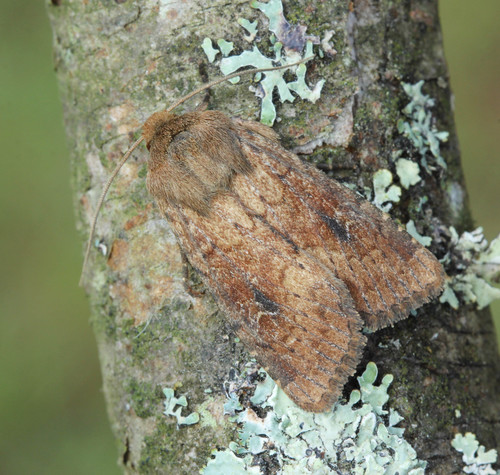
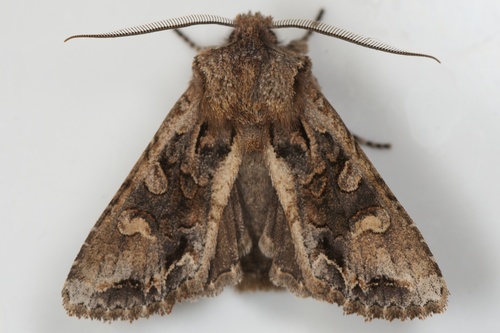
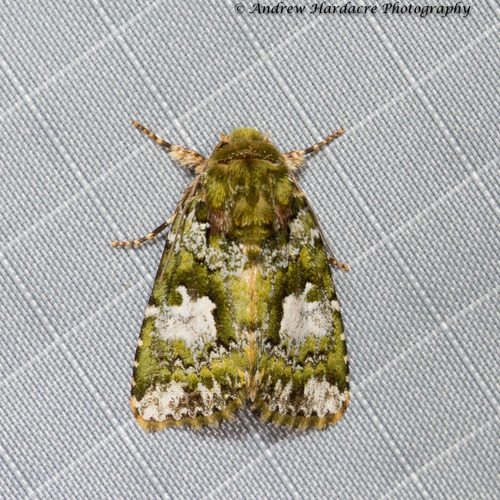
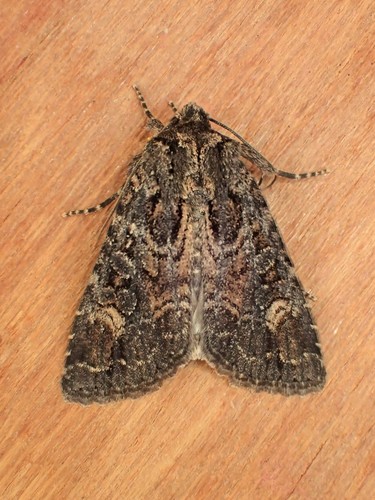
The wingspan of Aseptis binotata measures 29.5–35 mm. It is the most variable species in the genus Aseptis when it comes to forewing color and the intensity of pattern. Depending on locality, individuals may be brownish, warm dark brown, pale to medium gray brown, yellowish light brown, or reddish brown. In dark-colored specimens, the most distinct marking is a large pale yellowish postreniform patch, which is split by the dark postmedial line. The antemedial line is strongly convex toward the outer edge of the wing, and is filled with light tan. Black markings on the forewing include a series of wedge-shaped marks near the outer margin, below the apex, the outlines of the three forewing spots, and a short black basal dash in most specimens. Pale specimens may have faint, washed-out markings or contrasting dark markings instead.
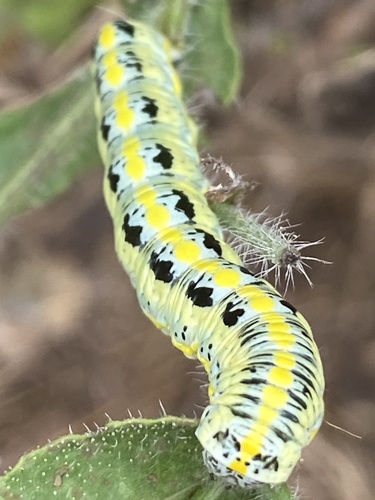
Flight periods vary by location and elevation: in the southern part of the range, flight starts in March at low elevations, and from April to July in mountain areas. In the northern part of the range, flight starts later and continues into August. The larvae of Aseptis binotata feed on a variety of broadleaf trees and shrubs, including big-leaf maple, ocean spray, and Ceanothus species. Other recorded host plants include Oemleria, Symphoricarpos, and Ribes species. The larva is green, with a white and red lateral stripe.