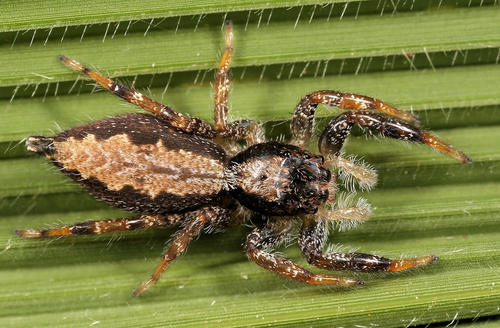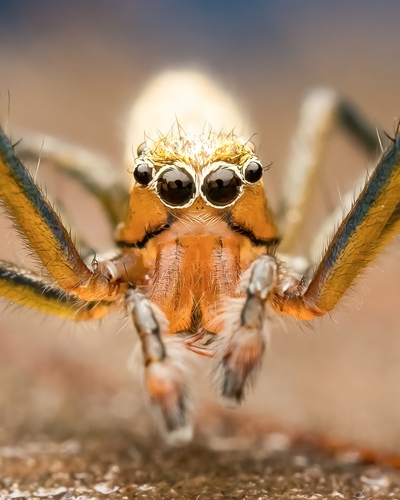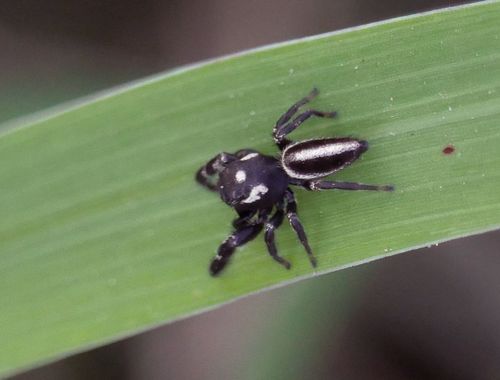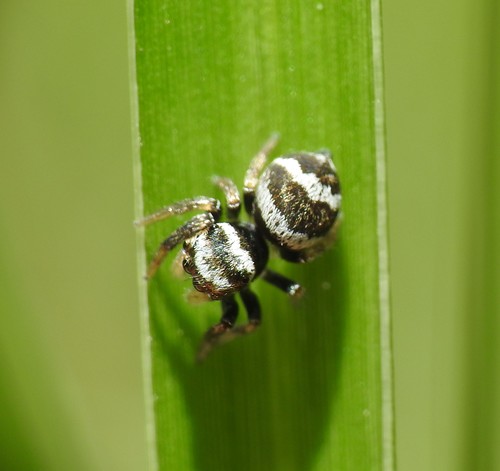
About Ascyltus pterygodes (L.Koch, 1865)
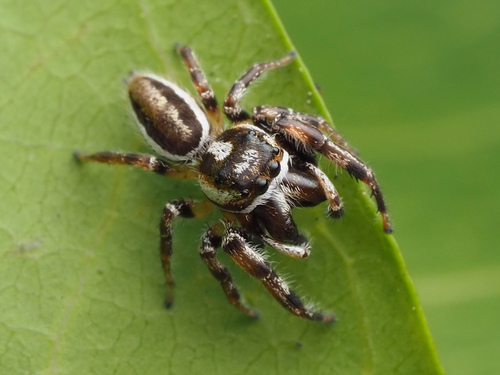
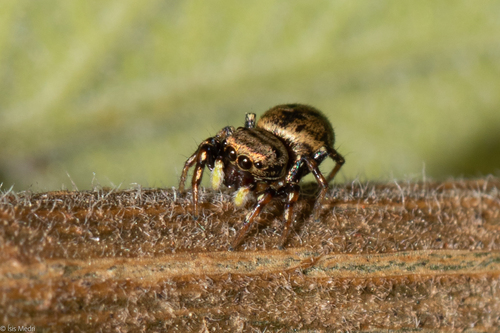
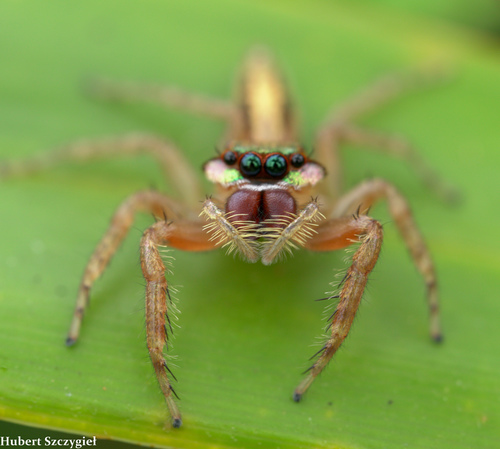
Ascyltus pterygodes individuals are large to very large in size. Key identifying features include iridescent scales on the antero-lateral carapace, very large prominent cheek areas, and chelicerae that extend distended forward. Additional distinguishing traits are the absence of lateral spines on the first metatarsi, three rows of eyes, and a large multicusped tooth. Most collected specimens of Ascyltus pterygodes have been found in the Laupāhoehoe area, located in North Hilo District on the island of Hawaii. This area spans elevations from just above 1,600 feet to approximately 4,600 feet, and contains wet mountainous forests made up of ‘ohi‘a and koa trees, including some poorly drained sections. The landscape also supports wet grasslands, small montane lakes, and numerous streams that run throughout the forests. Hakalau National Wildlife Refuge is adjacent to Laupahoehoe Reserve, and protects habitats for local wildlife. Ascyltus pterygodes has been observed on leaves and bushes, including common plants and shrubs such as banana. It has also been found inside homes, though this is an uncommon occurrence.