About Asclepias purpurascens L.
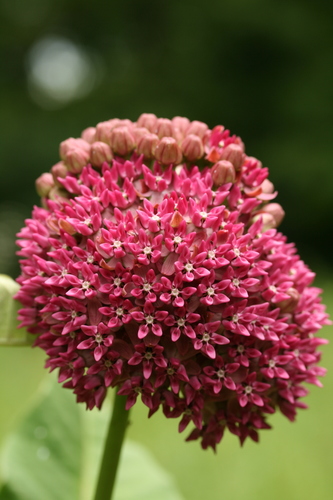
Asclepias purpurascens, commonly known as purple milkweed, is a herbaceous plant species in the milkweed genus Asclepias. It is native to the Eastern, Southern, and Midwestern United States, and its native range is similar to that of common milkweed (Asclepias syriaca). The species gets its common name from its flowers, which emerge pink and darken to purple as they mature. Unlike common milkweed, purple milkweed prefers partial shade, and it is considered an indicator species for oak savanna, particularly in Wisconsin. Purple milkweed rarely produces seed pods, and the pods it does produce are smooth, in contrast to the rough, warty pods of common milkweed. Like other milkweed species, purple milkweed hosts several insect species that depend on it, including the monarch butterfly (Danaus plexippus), the milkweed beetle (Tetraopes tetraophtalmus), large milkweed bug (Oncopeltus fasciatus), small milkweed bug (Lygaeus kalmii), and milkweed leaf beetle (Labidomera clivicollis). Other insects and pollinators feed on nectar from the plant's flowers. Purple milkweed is sometimes cultivated in butterfly gardens to attract pollinators and butterflies, though it is less common in cultivation than the light purple swamp milkweed (Asclepias incarnata) or the orange butterfly weed (Asclepias tuberosa). The plant's nectar attracts many other species of butterflies and insects.