About Asclepias perennis Walter
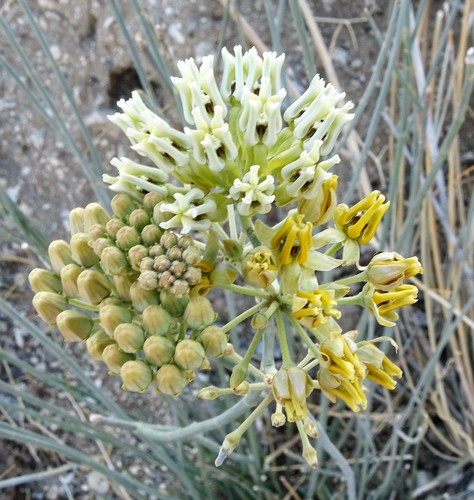
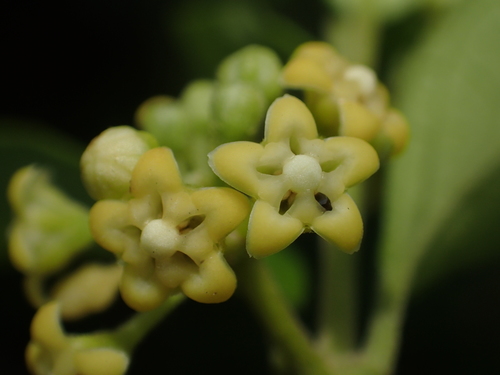
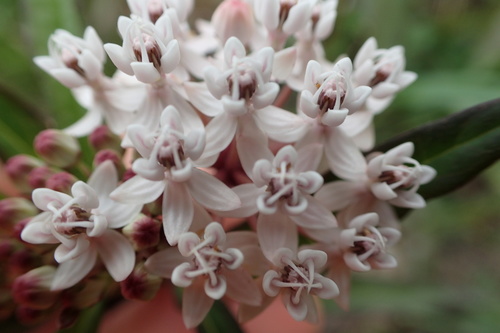
Asclepias perennis Walter, commonly called aquatic milkweed, is a cold-hardy herbaceous perennial. It forms a strong fibrous rootstock that is sometimes woody, and grows to a height of 46–61 cm (18–24 in). Many lateral stems can grow from the plant’s main stem. Its leaves are arranged oppositely, and range in shape from linear to narrowly lanceolate to elliptical. The leaves are glabrous, measuring 8–13 cm (3.1–5.1 in) in length and 1–4 cm (0.39–1.57 in) in width. The upper (adaxial) leaf surface is dull green, and the lower (abaxial) surface is a lighter green; leaf petioles grow up to 1.5 cm (0.59 in) in length. The inflorescence is an erect umbel 2 cm (0.79 in) in long. There is a single peduncle per node, with one or more peduncles per stem, which grow both terminally and axillarily. The rays of the inflorescence are subtended by linear bracts that are 2–4 mm (0.079–0.157 in) long, 1 mm (0.039 in) wide, and sparsely pubescent. The inflorescence has an involucre, and each peduncle holds more than 25 flowers. The flowers are 2 mm (0.079 in) in diameter and 3–4 mm (0.12–0.16 in) in length, with pedicels 1 cm (0.39 in) long. Flower horns extend beyond the hoods, corollas are reflexed, and flower color ranges from whitish to pink. The seed pods, called follicles, are 4–7 cm (1.6–2.8 in) in length, pendent, and shaped ovate to broadly elliptic-ovate. The follicle surface is smooth and glabrous. Seeds are approximately 12–17 mm (0.47–0.67 in) in length, with broadly winged margins, and have no coma. In ecology, aquatic milkweed is found in low wet woods, cypress swamps, lake and pond margins, slow streams, and wet ditches. Its native substrate is typically organic-rich and saturated. It can grow well in partial sun to full sun. This species has a secure conservation status, and is found in 13 U.S. states. Unlike other milkweeds that use comas for wind dispersal, aquatic milkweed has adapted for water seed dispersal: its seeds float and lack comas. It is a known host plant for the Monarch Butterfly, and blooms from May to September. In cultivation, aquatic milkweed is available commercially as both seed and propagated plants. Seed germinates readily, and mature flowering plants can be grown from seed in as little as three to four months. Plants can be grown successfully in containers as small as one quart, and the number of stems increases with container size. This species grows best with abundant water, and its planting substrate should retain good moisture, rarely if ever drying out. It has been recorded to tolerate cold temperatures down to −23 °C.