About Asclepias curtissii A.Gray
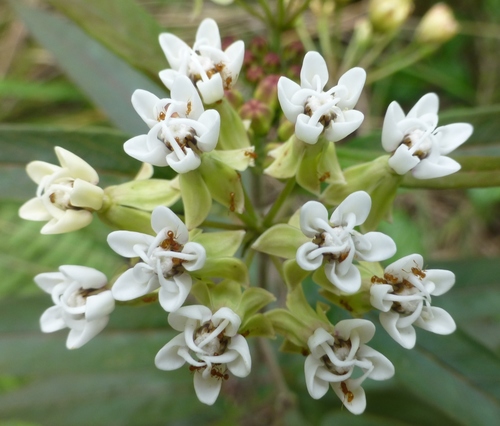
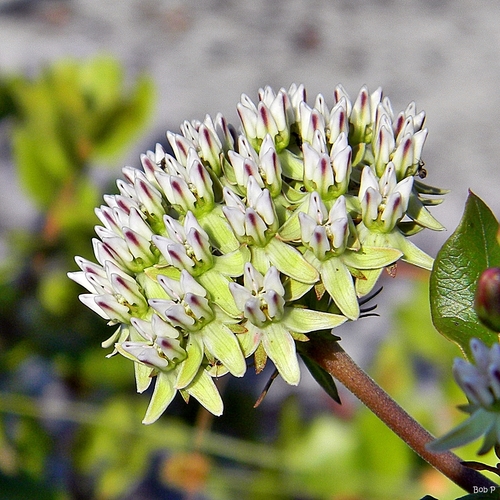
Curtiss's milkweed, scientifically named Asclepias curtissii A.Gray, is a deciduous plant that grows into a tall, lanky form, reaching a height of 2 to 4 feet. Its leaves are large, elliptical, dark green, and typically have a distinctly undulating edge. Flowers bloom during the summer, forming few flower heads (umbels) that usually grow at the tips of main stalks. Each umbel holds roughly 20 to 30 individual bright white flowers when in bloom. This species occurs in excessively drained areas of Florida, where it is typically found growing alongside other plants including Florida rosemary (Ceratiola ericoides), Chapman oak (Quercus chapmanii), myrtle oak (Quercus myrtifolia), and sand live oak (Quercus geminata), among others. Curtiss's milkweed has an unusually high tolerance for soil disturbance, and is often found along the edges of fire lanes and sand roads. The sap of Asclepias curtissii contains cardenolides, which are toxic to vertebrates when present in large quantities. Even so, deer are the main consumers of this plant, with grasshoppers also feeding on and removing some of its flowers. Many insect larvae use Curtiss's milkweed as both shelter during the early stages of their lives and a food source. While Asclepias curtissii is not commonly a primary food source for monarch butterflies, monarchs can and will feed on it when necessary. This milkweed has scattered populations that create challenges for pollination, but it has specialized flowers that only permit specific insects that seek out the plant to pollinate it. These pollinators include skipper butterflies and hairstreaks, which have been found in large numbers on the flowers of Asclepias curtissii.