About Asclepias connivens Baldwin ex Elliott
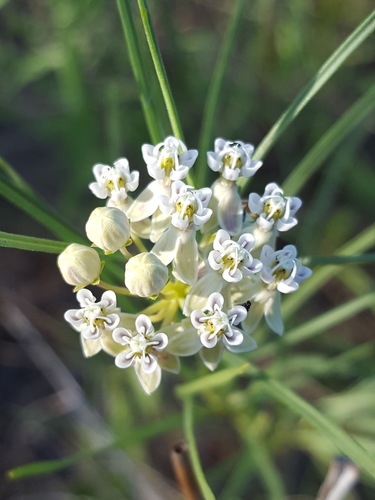
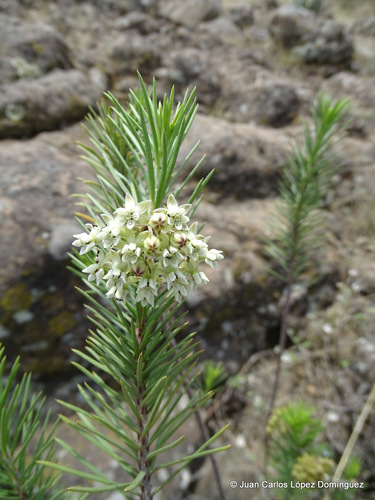
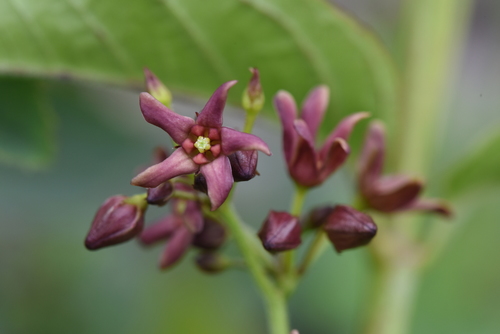
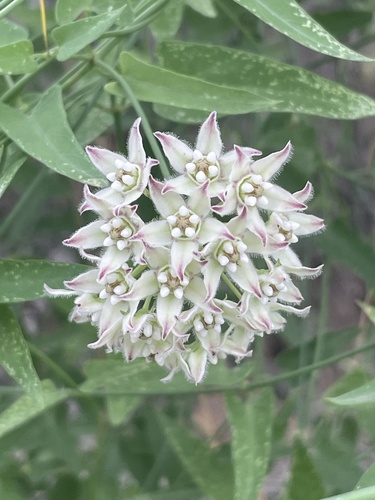
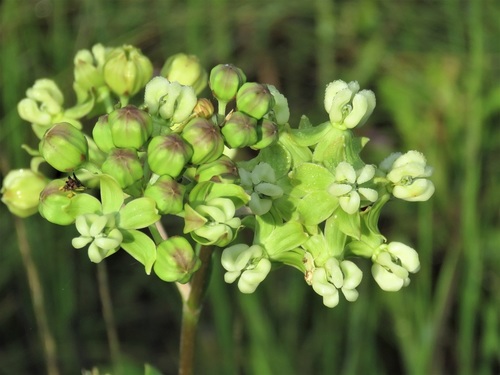
Asclepias connivens is a species of milkweed with two common names: Baldwin's milkweed and largeflower milkweed. This species is an obligate wetland plant, native to the southeastern United States, where it occurs in Alabama, Georgia, and Florida. It was first formally recognized in 1817 by American botanist William Baldwin. Its scientific epithet connivens refers to the converging (conniving) hoods that sit over the plant's stigma. Mature plants produce greenish-yellow flowers measuring ¾ inch (19 mm) across, with a bloom period from July to August. After flowering, mature fruit develops into seed-bearing follicles that reach 5 to 7 inches (130–180 mm) in length. The plant's upright stalks grow to a maximum height of 37 inches (94 cm). Its leaves are 3.9 to 4.7 inches (9.9–11.9 cm) long and 1.2 to 2.0 inches (3.0–5.1 cm) wide, and they grow in opposite, sessile arrangements along the stalk. This milkweed dies back completely to the ground each winter.