About Asarum europaeum L.
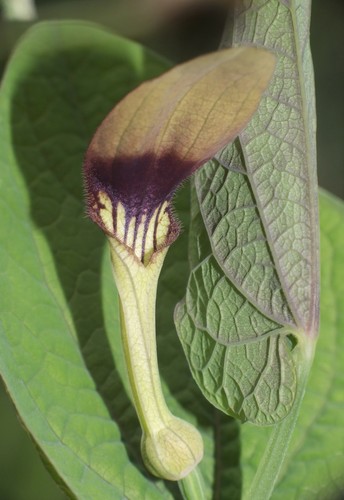
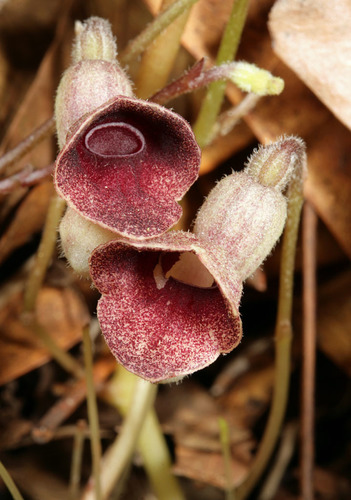
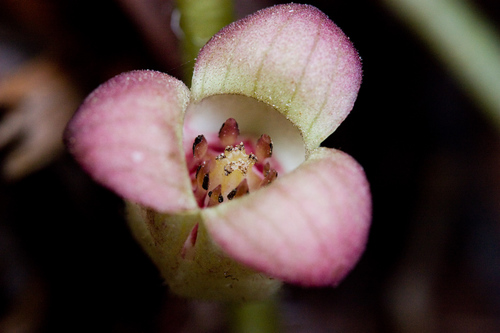
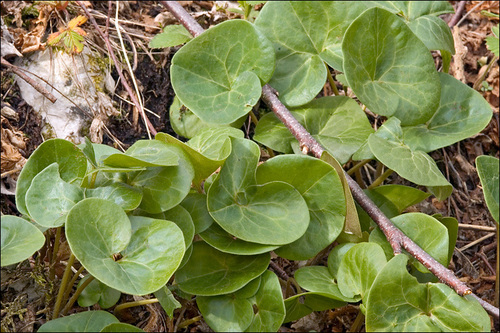
Asarum europaeum L. has prostrate stems that grow 10–15 centimetres (3.9–5.9 in) long. Each stem bears two kidney-shaped (reniform) leaves with long petioles; the leaves are roughly 10 cm wide, with a shiny upper surface, and a pepper-like taste and smell. There are 2 to 3 stipules arranged in two opposite rows along the stem. Its flowers are solitary, terminal, and nodding. The flower tube is made of fused tepals, ending in 3 petal-like projections that are brownish at their tips and dark purple toward the center of the flower. There are 12 stamens, and flowers emerge in late winter and spring. Asarum europaeum has a wide distribution across Europe. Its native range extends from southern Finland and northern Russia southward to southern France, Italy, Croatia, Serbia, Bosnia and Herzegovina, North Macedonia, and Bulgaria. It is not native to the British Isles, Scandinavia, northwestern Germany, or the Netherlands. Within Europe, it is cultivated outside its native range in the United Kingdom, Denmark, Sweden, Norway, and the Netherlands. It grows most commonly in deciduous woodland or coniferous forests, particularly on calcareous (chalky) soils. Asarum europaeum is highly shade-tolerant, and is often used as a groundcover in locations where few other plants will grow. This species has received the Royal Horticultural Society's Award of Garden Merit.