About Asaphodes aegrota (Butler, 1879)
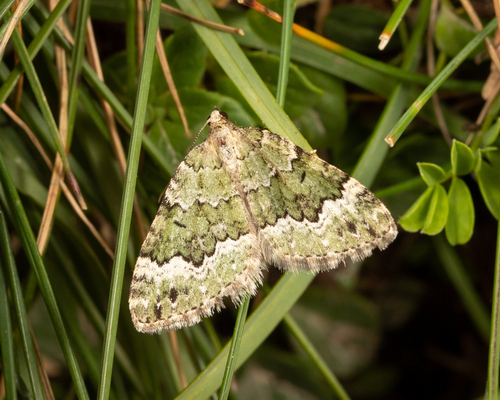
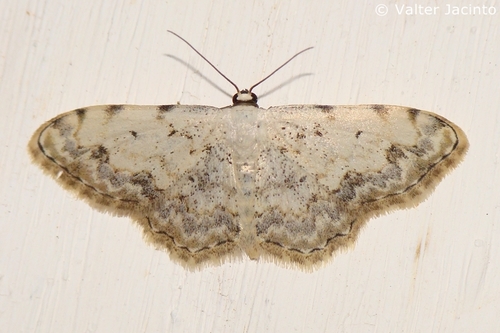
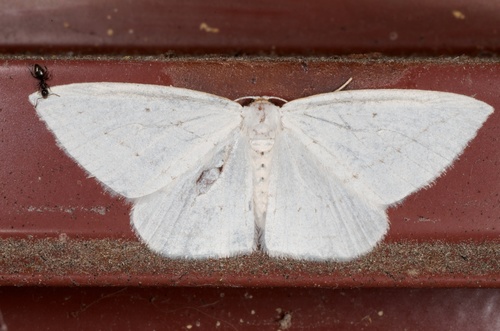
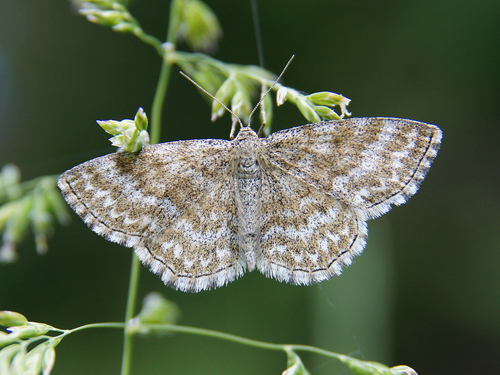
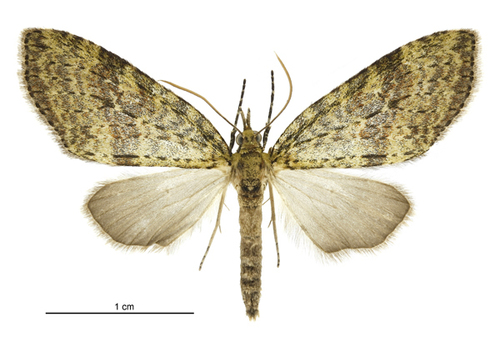
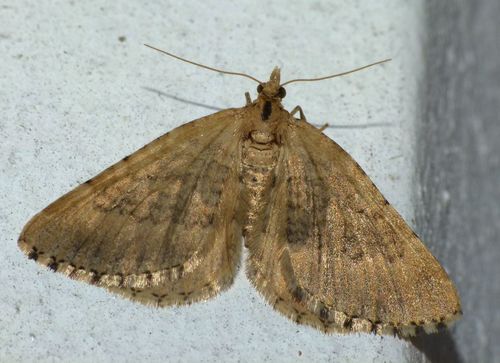
Butler originally described this species as follows: Whitish-brown, with a marginal series of small paired blackish spots on the wings; fringe is white, spotted with blackish and intersected by a dark grey line. The basal two-thirds of the primaries are crossed by approximately seven parallel dusky lines that start as black dots on the costal margin; discocellulars are black. The under surface of the primaries is greyish-brown with pale grey borders; the costal border is crossed by four or five white-edged blackish dashes, and marginal spots match those on the upper surface. Secondaries are white, crossed by around eight strongly arched parallel brown lines that become very indistinct in the costal area; the disc from the radial to the abdominal margin is clouded with brown, and marginal spots match those on the upper surface; body is white. This species is variable in appearance, and the intensity of markings on both the lower and upper sides of its wings can vary considerably. It also has populations with narrow-winged females, for example in the Wairau Valley, Marlborough. It can be distinguished from the similar-looking Asaphodes abrogata because A. aegrota lacks dark colouration at the outer edge of the forewings. This species is endemic to New Zealand and can be found on the North, South and Stewart Islands. It inhabits open spaces in lowland native forest, tussock grassland, and scrub. Hudson observed it amongst Discaria toumatou.