About Arundo donax L.
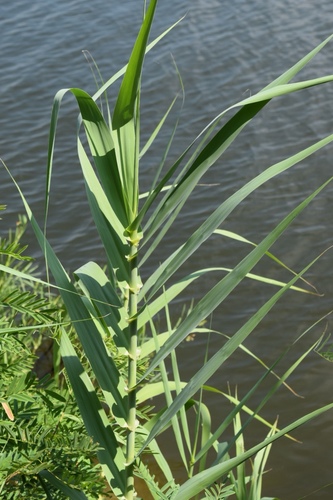
Arundo donax L. (giant reed) typically grows to 6 meters (20 feet) in height, and can exceed 10 meters (33 feet) under ideal growing conditions. Its hollow stems measure 2 to 3 centimeters (0.79 to 1.18 inches) in diameter. The grey-green, sword-shaped leaves are arranged alternately, growing 30 to 60 centimeters (12 to 24 inches) long and 2 to 6 centimeters (0.79 to 2.36 inches) wide with a tapered tip, and have a hairy tuft at their base. Overall, the plant resembles an oversized common reed (Phragmites australis) or a bamboo from the subfamily Bambusoideae.
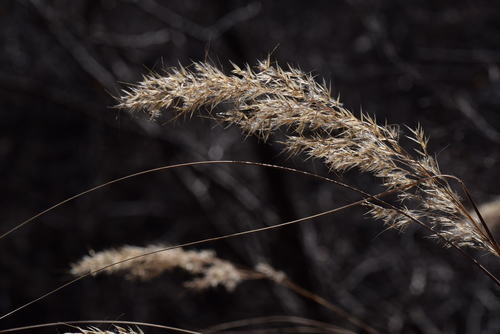
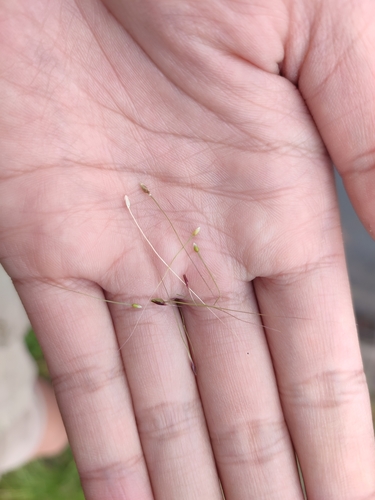
A. donax produces flowers in late summer, growing upright, feathery plumes 40 to 60 centimeters (16 to 24 inches) long. These plumes are usually seedless, and any seeds they do produce are very rarely fertile. Instead, the species mostly reproduces vegetatively via tough, fibrous underground rhizomes that form knotty, spreading mats that penetrate up to 1 meter (3.3 feet) deep into soil. Pieces of stem and rhizome that are less than 5 centimeters (2.0 inches) long and contain a single node can sprout easily under a wide range of conditions. This method of vegetative propagation appears well adapted to floods, which can break apart individual A. donax clumps, spread the broken pieces downstream, where they can sprout and establish new colonies.
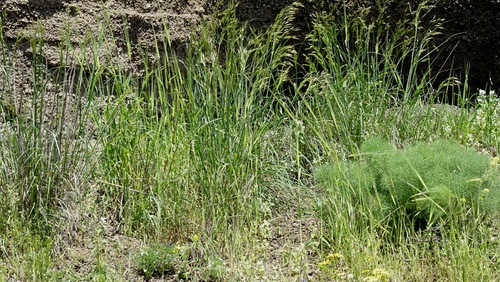
Giant reed is adapted to a wide range of ecological conditions, but is most commonly associated with riparian and wetland systems. It is distributed across the southern United States, from Maryland to California. It can grow in many soil types, from heavy clays to loose sands and gravelly soils, but prefers wet drained soils, where it forms dense single-species stands.
Establishment is a critical stage of giant reed cultivation. Both stems and rhizomes have a strong ability to sprout after being removed from the parent plant, so both can be used for clonal propagation. Research found that using rhizomes is the better propagation method for this species, producing a higher survival rate. A field study found that lower planting density (12,500 rhizomes per hectare) produced taller, thicker plants than denser plantings (25,000 rhizomes per hectare). Giant reed can be successfully grown at low plant densities.
Seedbed preparation is carried out in spring, immediately before planting, via one pass with a double-disk harrow and one pass with a field cultivator. Rhizomes are planted at a depth of 10–20 centimeters (3.9–7.9 inches) into soil, with a minimum planting density of 10,000 plants per hectare. Mature stems that have two or more nodes are planted 10–15 centimeters (3.9–5.9 inches) deep. Sufficient moisture is needed immediately after planting to ensure good root establishment and adequate contact between planting material and soil. Pre-plant fertilizer is applied based on the initial fertility of the soil, but phosphorus is usually applied at a rate of 80–100 kilograms (180–220 pounds) per hectare.
A. donax maintains high productivity without irrigation under semi-arid climate conditions. A trial conducted in Southern Italy testing yield performance of 39 genotypes reached an average dry matter yield of 22.1 tonnes per hectare in the second year. This result is comparable to yields recorded in Spain (22.5 t/ha) and South Greece (19.0 t/ha). Multiple reports note that growing giant reed with moderate irrigation is more economical than other irrigation regimes. A 6-year field study conducted at the University of Pisa evaluated nitrogen fertilizer demand and different management practices. The study found that fertilizer increased productivity in the early growing years, but as time passed and the root system became progressively deeper, yield differences from fertilizer application decreased and eventually disappeared. Harvest time and plant density were found to have no effect on biomass yields.
Due to its fast growth rate and strong ability to capture resources including light, water and nutrients, A. donax is not impacted by weed competition starting from the second year of growth. A post-emergence weed treatment is usually recommended during the first year. Giant reed has very few known diseases or insect pests, and no pesticides are used in intensive cultivation.
To remove giant reed at the end of a crop cycle, two main methods are used: mechanical removal or chemical removal. An excavator can be used to dig out rhizomes, or a single late-season application of 3% glyphosate applied to the above-ground foliar mass is efficient and effective, with the lowest hazard to surrounding biota. Glyphosate was selected as the most appropriate product based on evaluations of its efficacy, environmental safety, soil residual activity, operator safety, application timing, and cost-effectiveness. However, glyphosate is only effective in fall, when plants are actively moving nutrients to their root system, and multiple follow-up treatments are usually required. Other herbicides registered for aquatic use can be very effective for controlling Arundo at other times of the year.
When young, A. donax is readily eaten by browsing ruminants, but becomes unpalatable as it matures. A. donax has also been used in constructed wetlands for wastewater treatment.