About Artocarpus heterophyllus Lam.
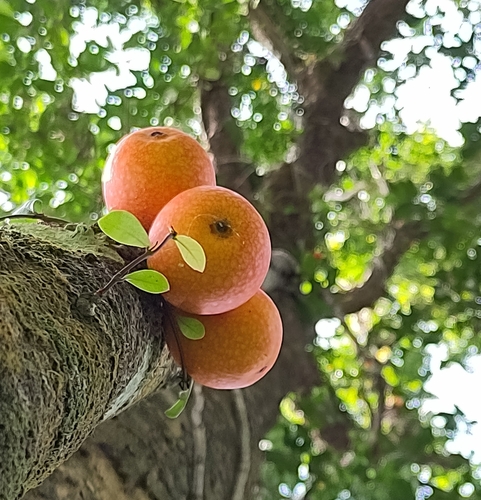
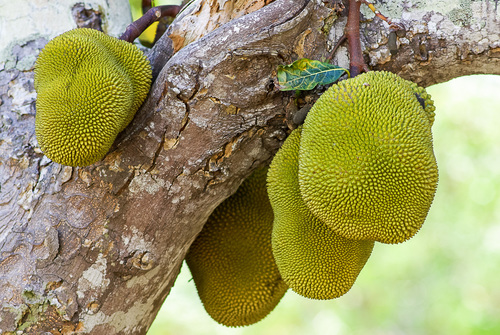
Artocarpus heterophyllus, commonly known as jackfruit, jakfruit, or nangka, is a species of tree belonging to the Moraceae family, which also includes figs, mulberries, and breadfruit. Jackfruit holds the record as the largest tree-borne fruit, reaching up to 55 kg (120 pounds) in weight, 90 cm (35 inches) in length, and 50 cm (20 inches) in diameter. A mature jackfruit tree produces around 200 fruits per year, while older trees can bear as many as 500 fruits annually. Jackfruit is a multiple fruit formed from hundreds to thousands of individual flowers; humans eat both the fleshy petals of unripe jackfruit and fully ripened jackfruit. The tree grows well in tropical lowlands and is widely cultivated across tropical regions worldwide, most extensively from South Asia through Southeast Asia to Oceania. Ripe jackfruit has a sweetness that varies by cultivar, and it is commonly used in desserts. Canned green jackfruit has a mild flavor and a meat-like texture, earning it the nickname "vegetable meat". Jackfruit is a common ingredient in South and Southeast Asian cuisines, and both ripe and unripe fruits are consumed. It is available internationally in canned, frozen, and chilled meal forms, alongside processed jackfruit products like noodles and chips. In its introduced range, the species has spread invasively. Its fruits naturally fall to the ground and open, and small mammals including common marmosets and coatis readily eat the fruit. These animals disperse the jackfruit seeds, allowing jackfruit trees to spread and compete for space with native tree species. The increased availability of jackfruit has also caused marmoset and coati populations to grow. Since both species opportunistically feed on bird eggs and nestlings, their population growth harms local bird populations. Ripe jackfruit is naturally sweet, with a subtle flavor similar to pineapple or banana. It can be used to make a wide range of dishes, including custards and cakes, or mixed into shaved ice desserts like Indonesia's es teler and the Philippines' halo-halo. For idli, a traditional breakfast dish in southern India, jackfruit is added to rice as an ingredient, and jackfruit leaves are used as a wrapping for steaming the idli. Jackfruit dosas are made by grinding jackfruit flesh into the batter. Ripe jackfruit arils are sometimes seeded, fried, or freeze-dried to be sold as jackfruit chips. The seeds of ripe jackfruit are edible after cooking, with a milky, sweet taste often compared to Brazil nuts. They can be prepared by boiling, baking, or roasting; roasted seeds have a flavor similar to chestnuts. Seeds are eaten as snacks, either boiled or fire-roasted, or used to make desserts. In Java, the seeds are commonly cooked and seasoned with salt to serve as a snack. In India, they are often added to traditional lentil and vegetable mix curries. Young jackfruit leaves are tender enough to be eaten as a vegetable. Jackfruit seeds can also be dehydrated and ground into a thickener for soups, or ground together with wheat to make flour. Some describe the flavor of ripe jackfruit as a blend of apple, pineapple, mango, and banana. Cultivars are grouped based on the characteristics of the fruit flesh. In Indochina, there are two main types: the "hard" variety, which has crunchier, drier, less sweet, and thicker flesh; and the "soft" variety, which is softer, moister, much sweeter, and has darker golden flesh than the hard variety. Unripe jackfruit has a mild flavor and meat-like texture, and is cooked in spiced curry dishes across many cuisines. The skin of unripe jackfruit must be removed first, then the remaining flesh is chopped into pieces and cooked before serving. The cooked chunks have a mild taste, color, and subtle floral notes similar to prepared artichoke hearts. Cooked young jackfruit is used in the cuisines of many Asian countries. In many cultures, boiled jackfruit is used in curries as a staple food. Boiled young jackfruit is added to salads, used as a vegetable in spicy curries and side dishes, and used as a filling for cutlets and chops. It may be cooked with coconut milk and eaten on its own or alongside meat, shrimp, or smoked pork. Jackfruit seeds are also boiled and added to sambar, a South Indian stew. Processed jackfruit sold in United States grocery stores is marketed as a plant-based meat alternative. After roasting, jackfruit seeds can be used commercially as an alternative to chocolate aroma.