About Arthropodium cirratum (G.Forst.) R.Br.
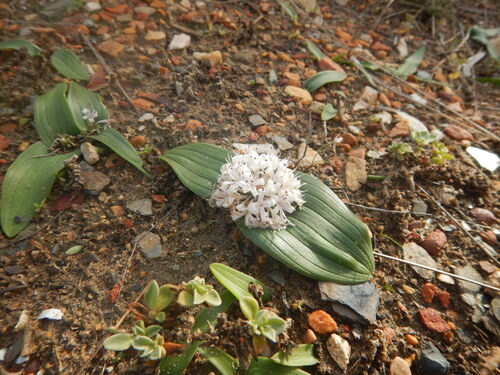
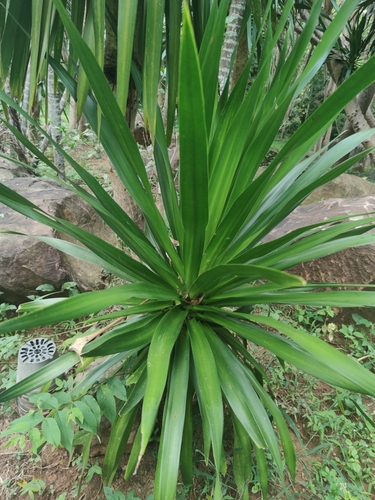
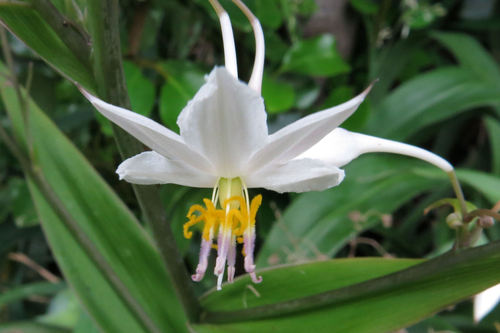
Arthropodium cirratum (G.Forst.) R.Br. has leaves that measure 30–60 cm (12–24 in) in length and 3–10 cm (1.2–3.9 in) in width. Its flower stalk often grows to one metre in height, and bears many white six-petalled flowers arranged in groups of two or three; each flower is about 2 cm (0.8 in) across. The stamens are tricoloured: purple and white, with yellow colouring at the curled end. The roots are 2–3 cm (0.8–1.2 in) wide. This species occurs naturally north of Greymouth and Kaikōura, near the coast, and as suggested by its name, it usually grows on rocks. It is often grown as an ornamental plant. Its rhizomes are edible when cooked and are available year-round. The rhizomes were historically eaten by Māori after being cooked in a hāngī. William Colenso held the belief that this plant was once cultivated by Māori for two reasons: first, the plant grows much larger under cultivation than it typically does in the wild, and second, it is often found near old abandoned Māori homes and plantations. Despite this, Colenso ranked it only fourteenth in importance out of eighteen types of wild vegetable food used by Māori.