About Arthrocaulon macrostachyum (Moric.) Piirainen & G.Kadereit
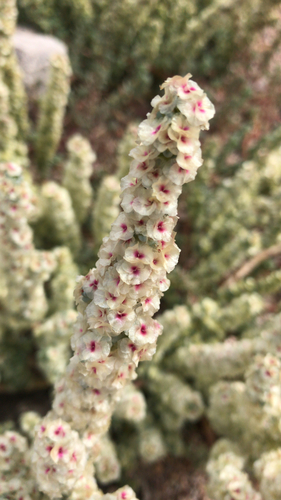
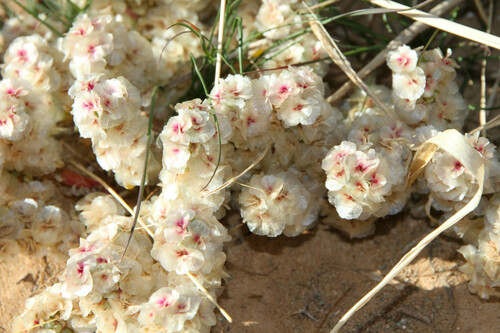
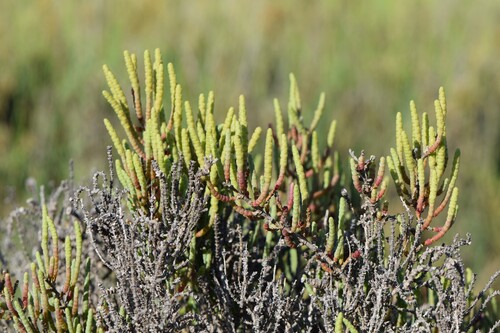
Arthrocaulon macrostachyum is a heavily branched subshrub that grows in clumps reaching up to 1 metre (3 ft) in height. This species has horizontal woody stems that may root at their nodes; these stems branch out into erect, jointed, succulent green stems. Its leaves are small and scale-like, they clasp the stem with their tips remaining free. The flowers are very small, produced in groups of three in terminal, cylindrical spikes. The perianth is conical and bears three teeth. These hermaphrodite flowers are wind-pollinated, and the fruit it produces is small, has a membranous pericarp, and contains a single seed.
A. macrostachyum occurs around the coasts bordering the Mediterranean Sea and the Red Sea, and ranges north into the Jordan Valley. It is also found in the Middle East, including Iran and Pakistan. In this region, it grows in muddy coastal swamps located immediately inland from the Avicennia marina mangroves that line the coast. In the delta region of Egypt’s Mediterranean coast, it is the dominant species in some plant communities found in salt marsh habitats.